(CHARLOTTE, NC.) — Traffic impacts, housing density, and zoning flexibility dominated discussion during the Charlotte City Council’s June 15 zoning meeting (part 2), where residents raised concerns about residential growth and council members questioned how conditional rezonings are handled in early stages of development review.
A significant portion of public comment focused on Petition 2026-025, a proposal from Olympia and Wright Homes to rezone property near the Hampton Place neighborhood for single-family residential development.
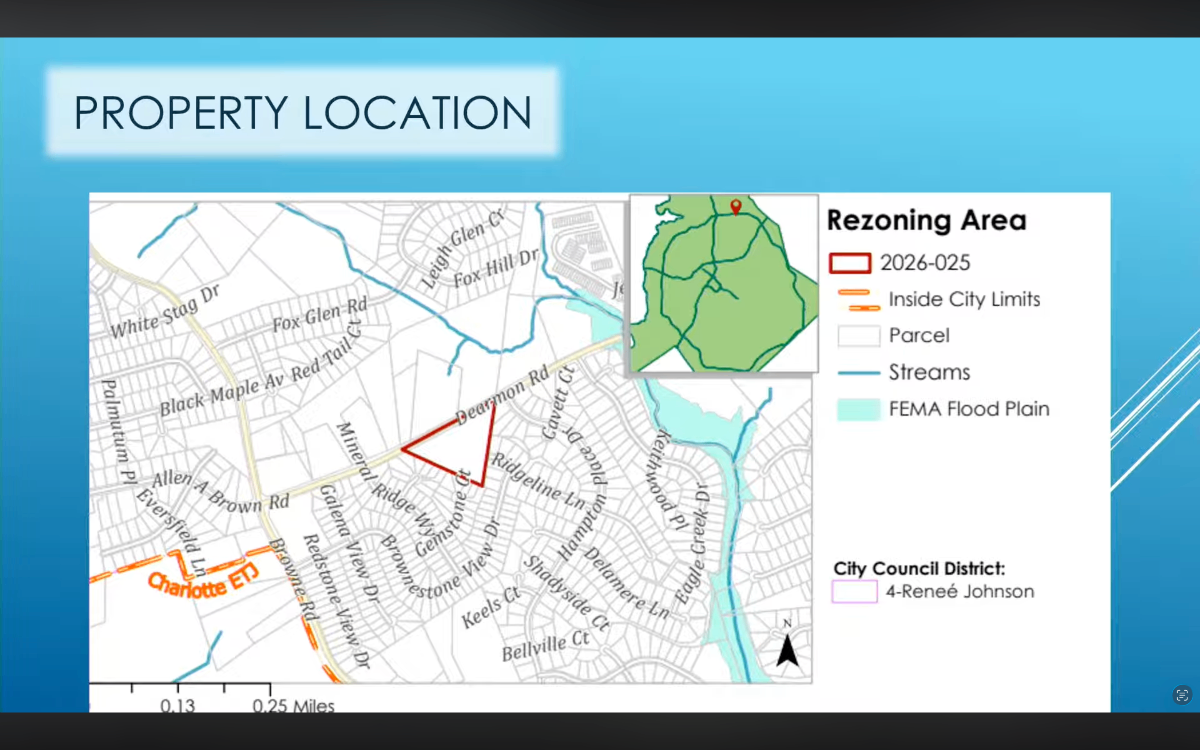
A planning map highlights the triangular subject property under review for Petition 2026-025 near DeArmon Road and Ridgeline Lane.
Photo Credit: CIty of Charlotte/YouTube
Residents said the proposal raised concerns about increased traffic, road connectivity, and compatibility with existing neighborhood character. Many long-term residents noted that the surrounding infrastructure was not originally designed to handle the increased vehicle load associated with modern, higher-density developments.
Selena Zaria, a Ridgeline resident, said neighbors were not opposed to development on the site but wanted a proposal that better matched the surrounding area.
"We're not opposed to having something built there," Zaria said.
Opposition centered on a proposed extension of Ridgeline Road, which residents said could increase traffic through a quiet residential area and affect ongoing improvements along DeArmon Road.
Several speakers also raised concerns about lot sizes and potential changes to neighborhood composition.
In response to community feedback, the applicant indicated a willingness to modify the proposal. Colin Brown, speaking on behalf of Olympia and Wright Homes, said the project would be converted to a conditional rezoning limiting development to single-family homes only.
"The main feedback that we have gotten from the community is a request to condition these single-family homes only, which the petitioner is willing to do," Brown said.
The friction between neighborhood preservation and adaptive municipal policy echoes similar governance and resource debates playing out across the country, where local councils face intense scrutiny over how planning decisions shape residential community outcomes.
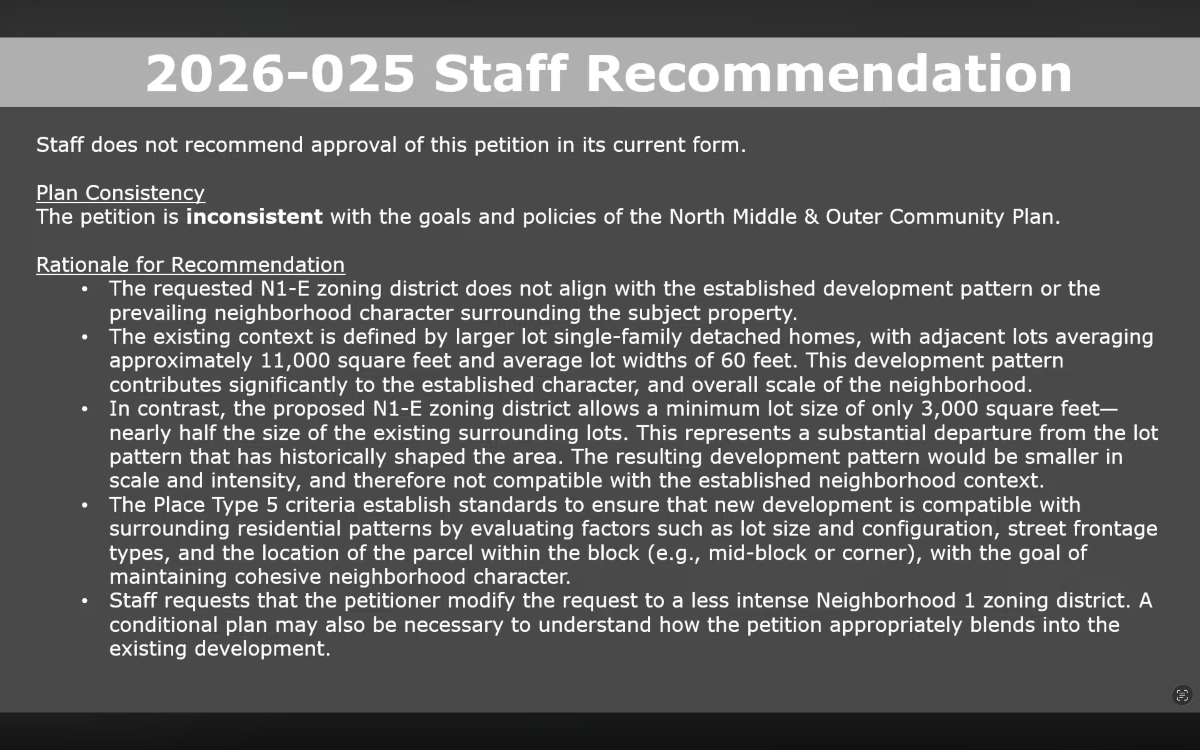
An official presentation details the planning staff's recommendation to deny Petition 2026-025 due to inconsistencies with the surrounding neighborhood character.
Photo Credit: CIty of Charlotte/YouTube
In one recent West Coast fiscal dispute reported by Jenny Russell in “San Diego Approves 2027 Budget After Debate Over Surveillance Cameras and City Spending,” municipal officials examined how to balance public safety technology expenditures with essential community services, raising broader questions about institutional transparency and civic oversight during major budget deficits.
The San Diego debate underscored how administrative adjustments often draw sharp pushback from local advocates who feel that neighborhood priorities are being sidelined in favor of broader city-wide mandates.
Council members questioned why those conditions were not included earlier in the rezoning process. Council Member Victoria Watlington suggested the city examine whether conditional rezonings should be more consistently used when projects generate substantial community concerns.
City staff and Charlotte Department of Transportation officials were asked to review potential alternatives to the proposed street extension and evaluate additional traffic mitigation measures.
Another rezoning case, Petition 2026-009, involving David Simonini Signature Homes LLC, also drew discussion over neighborhood compatibility. The proposal would allow 10 residential lots on property currently zoned for lower-density development. Planning staff recommended denial, citing inconsistencies with surrounding lot patterns and existing residential character.
Representatives for the developer argued that the 10 proposed lots would provide necessary housing options, but planning commissioners remained skeptical about the long-term impact on the area's established aesthetic.
Municipal infrastructure funding and tax governance decisions elsewhere have also recently drawn attention under contentious circumstances.
In Albuquerque, New Mexico, a legislative gridlock documented by Jorden Hampton in “Gross Receipt Taxes Dominate Albuquerque City Council Meeting” highlighted how public resistance to tax increases can stall local government efforts toward community project financing and municipal employee wage adjustments, particularly when long-term capital improvements are on the line.
The breakdown in consensus highlighted how fiscal constraints can paralyze a council's ability to act, leaving crucial regional infrastructure plans in a state of prolonged uncertainty while officials seek middle ground.
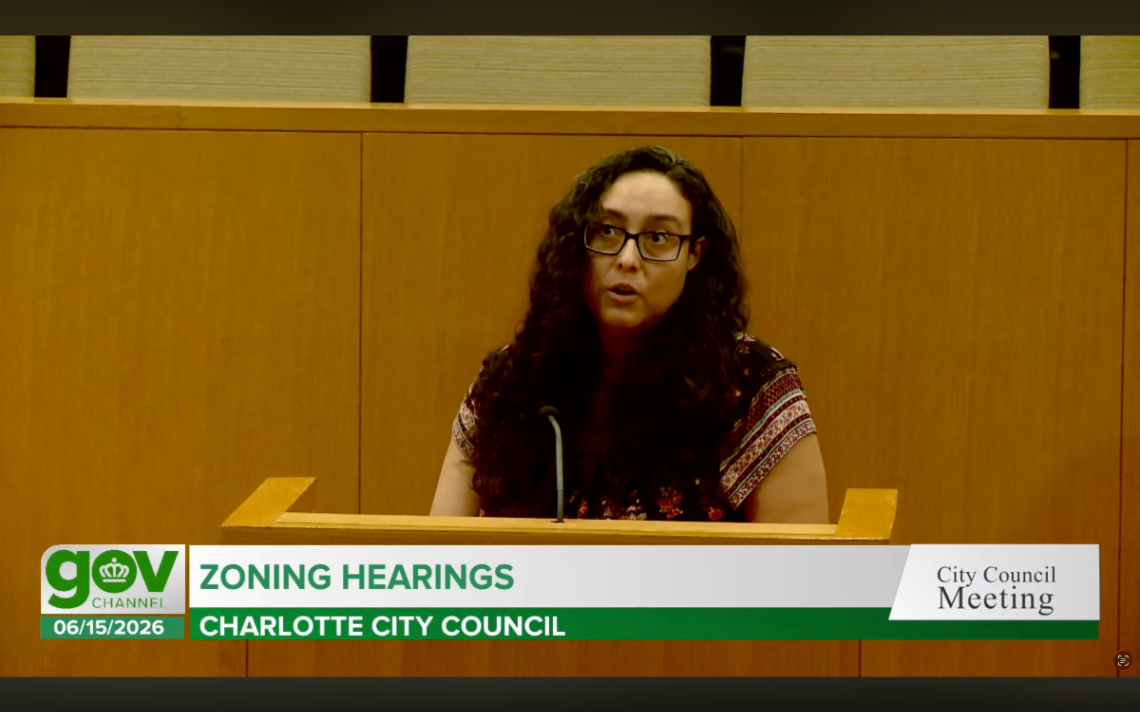
A resident addresses city council members to voice neighborhood concerns regarding road connectivity and increased traffic impacts.
Photo Credit: CIty of Charlotte/YouTube
The meeting highlighted broader ongoing debates over how Charlotte balances housing development with neighborhood preservation as growth continues across the city.
Council deliberations are expected to continue as officials evaluate additional traffic mitigation measures and alternative street extensions ahead of future voting cycles.
To add to or correct any information in this report, please contact Victoria Osborne at victoria.o@lead4earth.org.
Thumbnail Photo Credit: CIty of Charlotte/YouTube
0
0

Comments