(SAN FRANCISCO, CA.)- The Board of Supervisors meeting last Tuesday touched on affordable housing, further attempts to meet climate goals, and the call for support of the Fillmore district.
Proposition I, the 2020 real estate transfer tax passed by voters, was a heavily commented on item by the public.
SOMCAN and Community Land Trusts, District 6 representative Teresa Dulalas was one of many that urged the Board to oppose any efforts to repeal the tax. She cited that it is “voter mandated funding that supports housing stability programs in San Francisco”, including “emergency rental assistance, small sites acquisition, affordable housing preservation”. She went on to express that these programs “are lifelines” and that actions such as cutting funding “do not solve the housing crisis, but increase displacement and homelessness, and widen the economic divide in San Francisco”.
As affordable housing becomes an increasing struggle for many San Franciscans, measures such as Prop I are sometimes one of the few forms of protections residents have.
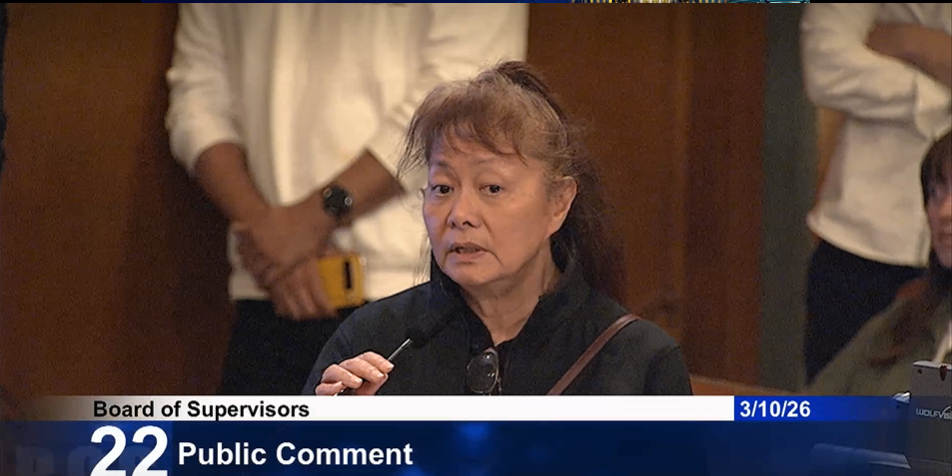
Photo Credit: YouTube
The complexities of balancing community interests with climate goals was also a topic of conversation.
A resolution was introduced “to approve and authorize a grant to have a permanent easement on SFPUC’s San Francisco Public Utility commissions property…for the purpose of replacing and relocating SFPUC’s existing solids treatment facilities at its southeast water pollution control plant with more reliable and efficient modern technologies and facilities at no cost”. The purpose of this is to “[deliver] an increased natural gas supply to SFPUC’s existing southeast water pollution control plant and its new biosolids digester facilities”.
Supervisor Fielder opposed the resolution, stating that she understands that it is attempting to help “meet our climate goals”, but that “in order to make this regenerative energy work, the plant requires an input of more natural gas”.
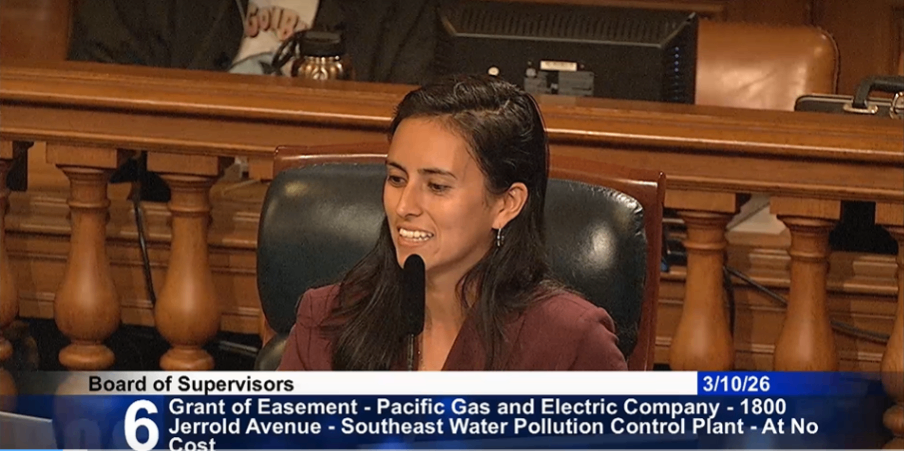
Photo Credit: YouTube
The Policy and Government Affairs Manager of the SFPUC, Jeremy Spitz, responded to this concern by explaining that the reason for the additional natural gas is that the company has chosen to “move away from its cogeneration process, where the biogas the process creates is used to create electricity, which then is fed back in to create generate heat”. SFPUC’s separation from the cogeneration process is due to it having detrimental “environmental justice impacts on the community nearby”.
In the end, the resolution was passed, but remains representative of the city’s attempts to toe the line between pushing the city forward in terms of sustainability alongside ensuring the livelihoods of community members.
Finally, the Ella Hill Hutch Community Center has been brought back to the forefront after facing closure as far back as August 2025.
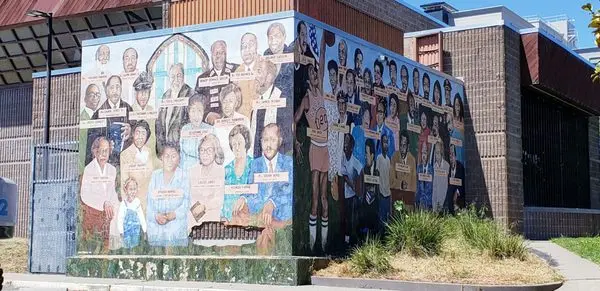
Photo Credit: MapQuest
Community member Randall Evans was one to speak on this issue, bringing up how “4,700 Black people were ‘erased’ from the Fillmore area, with 883 black businesses taken and 2,500 Victorian houses knocked down”. He added that “simultaneously, the city was given $50 million for the redevelopment of that area”, which they have not significantly invested in thus far.
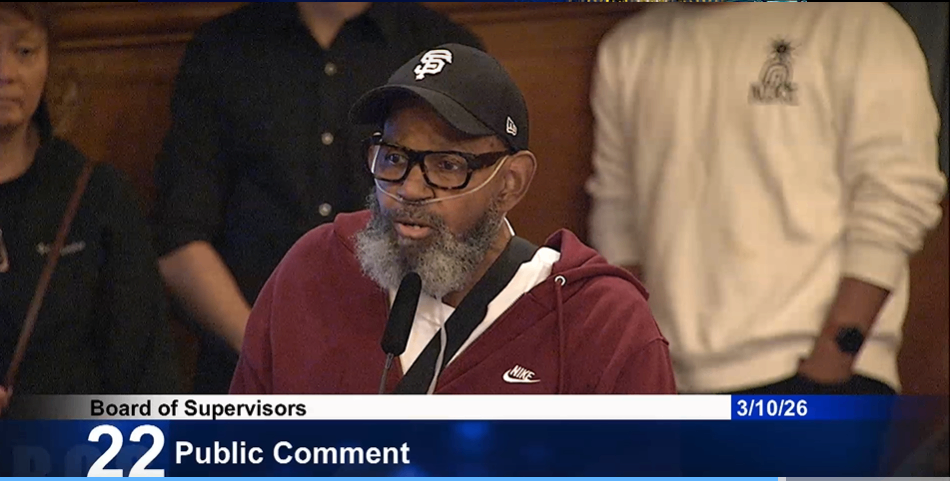
Photo Credit: YouTube
The community center is a staple in the Western Addition/Fillmore District of San Francisco, providing support, resources, and academic programming to hundreds of youths and their families in that area. As another unidentified speaker mentioned, the Fillmore was the first site of “Black removal” in the city and the epicenter of the city’s history of redlining. It is a vital necessity, as Evans and the other speaker exemplified, to direct attention to these areas and ensure they have the proper backing for redevelopment.
Submit comments and story ideas to Enya Niebergall at enya.n@lead4earth.org.
1
0

Comments