(CHARLOTTE, NC.) – American Airlines (AA) and Charlotte Douglas International Airport (CLT) have agreed to extend their current Airline Use and Lease Agreement for up to one year, allowing both parties to continue negotiations on a long-term contract that will determine airport operations, expansion planning, and financial arrangements at one of the busiest airports in the United States.
The current lease agreement was set to expire on June 30.
Under the extension, all existing terms will remain in place while the City of Charlotte, Charlotte Douglas International Airport leadership, and American Airlines continue discussions on a future framework governing the airline’s dominant hub operations at CLT.
Charlotte Douglas serves as American Airlines’ second-largest hub, with the carrier operating approximately 90% of all passenger flights at the airport. That concentration makes the lease agreement central to airport funding, capital investment decisions, and regional economic development.
According to the North Carolina Department of Transportation’s Aviation Division in its State of Aviation Report, Charlotte Douglas International Airport generates tens of billions of dollars in annual regional economic impact and supports more than 150,000 jobs across North Carolina
.
Passenger demand remains a major factor in negotiations.
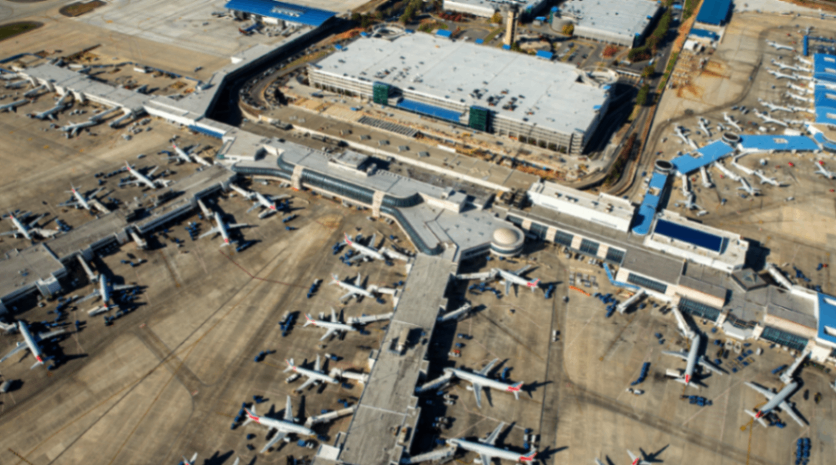
An aerial view captures the sprawling terminal concourses at Charlotte Douglas International Airport, where American Airlines operates its dominant hub.
Photo Credit: Charlotte Douglas International Airport
According to the Federal Aviation Administration’s CY 2024 Commercial Service Enplanements report, Charlotte Douglas International Airport remains among the busiest airports in the United States based on passenger boardings (enplanements), ranking within the top tier of large hub airports nationwide by total passenger volume.
Airport officials said the lease extension ensures operational stability while allowing ongoing capital projects to continue without disruption. CLT is currently undergoing multiple expansion efforts aimed at increasing capacity and modernizing facilities to accommodate long-term growth.
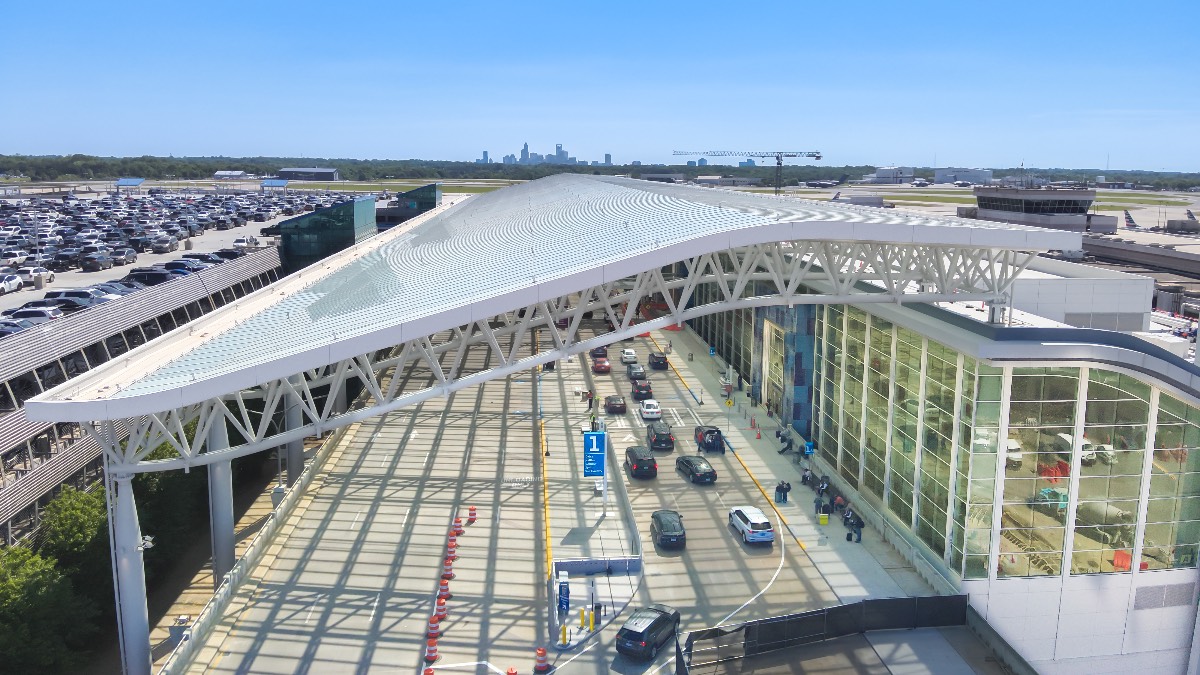
The airport's modern terminal curbside canopy highlights ongoing infrastructure upgrades designed to handle growing passenger volumes.
Photo Credit: Charlotte Douglas International Airport
Broader governance and infrastructure pressures seen in other cities reflect similar challenges.
In OpGov.News reporting authored by Kristin Hassel, Minneapolis officials examined long-term administrative oversight and structural decision-making in “Minneapolis City Council Effectively Pauses CCS Nomination Reconsideration Cycle.” The report highlighted how municipal governments are increasingly reassessing long-term governance frameworks under public scrutiny.
In another OpGov.News report authored by Robert MacMahon, Auburn officials addressed infrastructure safety concerns and rising traffic fatalities in “Amid Rising Traffic Fatalities, ‘Paint is Not Protection.’” The article noted how residents and city leaders are debating whether current roadway safety measures are sufficient to address long-term transportation risks.
While the topics differ, both reports reflect broader themes of infrastructure planning, accountability, and long-term capital investment, issues that also appear in major airport lease negotiations, such as the one between Charlotte Douglas and American Airlines.
American Airlines has reported approximately $4 billion in capital investment into Charlotte Douglas over the past decade, including terminal improvements, gate expansions, and operational upgrades.
The airline has also stated that its Charlotte hub supports more than 150,000 jobs statewide and contributes significantly to North Carolina’s economic output.
The lease agreement governs key operational areas, including gate assignments, revenue-sharing structures, maintenance responsibilities, and capital project funding.
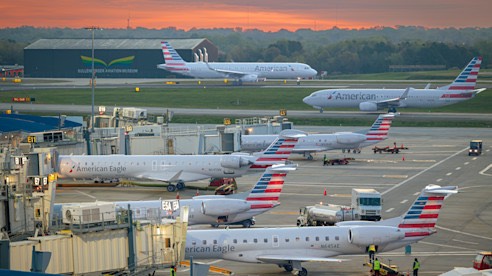
Mainline American Airlines and regional American Eagle aircraft fill the gates and taxiways near the Sullenberger Aviation Museum.
Photo Credit: Charlotte Douglas International Airport
Labor concerns have also emerged during negotiations, with worker advocacy groups raising questions about staffing levels, subcontracted labor conditions, and wage structures at high-volume hub airports such as Charlotte Douglas.
City officials are expected to continue negotiations with American Airlines over the coming months as both sides work toward a long-term agreement that will define operational control, investment responsibilities, and future growth capacity at CLT.
To add to or correct any information in this report, please contact me at victoria.l@lead4earth.org.
Thumbnail Photo Credit: American Airlines Newsroom
0
0

Comments