(PLEASANTON, CA) - Pleasanton’s City Council meeting on Apr. 21, 2026 highlighted community safety issues in regards to the Wireless Facilities Ordinance (WFO) amendment.
A WFO is a local law adopted by cities or counties that manages how and where wireless technology and equipment can be used.
Infrastructure under WFOs include cell towers, small cell antennas, and other equipment used by major telecommunications carriers like Verizon or AT&T.
One of the biggest factors that contribute to how WFOs can be installed is public safety and compliance.
Pleasanton’s ordinance specifically governs macro facilities (large cell towers or rooftop installations), small wireless facilities (antennas on streetlights, utility poles, etc.) and modifications to existing cell sites.
All wireless facilities in Pleasanton need to adhere to safety standards regulated by the Federal Communications Commission (FCC). FCC rules include the regulation of radiofrequency exposure, equipment energy usage, and testing certification.
The City Council meeting introduced a resolution to amend the 18.110 Pleasanton Municipal Code.
Honing in on coverage gaps for residents, reviewers had discovered that a significant contributor to the wireless coverage gap was the city's wireless ordinance itself.
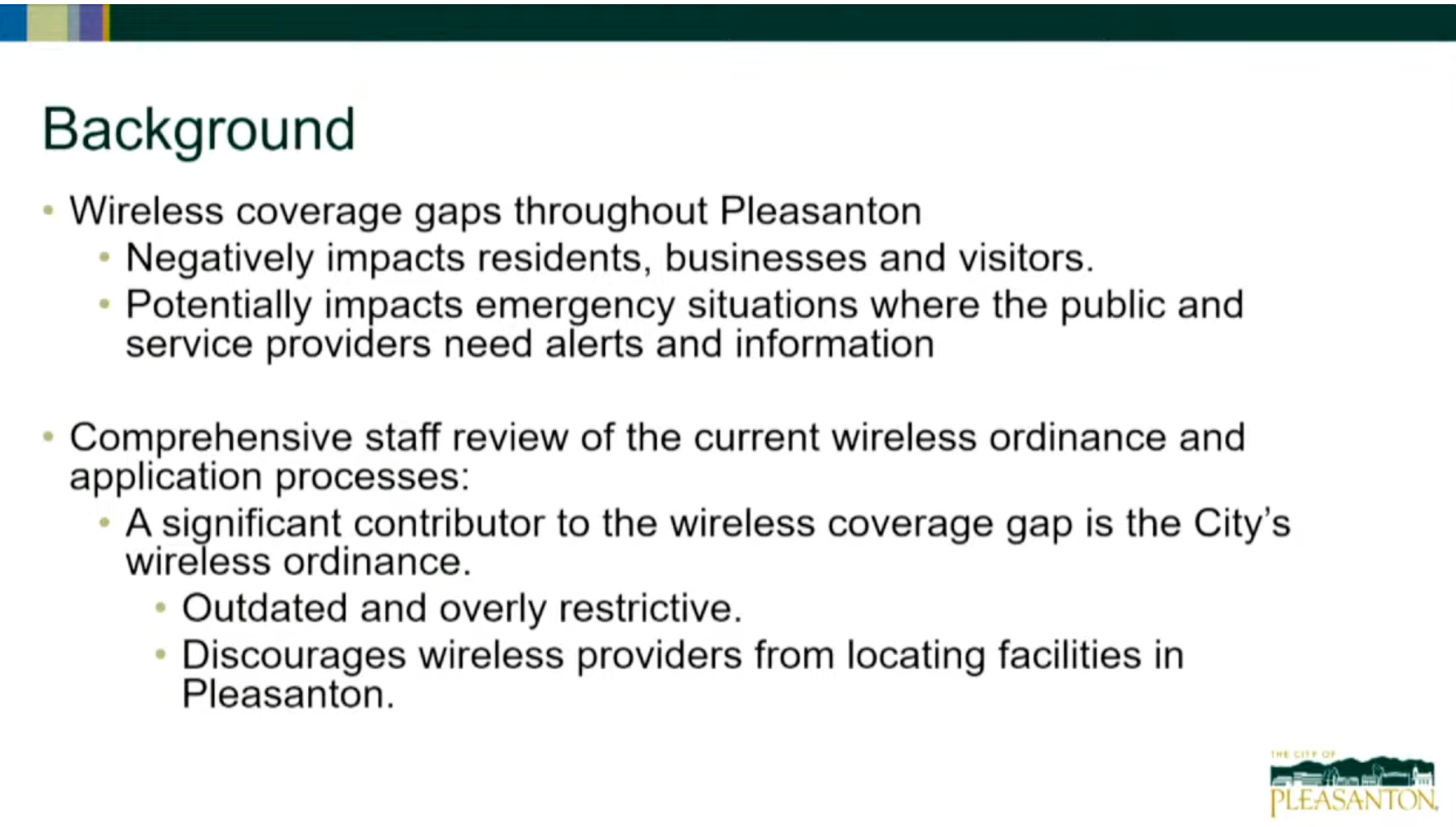
Photo credit: Youtube / City of Pleasanton, Background
“Proposing a new wireless ordinance which is basically a repeal and [replacement] of Pleasanton’s municipal code chapter 18.110- three different wireless policy documents which you have before you, one for large or macro wireless facilities, one for small wireless facilities and one covering modifications to existing facilities,” a reviewer said.
The three policy documents were then discussed.
Macro facilities typically cover a radius of 1-3 miles depending on terrain and other factors.
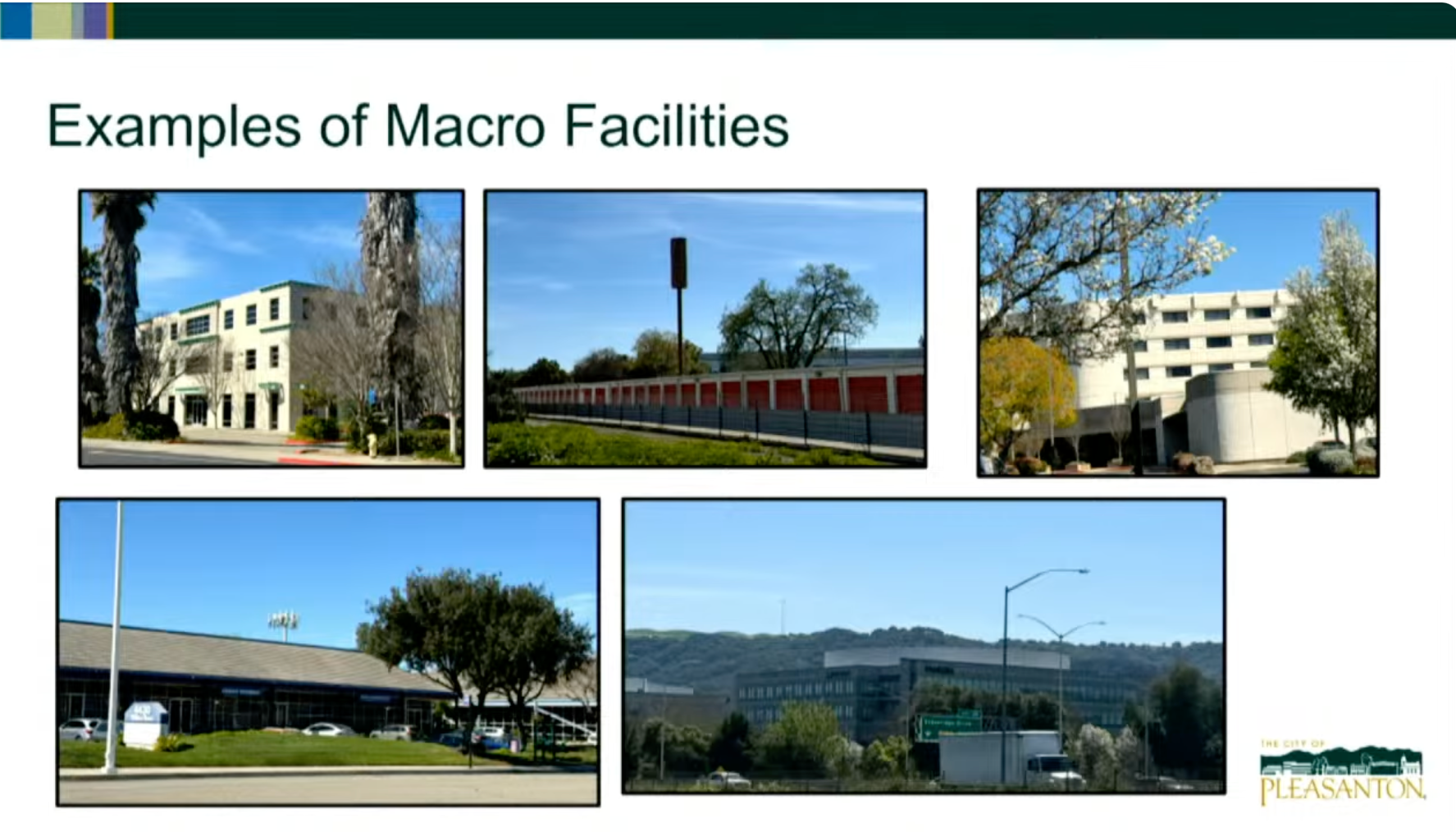
Photo credit: YouTube / City of Pleasanton, macro facilities
Small wireless facilities usually have a much smaller radius, ranging from 100-1000 feet, and can be attached to streetlights and utility poles.
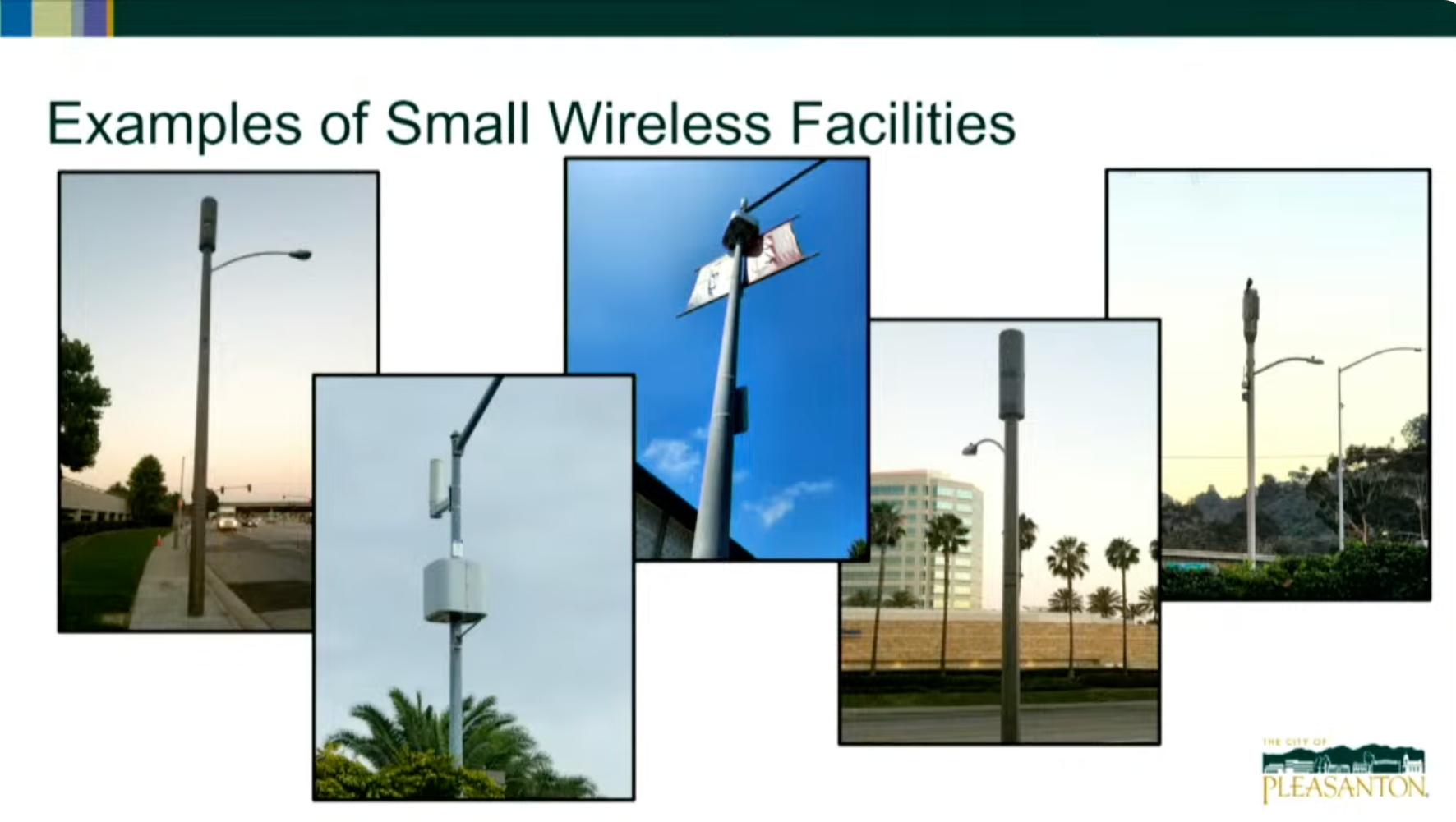
Photo credit: YouTube / City of Pleasanton, small wireless facilities
The third document focused on modifications to existing facilities, and is regulated by section 6409(a) of the Federal Spectrum Act.
According to T-Mobile, the act is for the purpose of “delivering better service faster by requiring local governments to review and approve applications for site improvements within a 60-day time limit.”
Staff then proposed important criteria for establishing facilities, which includes standards related to zoning, location, design, and aesthetic.
They went back to content discussed by the Planning Commission on Mar. 25, 2026, in which time-related policies for these three documents were discussed.
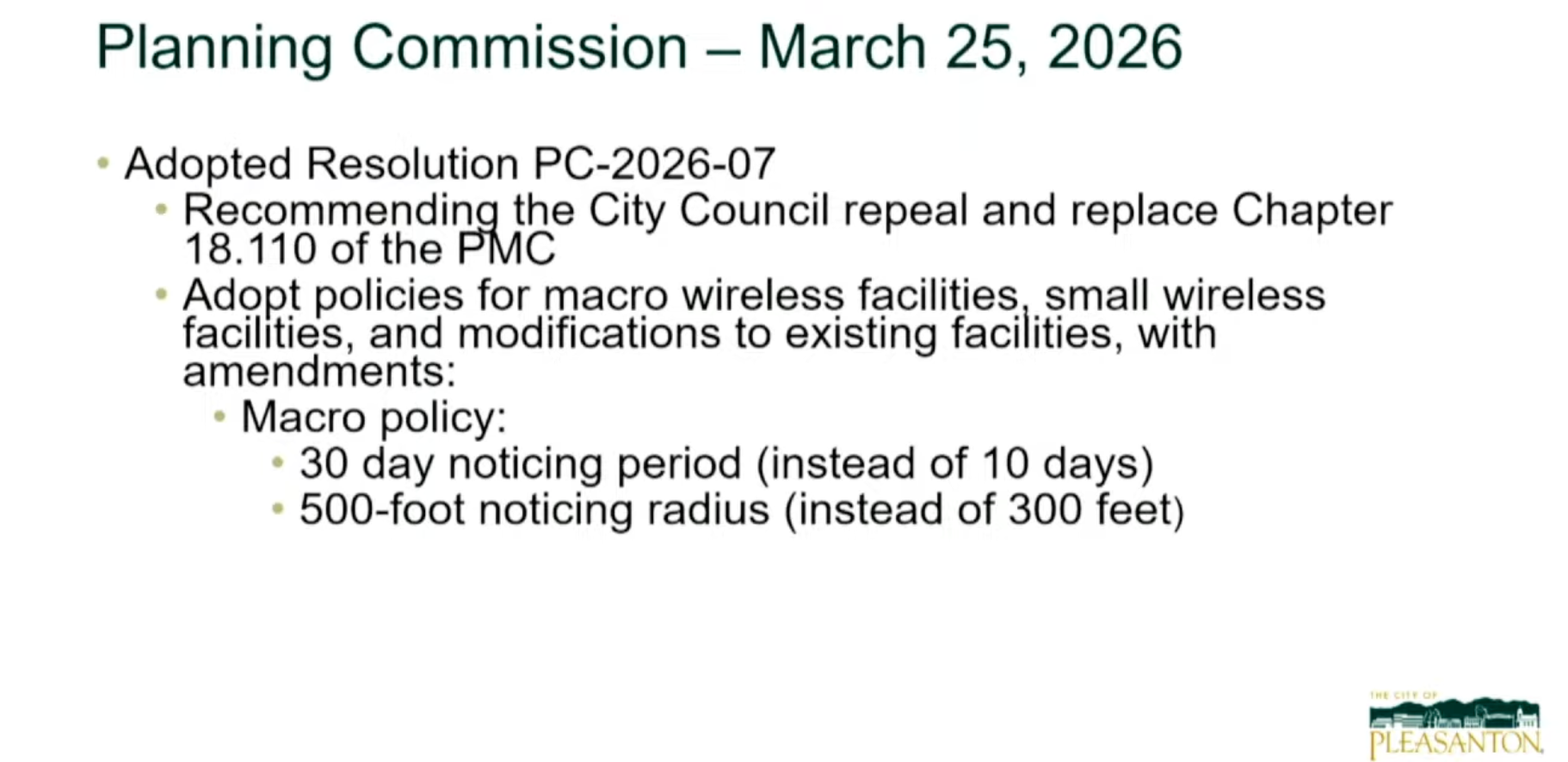
Photo credit: Photo credit: YouTube / City of Pleasanton, Planning Commission information
The overall recommendation by staff was to adopt a resolution adopting three new policies related to applications for wireless facilities and adopt a resolution updating the master fee schedule by adding wireless facility fees.
According to staff, it's important to note that the amendments don’t stem from noncompliance with standards, but rather from the fact that it hinders carriers from coming in because there are multiple areas in which facilities cannot be added.
Every locality is different, with some communities inviting facility addition and others wanting to restrict it. Ultimately, as the wireless landscape changes and technology itself evolves, the implementation of new facilities and how it impacts communities is an important consideration of this issue.
To add to or correct any information in this report, please email me at yashi.s@lead4earth.org or leave a comment below.
0
0

Comments