(CHARLOTTE, N.C.) – Charlotte city leaders say the city’s rapid growth will require major investments in transportation, housing protections, and workforce development, following a two-day strategic session focused on long-term priorities and infrastructure funding.
Charlotte City Council members reviewed plans tied to a newly approved one-cent mobility sales tax expected to generate roughly $20 billion over the coming decades. Officials say the funding could significantly reshape how residents move around the city, but council members emphasized that transparency, trust, and careful planning will determine whether those investments benefit all communities.
Former Charlotte Mayor Harvey Gantt highlighted the scale of the initiative and its potential economic impact during the meeting.
“The one-cent tax that we just passed will bring about, close to, 20 billion dollars in expenditures over the next upcoming decades. So the impact on the economy of Charlotte will be substantial.”
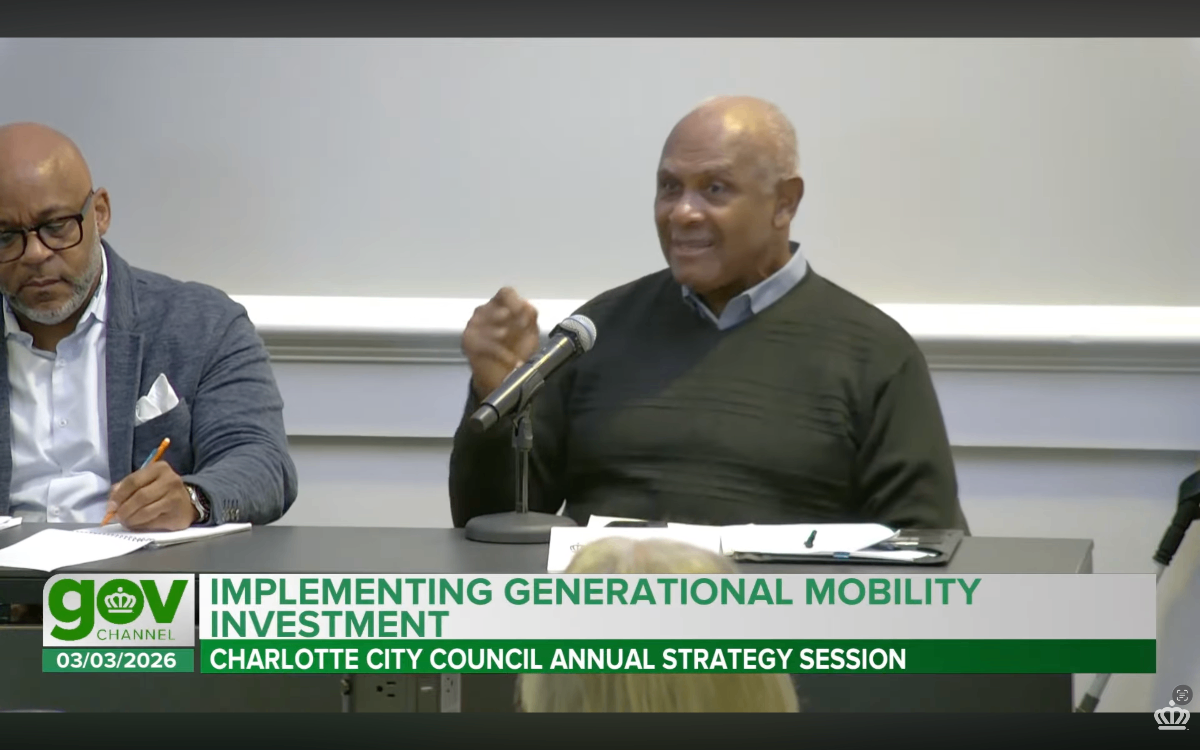
Former mayor Harvey Gantt speaks about the economic impact of the newly approved one-cent mobility tax during the council’s annual strategic planning meeting.
(Photo Credit: City of Charlotte/YouTube)
City staff told council members that the long-term funding represents a rare opportunity to expand transit, upgrade roads, and strengthen infrastructure while Charlotte continues to grow as one of the nation’s fastest-expanding metropolitan areas.
The strategic session also built on themes discussed in previous OpGov.ai coverage. In Charlotte Confronts Internal Trust Issues While Debating Public Safety, Transit Shift and I-77 Expansion, officials acknowledged the need for stronger internal communication and clearer public messaging as the city navigates major policy decisions.
Transportation planning and mobility investments
Transportation and mobility planning dominated much of the council discussion. City leaders reviewed the transition of the Charlotte Area Transit System (CATS) from a city department into an independent authority. The transition must be completed by July 1, 2026, through a master agreement between Charlotte and regional partners.
Council members said the shift could strengthen governance and allow the transit system to expand as additional rail and bus projects move forward.
Officials also discussed the city’s Strategic Investment Area program, which directs infrastructure spending toward historically underserved neighborhoods. Early projects in Far East Harrisburg and Arrowood have helped accelerate construction timelines while connecting small businesses to city contracting opportunities.
City leaders said projects in those areas are expected to be either completed or under construction by the end of 2026, with plans to expand the program to 22 neighborhoods across Charlotte.
Vision Zero and community safety
Public safety and street design were also central topics. Charlotte adopted its Vision Zero initiative in 2019, aiming to eliminate traffic deaths and serious injuries on city roads.
Transportation officials told council members that approximately 80 percent of serious crashes occur on only about 13 percent of Charlotte’s streets. As a result, the city is prioritizing safety upgrades along those corridors.
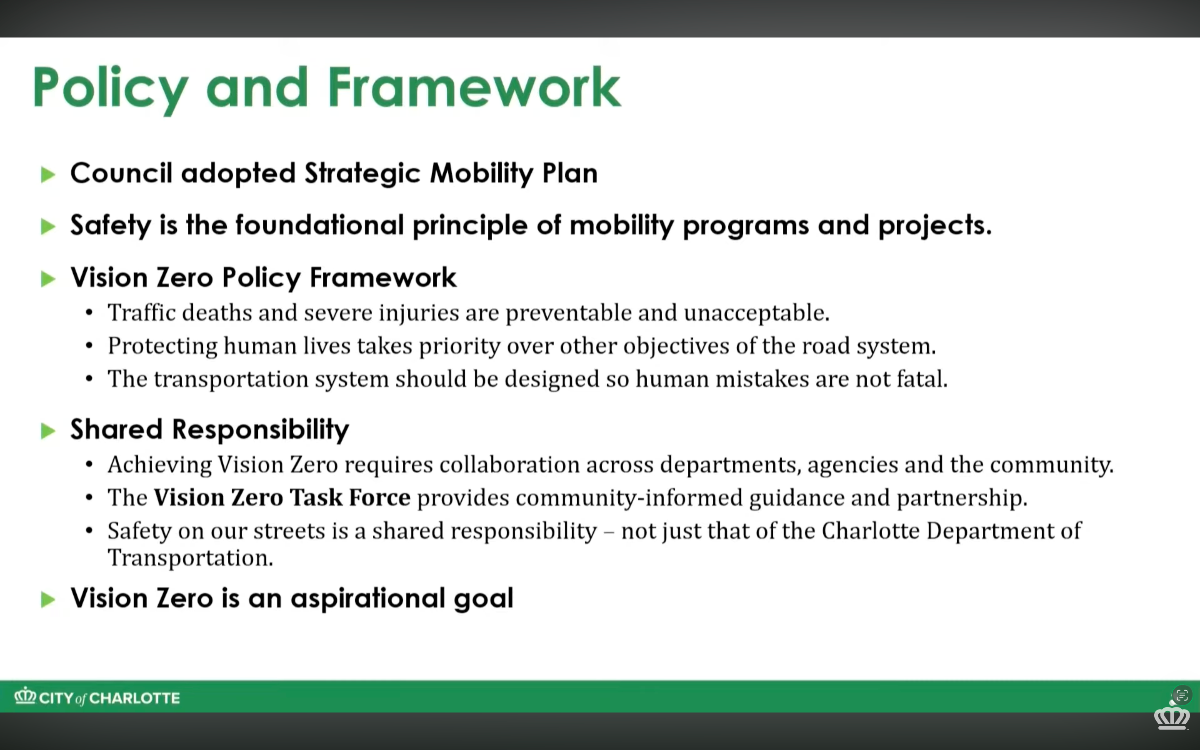
City officials present the Strategic Mobility Plan and Vision Zero safety framework during the annual council strategy session, outlining priorities for safer streets, coordinated planning, and long-term transportation investments.
(Photo Credit: City of Charlotte/YouTube)
Funding from a $20 million bond will support improvements such as upgraded street lighting, pedestrian crossings, traffic calming measures, and safer school zones.
Cities nationwide face similar safety concerns. Data from the National Highway Traffic Safety Administration shows that 39,345 people died in traffic crashes in 2024, underscoring why cities are investing in programs like Vision Zero to reduce roadway fatalities.
Community engagement around safety issues has become increasingly visible in local government meetings across the country. OpGov.news’s article by Aggressive Dogs, Graffiti Issues Rise at Public Safety Meeting highlighted residents presenting evidence of neighborhood safety concerns directly to officials in Atlanta, demonstrating how public participation continues to shape policy discussions.
Workforce development and housing affordability
Charlotte leaders also introduced a workforce initiative known as “Skill to Build,” designed to prepare residents and local contractors for upcoming infrastructure projects funded through mobility investments.
The program will distribute two workforce development grants totaling $1.2 million. The funding is intended to support construction training programs, internships, and contractor readiness programs so local workers and minority-owned businesses can compete for city projects.
Housing affordability remained a key concern throughout the discussion. Council members said the city must ensure that new development near transit corridors does not unintentionally displace long-time residents.
Charlotte has already taken steps to address the issue through a $100 million housing bond approved by voters, with about $90 million dedicated to anti-displacement strategies and affordable housing preservation.
Research from the Urban Institute shows that while transit-oriented development can improve access to jobs and services, it can also increase housing costs if affordability protections are not implemented alongside transit expansion.
Council member Lawana Mayfield reflected on the city’s broader goals and guiding principles during the meeting.
“The current City of Charlotte vision statement, Charlotte is America’s Queen City, opening her arms to a diverse and inclusive community of residents, businesses, and visitors alike. Here you will find a safe, family-oriented city, where people work together to help everyone thrive.”
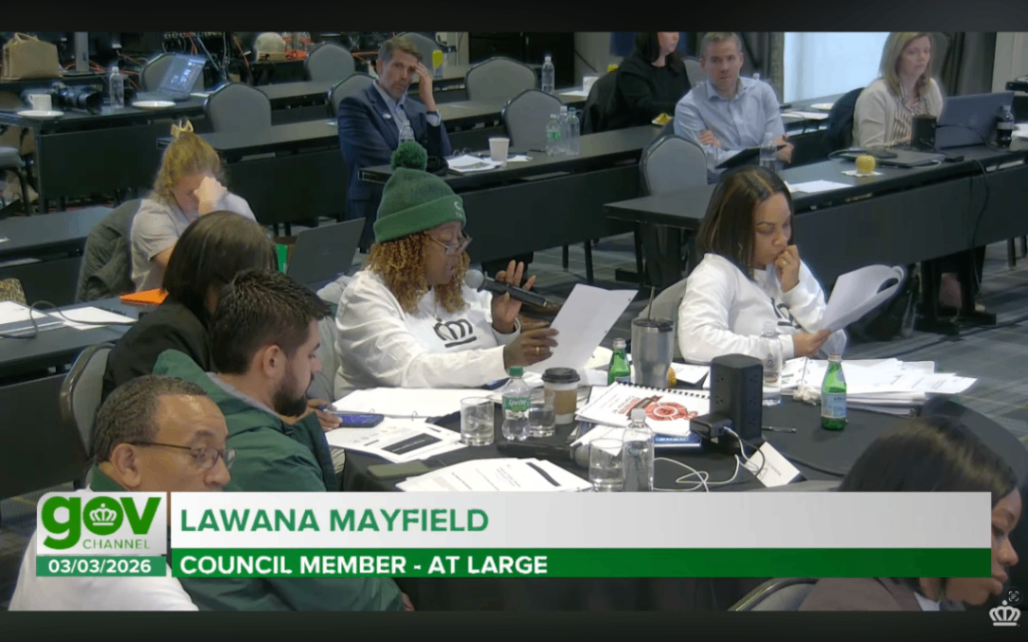
Council Member At-Large Lawana Mayfield addresses fellow officials during the strategy session, discussing the city’s vision of an inclusive community where residents, businesses, and visitors can thrive.
(Photo Credit: City of Charlotte/YouTube)
Strategic priorities moving forward
Council members concluded the session by reviewing Charlotte’s five strategic priorities: well-managed government, great neighborhoods, safe communities, transportation planning, and workforce development.
Several council members called for clearer performance metrics so residents can better track the progress of major initiatives. Others recommended expanding the strategic framework to include sustainability and climate resilience as Charlotte continues to grow.
Operational improvements were also discussed, including earlier distribution of council meeting materials and the formation of a committee to review council decorum and procedural rules.
The session underscored a broader challenge facing Charlotte leaders: balancing rapid population growth with investments that maintain safety, affordability and equitable opportunity across the city.
The full council meeting transcript and materials are available on OpGov.news at Charlotte City Council Meeting.
You can reach Victoria Osborne at victoria.o@lead4earth.org.
(Thumbnail Photo Credit: City of Charlotte/YouTube)
0
0

Comments