(CHARLOTTE, NC.) – Charlotte City Council members, city staff, developers and residents discussed proposed updates to the city’s affordable housing funding policy during a July 2026 working conversation meeting focused on a potential $125 million housing bond and strategies to expand housing opportunities.
The discussion focused on gathering community and developer feedback for the city’s 2026 affordable housing funding policy update, including housing production, preservation, homeownership opportunities and anti-displacement efforts.
City officials said the proposed $125 million affordable housing bond would build on previous investments made through the city’s affordable housing programs.
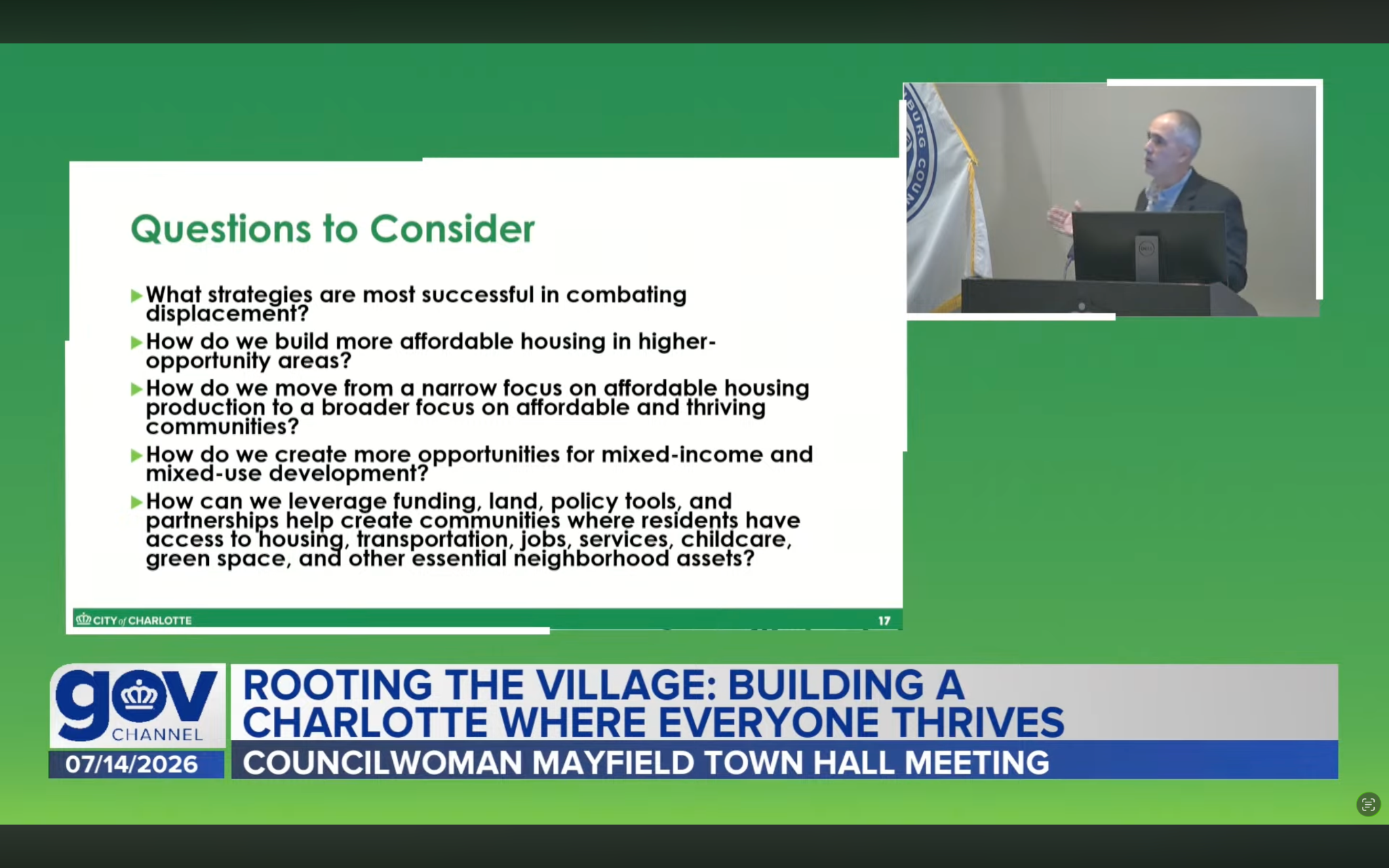
A panel of speakers leads a breakout discussion regarding development realities, workforce housing, and accountability measures for future projects.
Photo Credit: City of Charlotte/YouTube
The previous $100 million bond cycle supported the creation of approximately 3,000 housing units, represented a historic investment in homeownership, and resulted in an average monthly rent savings of $412 for residents living in supported housing.
During the conversation, developers discussed challenges affecting affordable housing development, including construction costs, infrastructure requirements, and the difficulty of financing projects serving residents with lower incomes.
Developers said housing serving households below the area median income often requires public support through sources such as land assistance, tax incentives, or direct funding because development costs can exceed what residents can afford through rent payments.
Participants also discussed the impact of infrastructure requirements on housing projects. Developers raised concerns about issues including limited sewer and water access, stormwater infrastructure needs, and additional project requirements that can increase costs.
Permitting timelines was another topic raised during the discussion. Developers said civil permitting processes can take between nine and 12 months, which can delay projects and increase financing expenses.
The conversation also highlighted the need for additional deeply affordable housing options. Developers said housing serving households at 60% of area median income and below remains difficult to produce, while projects serving households at 30% AMI often require significant subsidy from the city’s Housing Trust Fund.
Senior housing was also identified as an area with continued demand, with participants discussing limited availability and long waiting periods for affordable units.
Officials said future housing policy decisions will also need to consider development processes and land-use planning.
Similar discussions about how development regulations impact future growth have taken place in other communities, including the recent “New City Land Development Code Passes Planning Board,” written by OpGov.news reporter Angela Underwood, discussion on land-use changes and development standards.
Community members also discussed ways to expand participation in affordable housing development and increase available resources.
Ada Esther proposed awarding additional application points to established developers who partner with emerging developers on Housing Trust Fund projects. She said emerging developers often face challenges gaining experience, securing financing, and building partnerships needed to complete affordable housing projects.
The meeting also included a discussion about increasing private-sector involvement in affordable housing efforts. Councilmember Mayfield shared a suggestion from breakout discussions that corporations and private organizations could help match city funding to expand available resources.
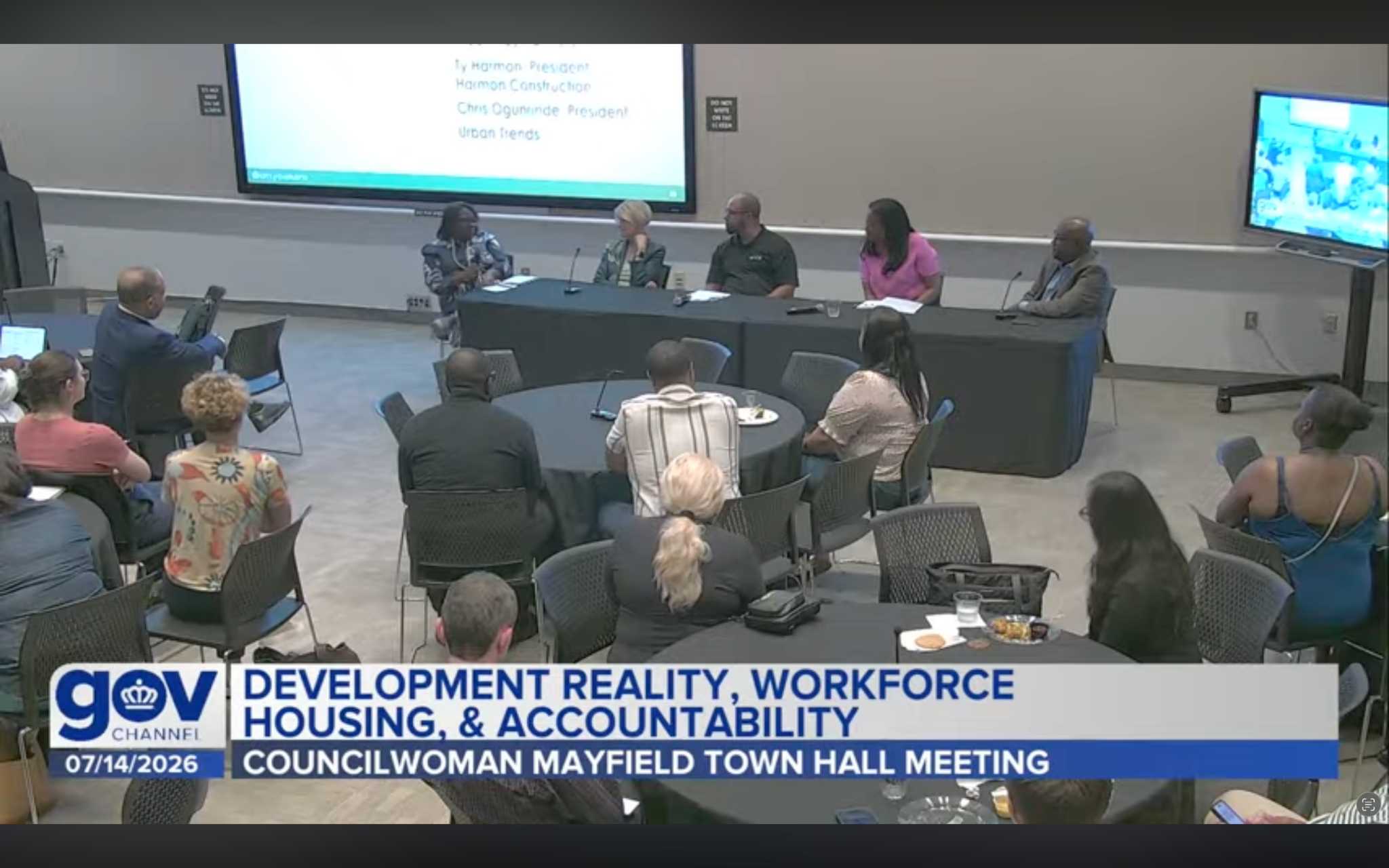
City staff present core strategic questions focused on combating displacement and leveraging resources to build thriving, mixed-income neighborhoods.
Photo Credit: City of Charlotte/YouTube
Participants noted that a previous effort to secure a $50 million private-sector contribution did not reach its target.
Residents following the meeting online also raised questions about broader infrastructure and investment priorities.
“Was I-77 tolls brought up?” one viewer asked during the YouTube livestream chat.
Another participant called for additional corporate investment targeted toward communities with greater housing needs.
“Bring in corporate dollars that could make up the percentage of federal Census tract dollars only to lower income areas to provide to affordable housing to District 6 & District 7,” the viewer wrote.
Developers also requested additional training on Housing Trust Fund tax credits, saying more guidance could help organizations better understand available financing options and application requirements.
Ralphen, who shared feedback from one breakout group, said developers expressed a need for more training on accessing Housing Trust Fund tax credits.
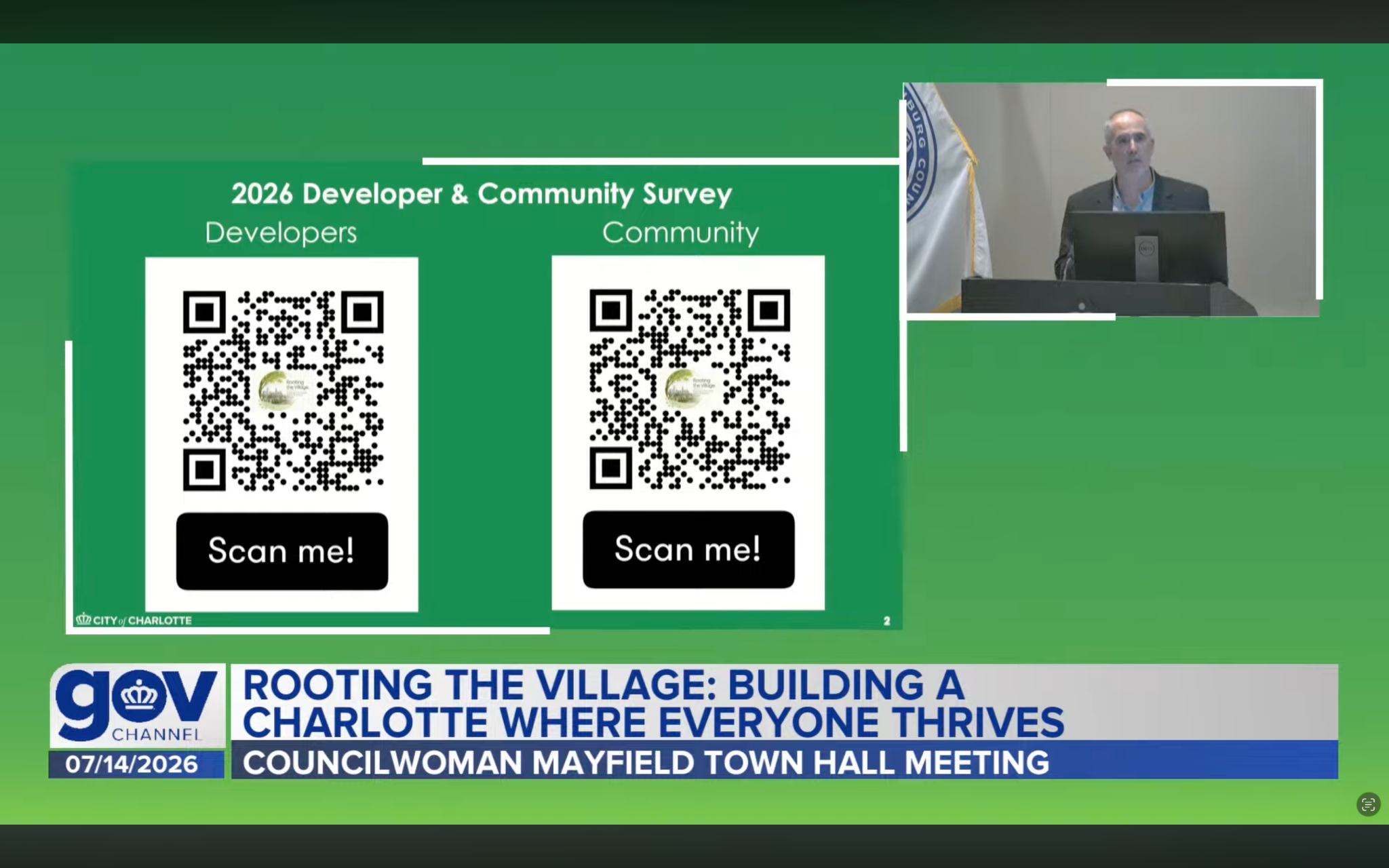
Interactive survey QR codes are displayed during the presentation to collect immediate policy feedback from participating developers and residents.
Photo Credit: City of Charlotte/YouTube
Another proposal discussed during the meeting focused on reducing the overall cost of living for residents.
Warren Wooten highlighted an idea to incorporate energy conservation, water conservation, and tree canopy restoration into housing projects to reduce utility expenses for residents and operating costs for developers.
The discussion followed broader community development conversations about how cities can create sustainable and connected neighborhoods, including efforts highlighted in “Summer Vibes Carry On at San Ramon’s Monthly Arts & Eats Event,” written by OpGov.news reporter Kathleen Parra, which examined community programming and neighborhood investment.
City staff said feedback gathered during the working conversation would be used to update recommendations for the 2026 affordable housing funding policy.
The Housing Committee is tentatively scheduled to review staff recommendations on July 27 before additional revisions and consideration by the full City Council.
To add to or correct any information in this report, please contact me at victoria.o@lead4earth.org.
Thumbnail Photo Credit: City of Charlotte/YouTube
0
0

Comments