(PENSACOLA) --- After nearly two years of meetings, public participation, and revisions, the Pensacola Planning Board approved the new Land Development Code (LDC).
Assistant Planning & Zoning Division Manager Greg Harding introduced the matter July 14, noting it addresses topics such as “zoning, development, regulations, parking, signage and more.”
“This update aims to reorganize the code to eliminate redundancies and internal conflicts,” Harding said of the project that began in 2024. “It’s going to clarify and consolidate language; it's going to streamline development.”
Inspire Placemaking Collective Principal Planner Patricia Tyjeski told Planning Board members the group was tasked with reorganizing, recommending, and implementing updates based on public and staff input.
First, reorganization.
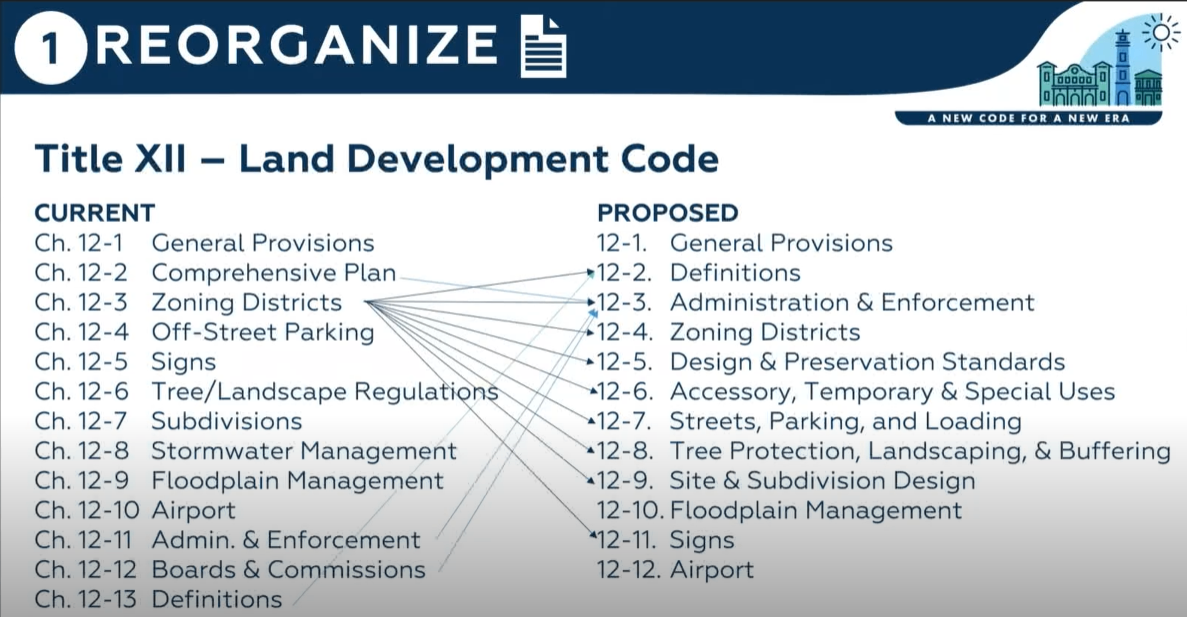
(Photo: Inspire Placemaking Collective presentation slide to the Pensacola Planning Board members, July 14)
“The code was pretty old,” Tyjeski said. “And you know, as it happens in every community that we have worked with, you start putting things that end up in the wrong places."
Creating a matrix was next, which included up to 549 comments from staff and the public, with “certain topics that just kept coming back again and again and again,” according to the principal planner.
Affordable housing, historic preservation, and sustainable infrastructure were the top three.
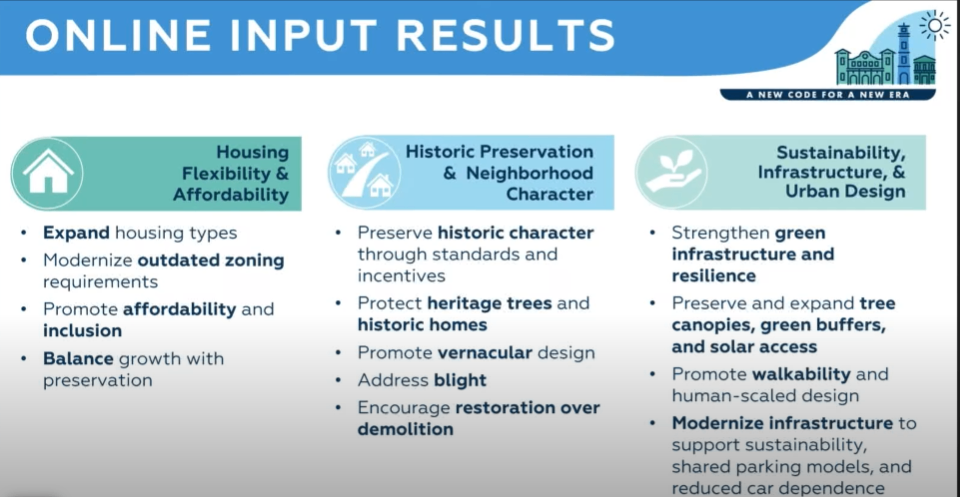
(Inspire Placemaking Collective presentation slide to the Pensacola Planning Board members, July 14)
After detailing each issue, board members spend the next two hours discussing the new LDC and state legislation, specifically allowing manufactured homes wherever single-family homes are permitted. Board member Matt Finn noted, “If the state statutes were to change, then it would be our responsibility to go back and revise the LDC."
"It just feels like something that is unnecessary for us to keep up with," Finn said.
According to Tyjeski, “if you don't put it in your code, you run the risk of staff making an interpretation that they shouldn't.” To avoid a state challenge, Tyjeski noted offcials should "put it in your table of uses.”
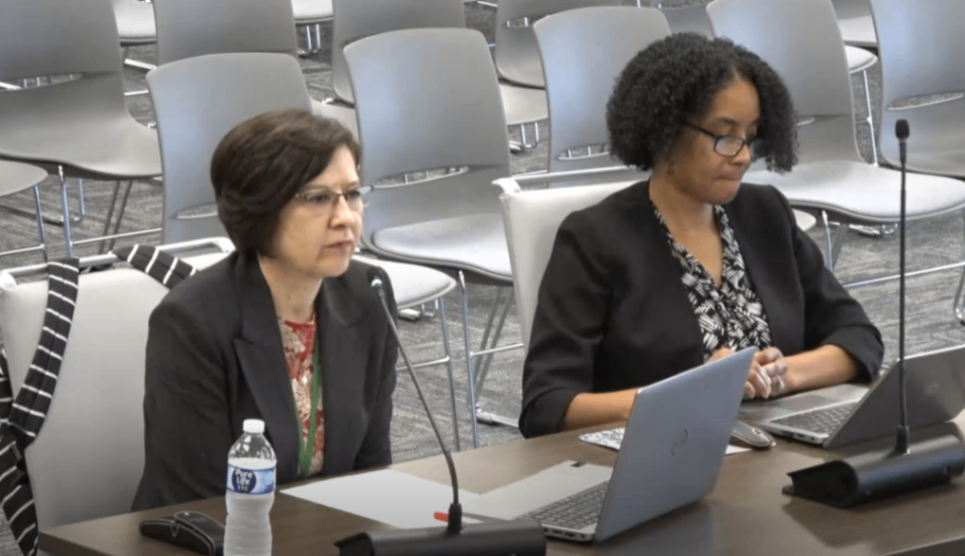
(Photo: Inspire Placemaking Collective Principal Planner Patricia Tyjeski, left, at the July 14 Planning Board meeting)
Board Member Bianca Villegas confirmed that while no one on the board was against mobile homes, it was important to clarify where they are permitted, specifically in historically preserved areas. Chair Paul Ritz noted that keeping up with state statutes is a constant, noting "this board suggests changes to the land development code on a regular basis.”
As for LDC language, “shall to should,” became an issue, according to Board Member Jordan Yee. According to Tyjeski, the terms vary based on different land-use development decisions, including bicycle parking.
“You do have a lot in your code that uses should, you know, currently,” Tyjeski. “So it's not like we're now introducing language that is not consistent with other parts of the code.”
The definition of “living” (landscaping) versus “non-living” (paving) materials within pervious areas also sparked a lengthy discussion, particularly in districts like the Gateway Redevelopment District.
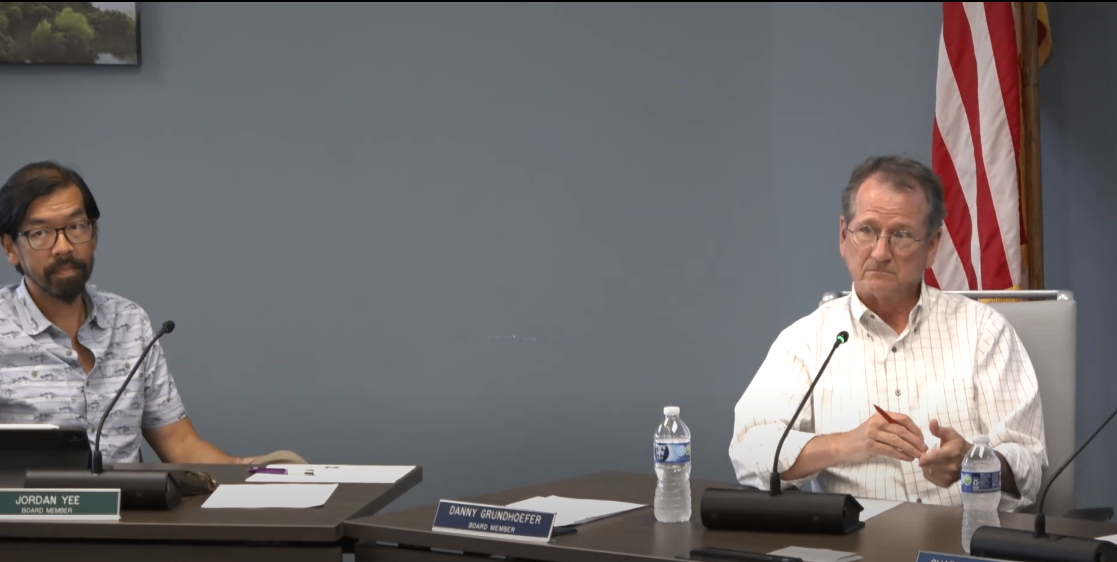
(Photo: Planning Board members Jordan Yee, left, Danny Grundhoefer, right, discussing the new Land Development Code)
Board member Danny Grundhoefer suggested increasing the percentage from 50% to 75%.
“So we don't end up with half the property that is supposed to be open, that's got sidewalks on it, or that's got a cover, a pool enclosure over it,” Grundhoefer said.
What became clear after discussing the “definition” of landscaping is that the new code requires greater attention to coverage.
“Under the old code, the landscape ordinance did not apply at all; it was completely exempt,” Harding said. “In this new code, it does apply; every district that was previously exempt from our landscape ordinance is now required to follow the landscape ordinance.”
Ultimately, the board approved a 50% living material requirement for pervious areas via a footnote in the lot coverage tables. Required landscaping for designated areas, including buffers and islands, is now composed entirely of living material.
Additionally, the board members approved increasing the LDC roof overhang allowance from 2 feet to 3 feet citywide. The new LDC now allows triplex and quadruplex units in medium-density residential districts and increases the replacement tree fee from $400 to $1500, as previously reported by OpGov.News.
The end of the two-and-a-half-hour-long meeting was left open, with board members noting that tree preservation and historic demolition need further attention regarding state guidelines. There was no public comment on the LDC code, and board members approved the new code, which will go to the city council for approval.
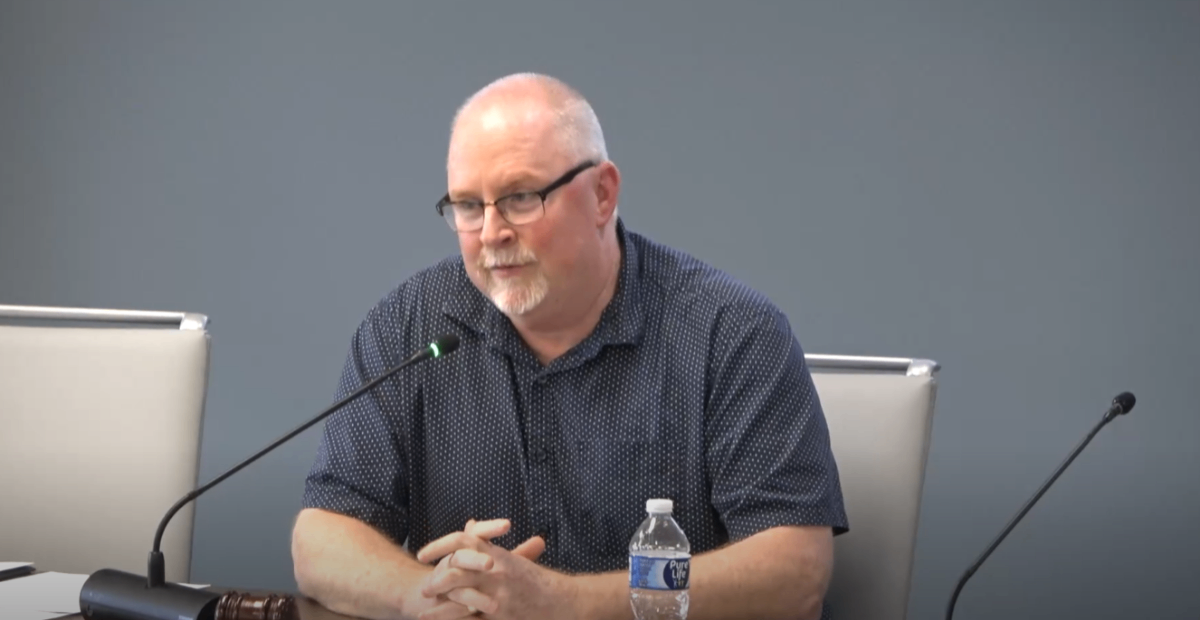
(Photo: Planning Board Chair Paul Ritz wrapping up the new Land Development Code approval)
“Thank you for all the effort that you've put in," Ritz said to Tyjeski. "We appreciate that you've accepted this task from the city and carried it this far.”
To review the LDC, the project website offers a draft of the updated LDC, along with community participation contributions and comments.
0
0

Comments