(CHARLOTTE, NC.) — Charlotte City Council members spent much of a special meeting on June 10 debating how to select the city’s next interim mayor before hearing from more than two dozen applicants seeking to fill the vacancy left by former Mayor Vi Lyles.
The meeting, originally scheduled as a candidate forum, began with an extended discussion over nomination procedures, interview formats, and whether Mayor Pro Tem James Mitchell, who is among the applicants, should participate in votes related to the selection process.
After nearly an hour of procedural debate, council members approved an amended process allowing each member to nominate up to three candidates.
The five candidates receiving the most support will advance to a separate interview session scheduled for June 18, with a final selection expected later in the month. Officials said the structure was intended to balance efficiency with broader deliberation, given the short timeline for filling the vacancy.
Councilmember Lorna Mayfield introduced the framework, arguing that a multi-stage process would allow for more thorough evaluation before a final decision.
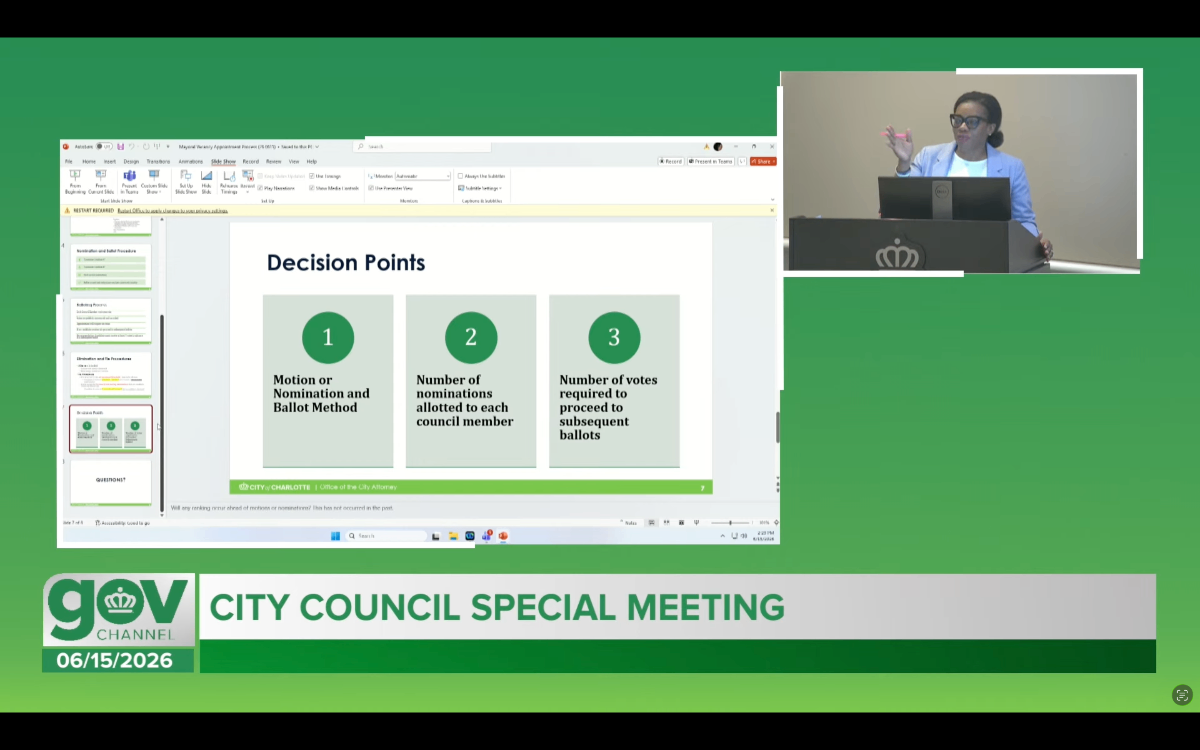
A speaker addresses the chamber during the council's intensive debate over restructuring the interim appointment framework.
Photo Credit: City of Charlotte/YouTube
Several members echoed concerns that a single-round vote could limit consideration of less publicly visible applicants who nevertheless bring relevant experience in city governance, budgeting, or community development.
The discussion also included repeated questions about Mitchell’s participation. City Attorney Patrick Baker advised that state law does not require recusal in such cases, citing previous instances where elected officials participated in similar decisions involving themselves.
Council ultimately allowed Mitchell to take part in the process, though some members raised concerns about public perception and transparency, particularly given the interim nature of the appointment.
The debate over procedural authority and municipal discretion echoes similar governance tensions playing out in other jurisdictions, where councils and governing boards have faced scrutiny over how internal rules shape public decision-making outcomes.
In one recent East Coast redevelopment dispute reported in “Dispute Emerges Over Legal Opinion on Asbury Park Casino Redevelopment Agreements,” municipal officials examined how far their authority extends in revisiting prior agreements tied to long-term redevelopment projects, raising broader questions about institutional flexibility and accountability in public governance.
Once the forum portion began, candidates emphasized priorities including affordable housing, transportation, public safety, economic mobility, and government transparency.
Several applicants framed their remarks around the need to stabilize leadership during the interim period while ensuring continuity in ongoing infrastructure and budget initiatives already underway across city departments.
Mitchell stressed continuity, pointing to recent council work and arguing his experience as mayor pro tem would allow him to lead immediately without a lengthy adjustment period. He also emphasized coordination with county and regional partners as a key priority for maintaining momentum on transportation and housing initiatives.
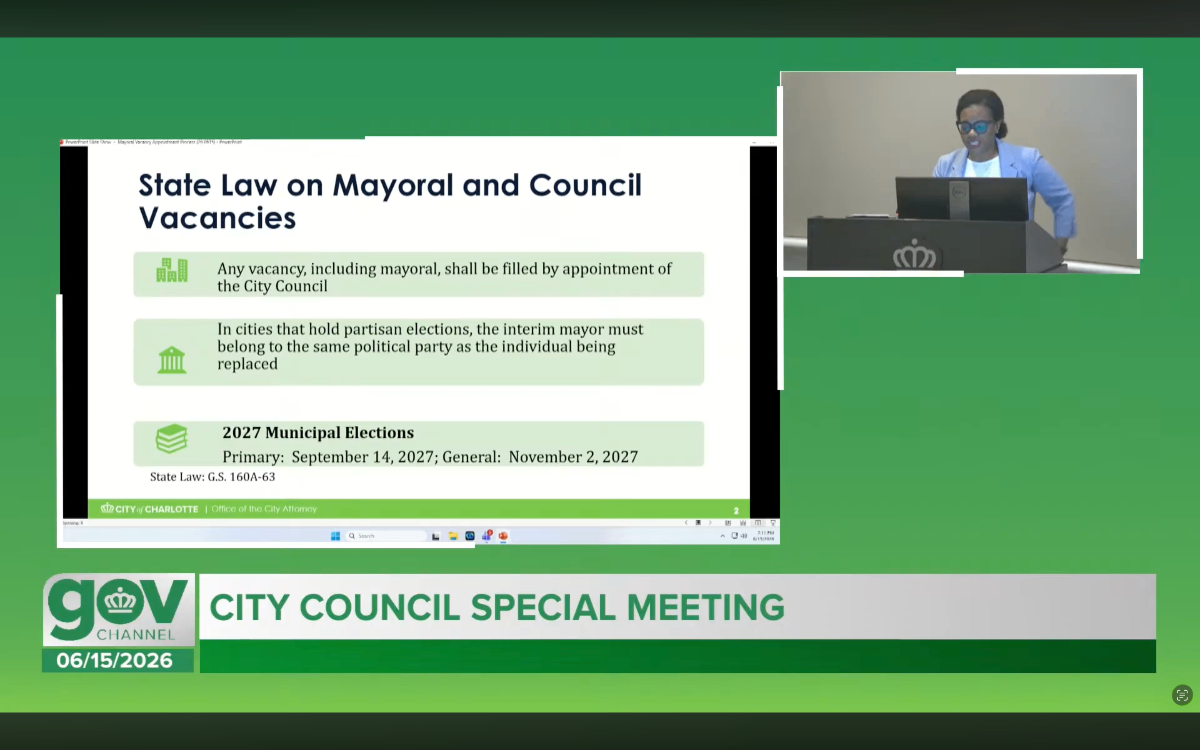
An official presentation slide details the specific North Carolina state laws governing mayoral and council vacancies.
Photo Credit: City of Charlotte/YouTube
Other candidates focused heavily on affordability pressures, transit expansion, and rising cost-of-living challenges, while several noted they were seeking only a temporary leadership role to guide the city until a permanent mayor is elected. Several applicants also called for stronger community engagement practices, suggesting more public-facing forums and increased transparency in council deliberations.
Public commentary, though limited in duration due to scheduling constraints, reflected similar themes.
Speakers urged council members to prioritize experience in crisis management, fiscal oversight, and intergovernmental coordination. Others encouraged the body to consider candidates outside of current political circles to bring a fresh perspective to city leadership.
Council members are expected to submit nominations by June 16, with interviews set for June 18 and a final vote later this month. Officials indicated that additional procedural guidance may be released ahead of the interview session to clarify scoring, questioning format, and deliberation structure.
Municipal infrastructure and governance decisions elsewhere have also recently drawn attention under very different circumstances.
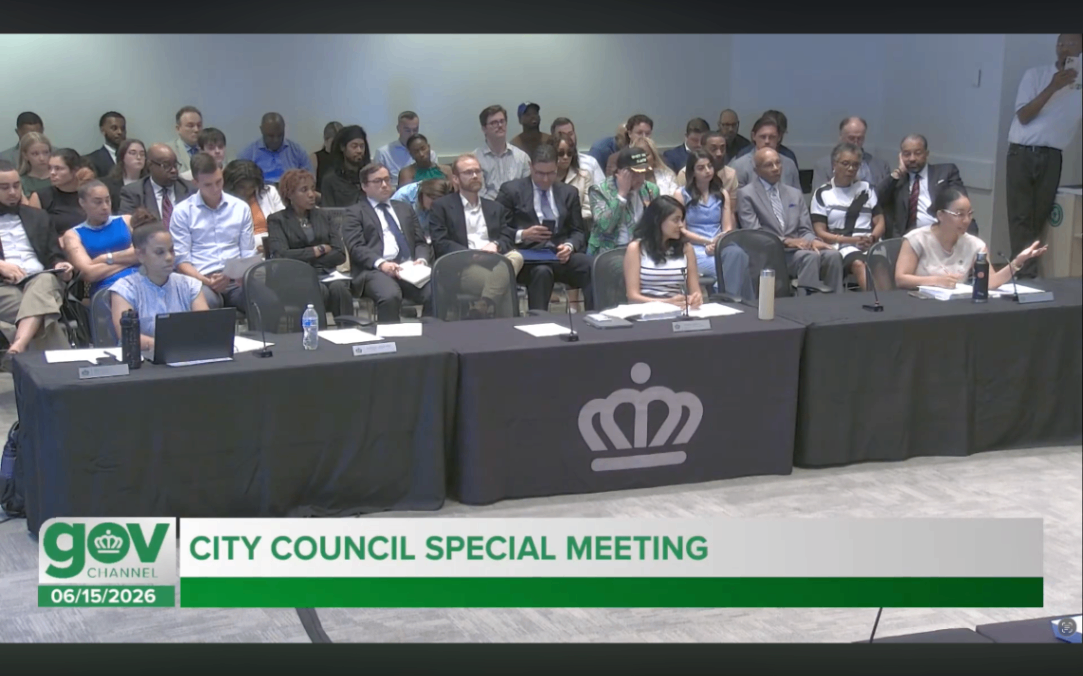
Candidates and attendees look on as applicants outline their strategic visions for Charlotte's infrastructure and budgeting priorities.
Photo Credit: City of Charlotte/YouTube
In Tracy, California, a catastrophic industrial fire documented in “Catastrophic Fire Wreaks Devastation Upon Medline’s Massive 1-Million-Square-Foot Distribution Center In Tracy” highlighted how large-scale emergency events can rapidly shift local government priorities toward response coordination and economic recovery planning, particularly when major employment centers are affected.
Council deliberations in Charlotte are expected to continue as officials move toward appointing an interim mayor ahead of the next municipal election cycle, with attention focused on balancing procedural fairness, public transparency, and the need for timely leadership continuity.
To add to or correct any information in this report, please contact Victoria Osborne at victoria.o@lead4earth.org.
Thumbnail Photo Credit: City of Charlotte/YouTube
0
0

Comments