(ASBURY PARK, NJ.) — A newly surfaced dispute is raising questions about whether Asbury Park officials misstated the findings of retired New Jersey Supreme Court Justice Lee A. Solomon in the City’s long‑standing redevelopment battle over the historic Casino building.
The Casino, a century‑old structure anchoring the southern end of the Asbury Park Boardwalk, is one of the city’s most recognizable historic landmarks and a central feature of the waterfront redevelopment zone.
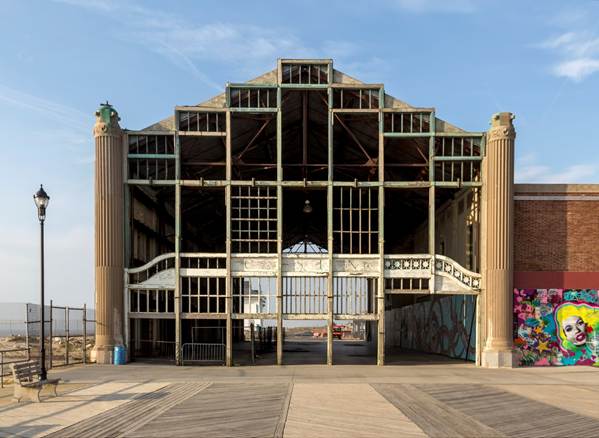
(The north side of the Casino, Asbury Park, New Jersey. Credit: commons.wikimedia.org.)
Documents provided to OpGov.news by attorney Thomas De Seno, who argued the matter before Solomon, directly contradict the City’s June 10 press release claiming the Justice concluded that reclaiming the Casino “is not a viable path under the existing agreements.”
According to De Seno’s letter to the City Council, Solomon’s April 23, 2026 opinion “ruled, without ambiguity” that the City retains the right to sue and retake the Casino if construction‑related obligations under the 2002 Redeveloper Agreement were not performed.

(Image: Attorney Thomas De Seno letter to the City Council. Credit, De Seno.)

Solomon’s written opinion—summarized in De Seno’s materials—states that remedies available to the City “may include repurchasing the Casino, seeking injunctive relief, suing to cure the default, terminating Asbury Partners’ rights in the Casino, and/or taking other actions permitted at law or in equity.” These remedies, Solomon noted, flow from the 2002 Redeveloper Agreement, which he affirmed remains the controlling contract for the Casino.

These remedies flow from the 2002 agreement, which Solomon confirms remains the controlling contract for the Casino.
A Tale of Two Interpretations
While Solomon outlined a clear set of potential remedies, the City’s June 10 statement focused instead on a May 28 addendum addressing the separate 2006 Dispute Resolution Agreement (DRA). (Find documents online.) In that announcement, the City asserted that the DRA “severely limits” its ability to reclaim ownership and concluded a take‑back is “not a viable path.”
"We appreciate Justice Solomon's thorough and independent review of these agreements and the clarity it provides regarding the City's legal options. While the report confirms that reclaiming ownership of the Casino property is not a viable path under the existing agreements, our commitment to the preservation and restoration of this iconic landmark remains unwavering," said Mayor John Moor.
“That is not what Justice Solomon said, and I doubt the Mayor said it either,” De Seno countered in his letter. “Justice Solomon found exactly the opposite. While passing no judgement on the prospects of success, His Honor did not say there was ‘no viable path,’ rather he confirmed the reverse: it is a legally cognizable claim.”
Local media outlets and city organizations adopted this framing, producing headlines such as:
“Asbury Park Casino can't easily be taken from developer, city says”
“Reclaiming Casino Not Viable Says Review by Former Justice”
“City Releases Independent Review of Casino Property Agreements”
De Seno maintains these headlines stemmed from the City’s inaccurate summary—not from Solomon’s actual findings.
What the Addendum Actually Said
Solomon’s May 28 addendum did not revise or contradict his April 23 conclusions. Instead, according to De Seno, it addressed only two narrow points related to the 2006 DRA:
• The $1.3 million in repairs covered by the DRA were completed and can no longer be grounds for default.
• All other obligations under the 2002 agreement—if any remain—still carry enforceable remedies, including potential repurchase.

Solomon added that determining whether any redevelopment obligations remained outstanding was outside the scope of what the City instructed him to review.

The Central Dispute: A $33.6 Million Construction Obligation
A key document driving the disagreement is a 2004 Clarke Caton Hintz (CCH) report incorporated into Section 3.5 of the 2002 Redeveloper Agreement—a document absent from the City’s press release and from the limited record Solomon was permitted to review.
Section 3.5 required the developer to hire a professional firm to assess the Casino and prepare a detailed rehabilitation plan and cost estimate. Once submitted, that report became part of the binding redevelopment contract.
The CCH report, spanning nearly 300 pages, identified:
• major structural and restoration work,
• environmental and preservation requirements,
• and a new multi‑story retail wing.
Total estimated cost: $33,614,000
Planned construction timeline: 2004–2007
De Seno argues that none of this work was performed, constituting a clear default under the controlling 2002 agreement. However, Solomon did not evaluate these obligations because the City instructed him not to review supplemental documents—including the CCH report. His addendum explicitly notes that assessing whether additional duties remained was beyond the scope of his assignment.
This omission now sits at the heart of the conflict:
If the $33.6M obligation remains valid and unfulfilled, De Seno argues the City has a strong legal basis to pursue the very remedies—including repurchase—that the City’s press release declared were “not viable.”
Why the City’s Press Release Misstated Solomon’s Findings
According to De Seno, the City’s misinterpretation stems from its narrow instructions to Solomon: he was told to consider only the contracts themselves, not the documents incorporated into them. Because the CCH report was added to the 2002 agreement after its execution, Solomon never reviewed it.
Despite this limitation, Solomon still concluded that while the 2006 DRA obligations are fully satisfied, the City may default the developer on “ANY” remaining obligations under the 2002 agreement—a phrasing broad enough to encompass the CCH obligations.
De Seno believes the City likely overlooked the report when drafting its June 10 release. Assuming the 2006 repairs were the only obligations at issue, the City concluded—incorrectly, he argues—that all default rights had been extinguished.
Viewed with the full record, De Seno maintains Solomon’s opinion supports the opposite conclusion: the City retains the right to pursue all remedies available under the 2002 agreement, including reclaiming the Casino, if it establishes a default.
The Bottom Line
According to the documents provided by De Seno:
• Solomon did not say the City cannot take back the Casino.
• He said the City can—if a default under the 2002 agreement is established.
• The City’s press release—and subsequent media coverage—conveyed the opposite.
Whether the City issues a corrective statement may shape both the future of the Casino and the credibility of the redevelopment process.
Note to readers: This article does not take a position on the legal interpretation. It reports on discrepancies between the documents and the City’s summary. The City has not yet responded to OpGov.news’ request for comment. This article will be updated or a new article will be produced should the City provide additional clarification.
If you’d like to add or correct anything in this report, feel free to reach out to me or leave a comment below. If you have any Asbury Park story tips or ideas, please reach out to Sarah Denos at sarahkdenos@gmail.com.
0
0

Comments