(CHARLOTTE, N.C.) — Charlotte City Manager Marcus Jones on Monday unveiled a proposed $4.49 billion fiscal year 2027 budget that would raise the city’s minimum wage for employees to $25 an hour, increase several utility fees, and continue investments in public safety and infrastructure as the city navigates rapid growth and rising service demands.
Jones states that Charlotte’s economic footprint within North Carolina continues to expand, pointing to the city’s role as a major driver of state economic activity.
“The most important stats on this particular slide are that 23% of North Carolina’s GDP is in Mecklenburg County,” he said.
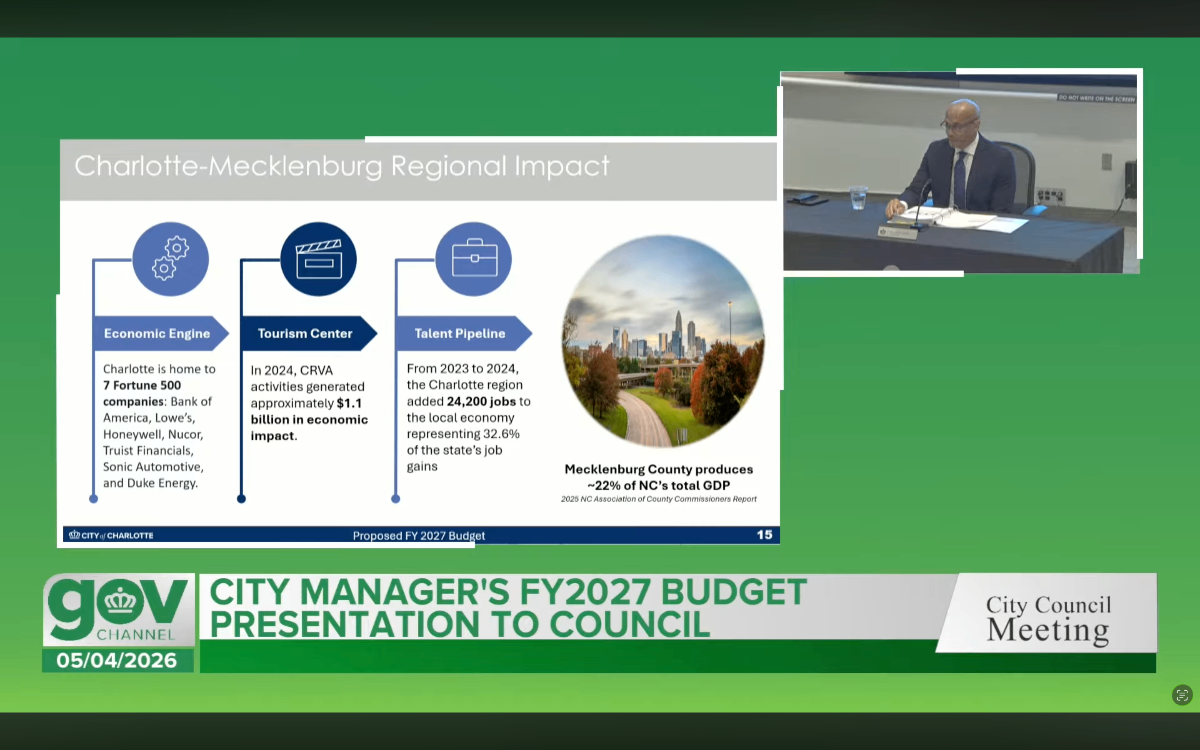
The budget presentation highlights Mecklenburg County’s significant economic footprint, which now produces nearly 23% of North Carolina’s total GDP.
(Photo Credit: City of Charlotte/YouTube)
The upcoming fiscal year proposal would raise minimum pay for full-time city employees to about $52,000 annually. The increase is designed to improve recruitment and retention in key departments, including police, fire, and utilities, where staffing shortages have persisted in recent years.
“I’m proposing that we also increase our minimum pay for employees to $25 an hour,” Jones said.
Research on wage policy and urban labor markets
Economic research suggests that local minimum wage increases like Charlotte’s proposal generally raise wages for low-income workers without producing large negative employment effects.
A study published in the Journal of Economic Perspectives finds that city and state minimum wage increases tend to boost earnings for low-wage workers while producing relatively small impacts on employment overall, particularly in urban labor markets where job demand is stronger and more flexible.
The Federal Reserve Bank of Richmond, which includes North Carolina in its Fifth District coverage, similarly finds that minimum wage increases typically lead to higher earnings with mixed or modest employment effects depending on local economic conditions. The analysis notes that large metropolitan economies are generally more resilient to wage adjustments due to diversified industries and stronger labor demand.
Together, federal and state research suggests that wage increases in cities like Charlotte can improve worker compensation while producing limited measurable disruption to broader employment trends.
Governance strain and public pressure in other cities
Recent reporting from other U.S. cities highlights similar challenges as local governments face increasing pressure over services, transparency, and public trust.
In Pensacola Mayor, Escambia County Commissioners No Show at Community Meeting, published by Angela Underwood, local officials faced criticism after failing to attend a scheduled community meeting organized by residents. She describes frustration among civic groups who said the absence reflected a broader disconnect between elected leaders and constituents during ongoing debates over city services and governance priorities.
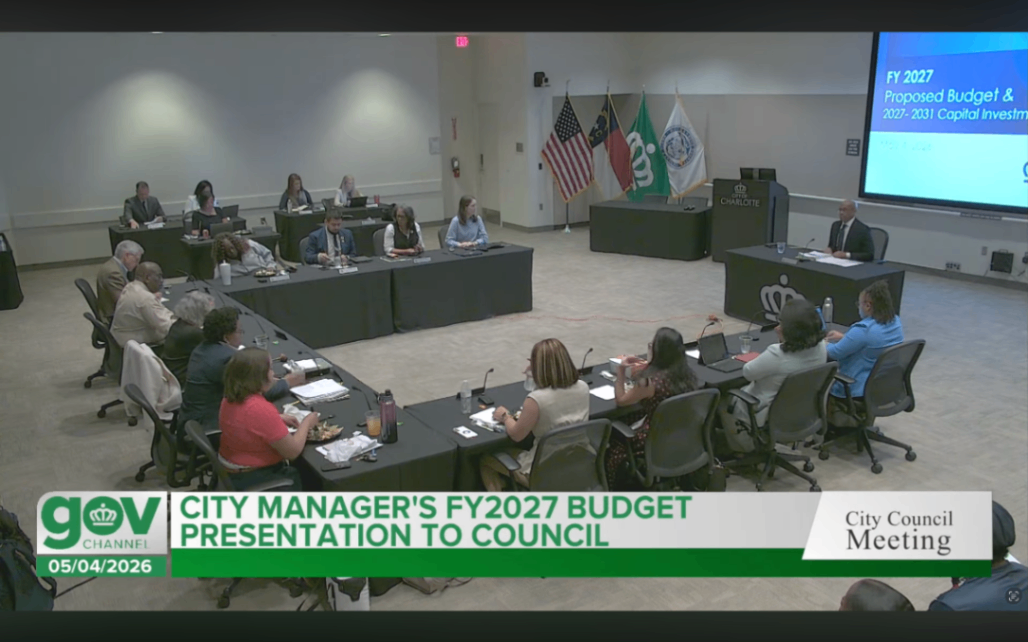
City Manager Marcus Jones delivers the $4.49 billion FY2027 budget proposal to the Charlotte City Council, emphasizing workforce investments and infrastructure.
(Photo Credit: City of Charlotte/YouTube)
In another case on the East Coast, FIFA World Cup Brings Concerns to Atlanta, published by Jorden Hampton, residents and local stakeholders raised concerns about the city’s preparedness for major international events. He highlights tensions surrounding infrastructure capacity, homelessness visibility, and transportation strain as Atlanta prepares for increased global attention.
While Charlotte’s budget process is distinct, these cases reflect broader national pressures facing growing cities: balancing infrastructure demands, public expectations, and administrative capacity amid rapid change.
Fee increases tied to rising costs
Charlotte’s proposed budget also includes modest increases to solid waste, water and sewer, and stormwater fees. Jones emphasized that the adjustments are necessary to maintain current service levels amid inflation and continued population growth.
“Also, fee increases are also needed to maintain a level of service, and we have three increases in this budget,” Jones said. “So, solid waste is a monthly increase of $1.35, wastewater of $4.41, and storm water of $0.48.”
Under the proposal, combined monthly utility costs would rise by about $6.24 for the average household.
According to the city, the fee adjustments are part of a broader effort to align user costs with service delivery expenses rather than relying more heavily on general tax revenue.
Growth pressures and workforce demands
The budget continues investments in public safety staffing, including recruitment and retention incentives for police and fire personnel. Like many large U.S. cities, Charlotte continues to face workforce shortages in critical service areas.
The investments are essential as rapid population growth increases demand for emergency response, infrastructure maintenance, and municipal services.
Charlotte remains one of the fastest-growing large metro areas in the United States, with sustained development placing pressure on housing affordability, transportation systems, and utilities.
Budget moves to public review
The proposal now advances to public hearings and City Council review before a final vote expected in June. The new fiscal year for Charlotte begins July 1, 2026, and lasts through June 30, 2027.
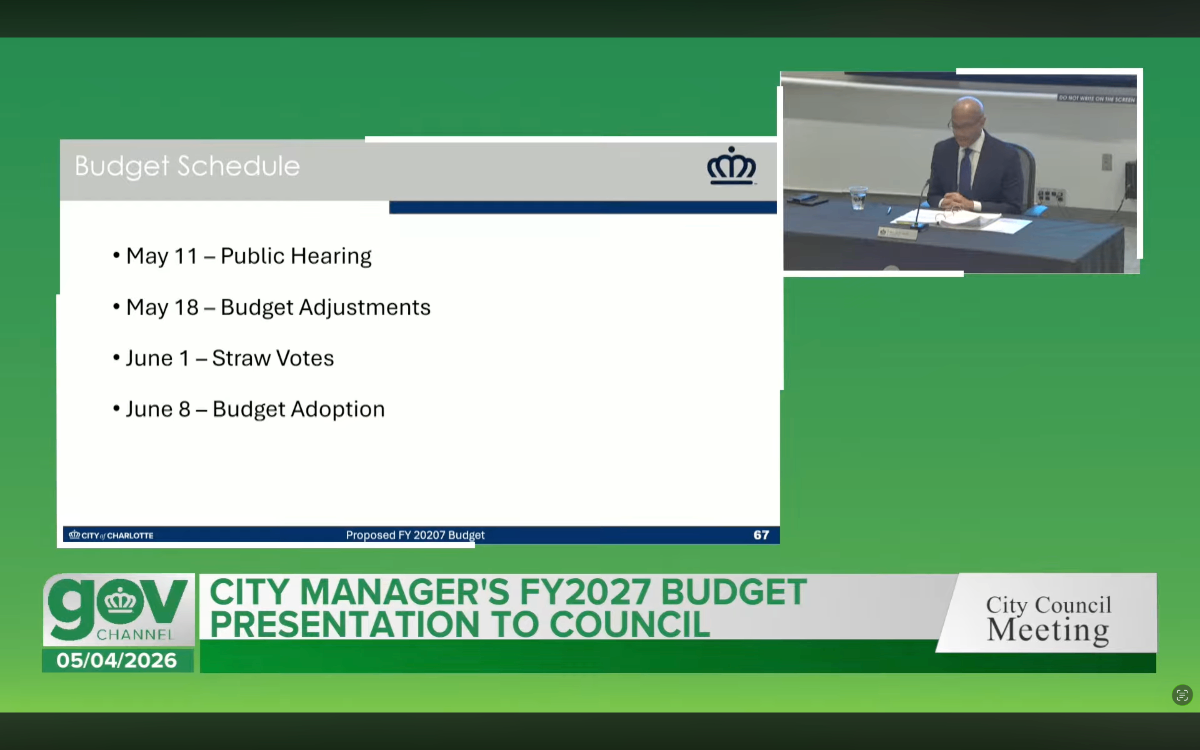
Local residents will have the opportunity to weigh in on the proposal during a public hearing on May 11 before the final budget adoption scheduled for June 8.
(Photo Credit: City of Charlotte/YouTube)
Looking ahead, Charlotte faces the challenge of balancing affordability with service quality as rapid growth continues to reshape the city, amid broader pressures facing urban areas nationwide.
Do you think it will be enough to address the issues the city is facing?
The full meeting agenda and materials are available through OpGov.news at the City of Charlotte Meeting.
You can reach Victoria Osborne at victoriao@lead4earth.org.
(Thumbnail Photo Credit: City of Charlotte/YouTube)
0
0

Comments