(ATLANTA, Geor.) – Residents in Atlanta are still pressing the City Council regarding the possible sale of the Atlanta City Detention Center to Fulton County due to the implications of the deal for jail workers and those incarcerated. The October 5 City Council meeting showcased a demand for action to improve the crime situation on Martin Luther King Jr. Drive and soaring housing expenses for condominium owners.
One community member, Michael Collins, noted that there are still many unknown aspects concerning the proposed detention center sale, such as the city officials' consultation with the federal monitor.
"We wanted to just flag that there are things that we do not know about the ACDC sale that remain unanswered. One big issue is the conversation with the federal monitor. Has there been one?" Collins asked.
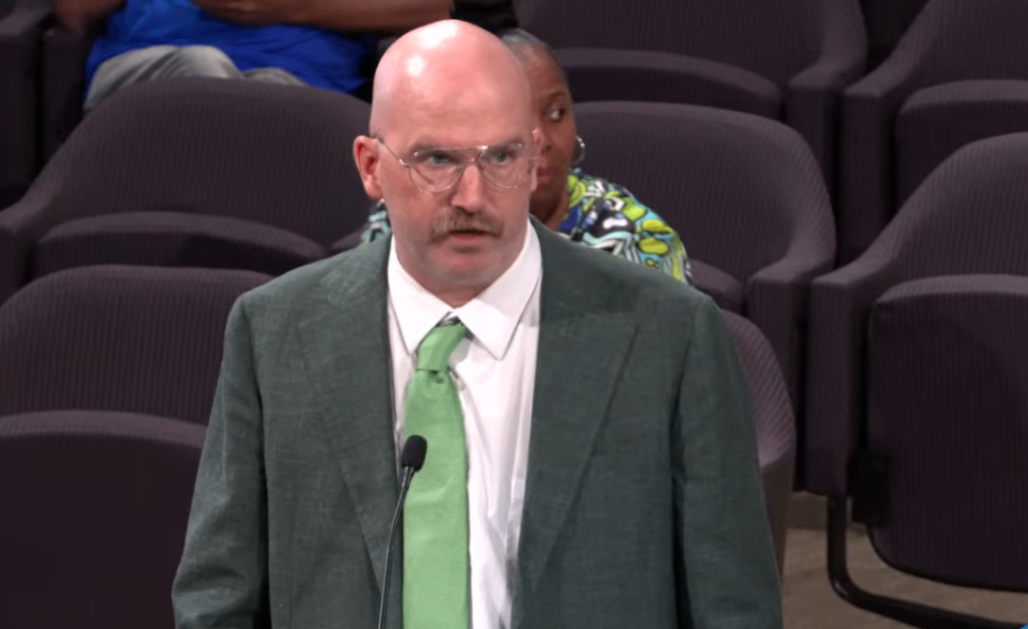
Photo Credit: YouTube \ Atlanta Channel 26 \ Michael Collins shares his concerns during public comment at the Atlanta City Council Meeting on October 5
Collins raised the question whether detention center workers will be willing to work for Fulton County, referring to the staffing difficulties of the county's Rice Street jail. Collins pointed out that the union representing the workers, PACE, opposes the sale.
"ACDC employees do not desire to work at Fulton County or for Fulton County, certainly not at Rice Street... which is a facility that has had major staffing problems. Currently, PACE, the union that represents the employees, is opposing the sale," Collins said.
Collins emphasized that the sale proposal has more to do with the priorities of the mayor in funding than with the interests of Atlanta residents and those incarcerated.
"We remain opposed to this plan, which is much more about the mayor getting funding for his neighborhood reinvestment initiative and much less focused on what is best for the people of Atlanta or indeed incarcerated people," Collins said.
Under the proposed deal, the Atlanta City Detention Center will be transferred to Fulton County. Collins focused on the questions which remain unanswered, employee concerns and the implications for people detained at the center.
Residents called for changes in the area along Martin Luther King Jr. Drive because of crime, homelessness, and other issues damaging the corridor.
Third-generation Harland Terrace community resident Tamika Jordan in District 10 urged city officials to reconsider their strategy and implement a stricter enforcement of the laws in the area.
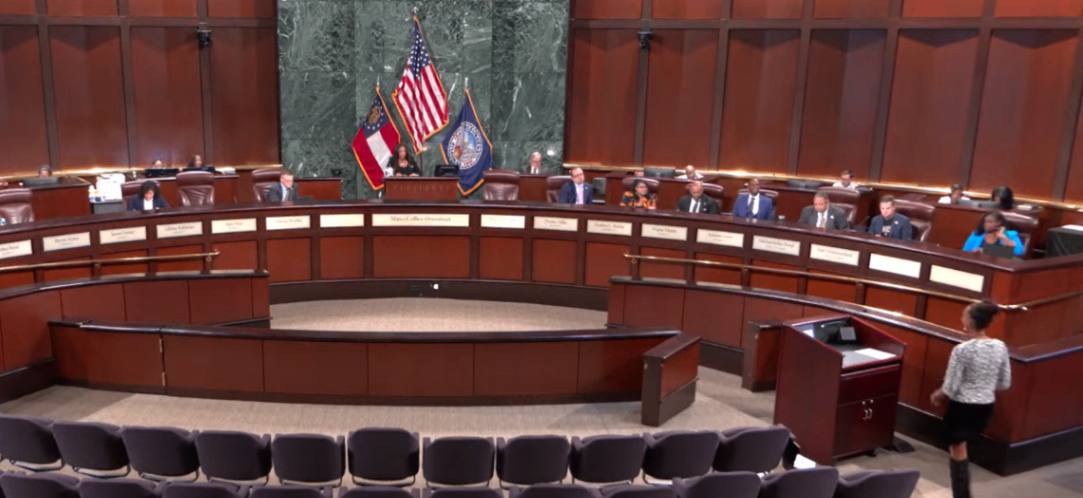
Photo Credit: YouTube \ Atlanta Channel 26 \ A resident takes the podium to share their concerns during public comment at the Atlanta City Council Meeting on October 5
"I'm here to ask and insist that you switch your strategies and strictly enforce the law as it pertains to the severe degradation of the MLK corridor," Jordan said. "We must completely lose the rhetoric celebrating this corridor as the birthplace of Doctor King, because if he were here to see it today in its current state, I think he would be deeply embarrassed and ashamed."
Jordan referred to the changes made in the area of Fulton Industrial Boulevard and resulting in an increase in homelessness and street crime on MLK corridor.
"We saw the warning signs clearly when Fulton Industrial Boulevard was cleaned up. The displaced homeless, public nakedness, and street-level crime showed up on the MLK corridor like never before. This was our warning, and it was ignored," Jordan said.
Also, Jordan referred to recent shootings and theft in the area and demanded accountability.
"A few weekends ago, we suffered two more shootings along the corridor, while the baseline of theft and lawlessness continues unchecked. We will not stand for it anymore. Someone must be held accountable for this ongoing negligence," Jordan said.
Quincy Jordan, Harland Terrace community resident, described the situation of the corridor as the new type of barrier for the neighborhood.
"In 1962, barricades went up... The barricades now look different. These are barricades of indignity. Barricades of distress. Barricades of poverty, and they are located at the intersection [on MLK]," Quincy Jordan said.
The high cost of living and the threat of being displaced were also issues mentioned by residents.
Resident and homeowner at The Landmark Condominiums Mickey Buggs said that the owners face the additional cost of $300,000 for the property and described the financial pressure as an effort to force residents to leave the place.
"The matter has gotten worse. They're actually now putting on one of our properties—they want another $300,000 from us. So the object of the game for this building is to bankrupt us financially, deprive us, starve us out of the building," Buggs said.
According to Buggs, several owners have foreclosures on their units, and some even have the date for that.
"Several of us have foreclosures on our units. Some of us have dates set... We're out of time. We're well out of time. And this is unfortunate. So I'm unclear why this is allowed to happen, and especially in your backyard. Why have we normalized suffering? Why have we normalized profit over lives?" Buggs said.
Other speakers addressed different issues, from the future of the city detention center to the situation of crime and cost of keeping the home.
To add to or correct information in this report, please contact me at mia.s@lead4earth.org.
0
0

Comments