(ALAMEDA COUNTY, CA.) - Alameda County Officials launched the controlled release of male mosquitoes within the city of Livermore as part of a project aiming to stop the growing threat of invasive, disease-carrying female mosquitoes.
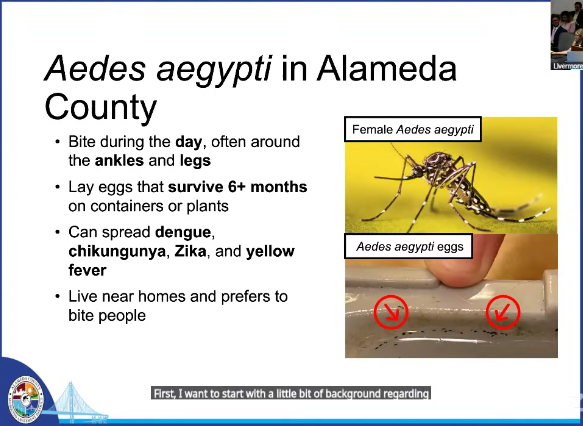
Photo Credit: City of Livermore / Youtube
Aedes aegypti, as it is scientifically called, is the specific species of mosquito known to transmit viral illnesses such as dengue, zika, and yellow fever. “In 2025, we have found this mosquito species in Pleasanton, Livermore, Fremont, and Dublin,” Community Liaison of the Alameda County Mosquito Abatement District Lizbeth Martinez said.
During the Jun 22 meeting, she noted the mosquitoes' habitat, which prefers to live in the vicinity of resident homes to bite them. Martinez noted that specific target areas the mosquitoes bite are on the ankles and legs, and are typically active during the day.
The Aedes aegypti can also lay eggs on containers and plants that can last for over six months without the need for water. Additional information also suggests that the summer heat and rain had only increased the numbers of these harmful mosquitoes, which ultimately pose a threat.
The Innovative Mosquito Reduction Program, tasked with combating the issue, consists of various methods to safeguard communities and decrease mosquito numbers. “So the technique that we’re going to be using in Livermore is Aedes aegypti that are carrying Wolbachia,” Laboratory Director Eric Haas-Stapetlon said.
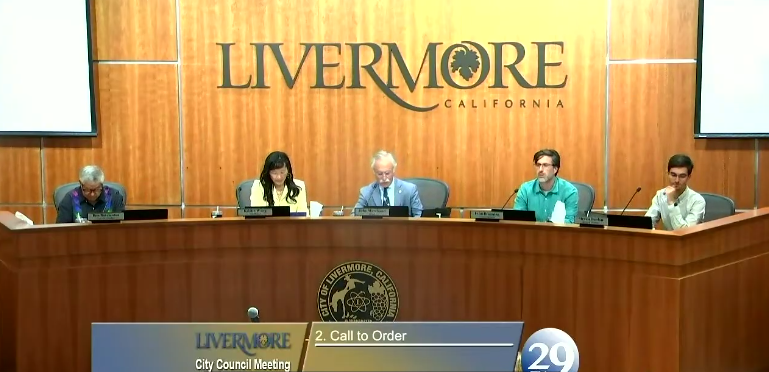
Photo Credit: City of Livermore / YouTube
Wolbachia, a bacteria found in roughly 60% of insects, limits egg growth by misaligning chromosomes leading to early embryonic death. It is worth noting that compared to their female counterparts, male Aedes aegypti don't bite, but rather consume nectar and fruit juices.
Aedes aegypti males, specifically already carrying Wolbachia, would be utilized to mate with female mosquitoes to prevent their eggs from hatching, slowing their procreation.
Regarding the utilization of the males, Haas-Stapetlon said, “These mosquitoes are released by district staff in the neighborhoods we’ve selected.”
Over time, with fewer eggs produced by the females unable to hatch, the amount of female mosquitoes born decreases over time, thus leading to fewer bites and less risk of viral disease spread, Haas-Stapetlon noted.
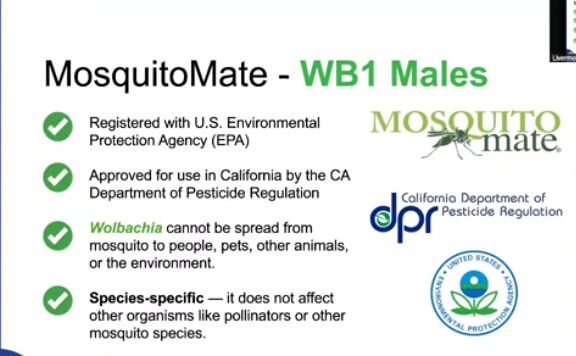
Photo Credit: City of Livermore / YouTube
“This is very important because this mosquito does transmit diseases like dengue and is a very aggressive biter,” Haas-Stapetlon pointed out. This specific type of mosquito, classified as a WB1 mosquito, is registered with the Environmental Protection Agency (EPA) and is approved for use by the California Department of Pesticide Regulation.
In relation to how Wolbachia can affect other species, he clarified, “Importantly also, Wolbachia cannot be spread from mosquitoes to people, pets, other animals, or the environment, and it's very species-specific.”
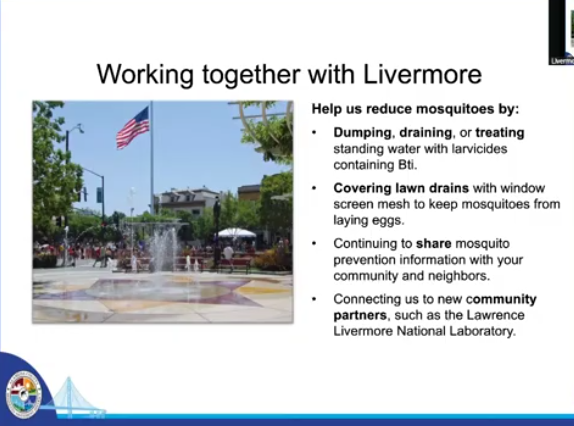
Photo Credit: City of Livermore / Youtube
He added that because it’s species-specific, the bacteria has no effect on other species of mosquitoes, and does not affect pollinators. Both Martinez and Haas-Stapetlon urged the community to do their part by disposing of and dumping any still water or to treat still water with larvicides to prevent mosquitoes from laying eggs.
Attempts to educate the general public through Informational Brochures and door hangers have also been used.
Along with this support and education, the reduction program is actively trying to establish connections with other community partners and organizations, such as the Livermore National Laboratory.
The release of the Mosquitoes is expected to run through October.
If you have any questions, comments, or concerns, please email me at yikaileau.w@lead4earth.com
0
2

Comments