(GILBERT, AZ.) – What is a midge fly, and why are the residents of Gilbert still struggling with these flies in vast numbers in their own homes?
According to the Town of Gilbert website, midge flies are a small insect resembling a mosquito, but they don’t bite the way mosquitos do. While irritating bites may not be an issue, their presence is for many Gilbert residents who live near standing water at the South Recharge Facility, which encourages the breeding of these pests.
At the town council meeting on Mar. 3, several residents from The Bridges residential community came forward to represent the ongoing battle with bugs.
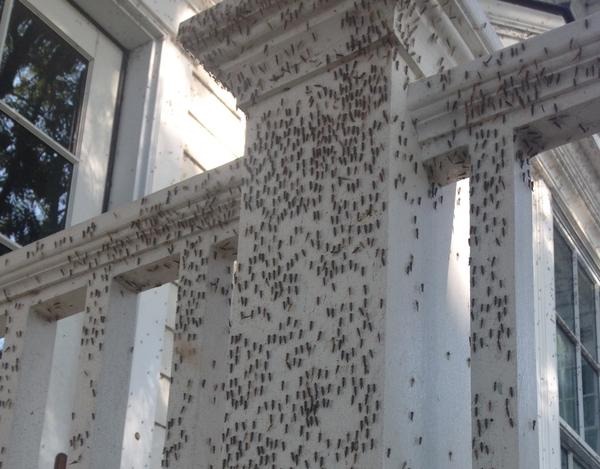
Photo Credit: NC State Extension
This isn’t a new issue, though– the residents living in The Bridges community have been battling swarms of midges for over a decade. According to a historic 2016 report by 12 News, the problem was illustrated as “ominous swarms” that resemble something “out of a horror movie”.
Such a toll on daily life drove residents to share their experiences and demand action on such an everlasting issue that they affirm is treatable.
Bridges community resident Eric Torres shares how the infestation has caused a decline in the quality of life in the area over the past ten years.
“We can't sit outside in the evenings or talk to our neighbors. We can't relax in our backyards or after work,” he states, “Simple things like grilling, watching the kids play, having a quiet conversation on the patio are constantly interrupted by swarms of midgeflies covering our faces, getting in our hair, and flying in and out of our our faces, mouth, and eyes.”
His testimony is supported by other members of the community, including Gilbert resident April Ellison, who also spoke on the town’s inaction on the midge fly situation following the purchase of her home and the sparse information she was given prior.
“The printout made it seem like it was very minor; and, during our first midge fly season in 2015, we found out just how misled we were,” she recollects, “...What the town states is just a nuisance is anything but minor. Mitchfly season is during the nicest time in Arizona when we all want to be outside. But for those of us in the Bridges neighborhood, this is impossible.”
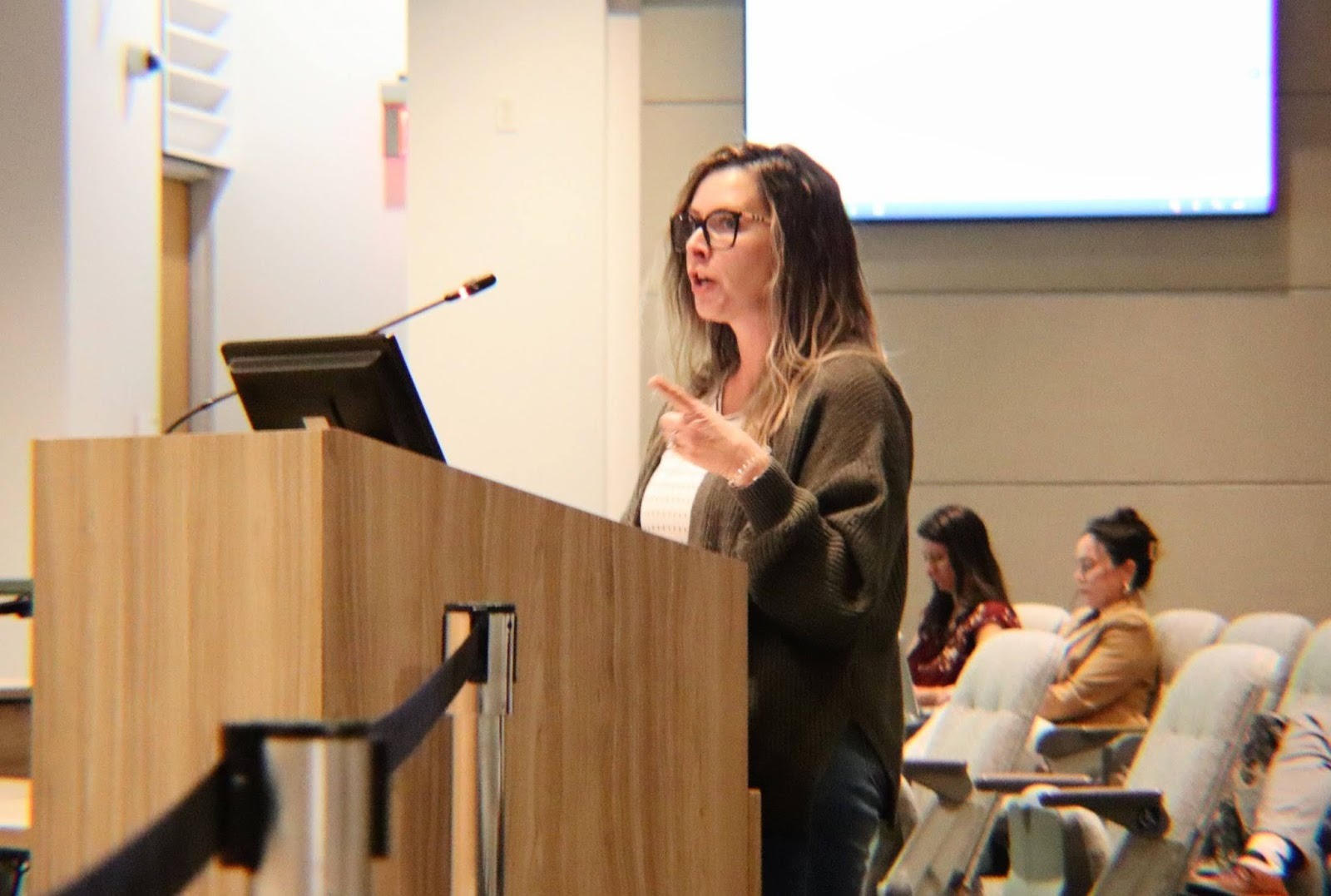
Photo Credit: Teri Tracy
She continues, “They are present in overwhelming numbers. These insects surround our homes. Our children cannot play outside. I've literally had to pick bugs out of my children's eyes.”
The Town of Gilbert website expresses that measures are indeed in place in an attempt to mitigate the issue, including but not limited to treating water with larvicide, spraying nearby vegetation with dish soap, and fogging the area three times per week.
Town spokesperson Joanna Guzman responded to a request for comment on the matter, stating that while the town is taking several additional measures to control the swarms of flies, certain seasons are simply more prone to swarms and the South Water Recharge facility is an ideal site for these bugs to breed.
“While all Gilbert recharge sites see increased insect activity during spring and fall, leading to more resident complaints across the neighborhoods around our recharge facilities, the South Recharge Facility experiences even more noticeable activity because of the surrounding land use.”
“Reclaimed water and recharge activities play a vital role in ensuring Gilbert’s long-term water supply. The SRF’s primary purpose is groundwater recharge. This is critical to Gilbert’s long term water security during Colorado River shortages and future drought conditions. Since recharge relies on water-filled basins, insect habitats naturally form during this time of the year,” she says.
Guzman continues, “We understand how these seasonal swarms can be disruptive and are actively working to minimize their impact. Gilbert Public Works continues to implement several strategies to reduce impacts, including:
· Adulticide fogging three nights per week
· Continuous larvicide application
· Basin drying rotations and soil disking
· Water diversion to other facilities when feasible
· Agricultural drone larvicide application (new technology approved this year)
· Digging of survival zones in basins to help support the survival of predatory fish while standing water is present.”
Her statement concludes that while a temporary effort to reduce midge fly numbers at the facility was implemented in February, this is merely a temporary solution that will affect the treatment of water.
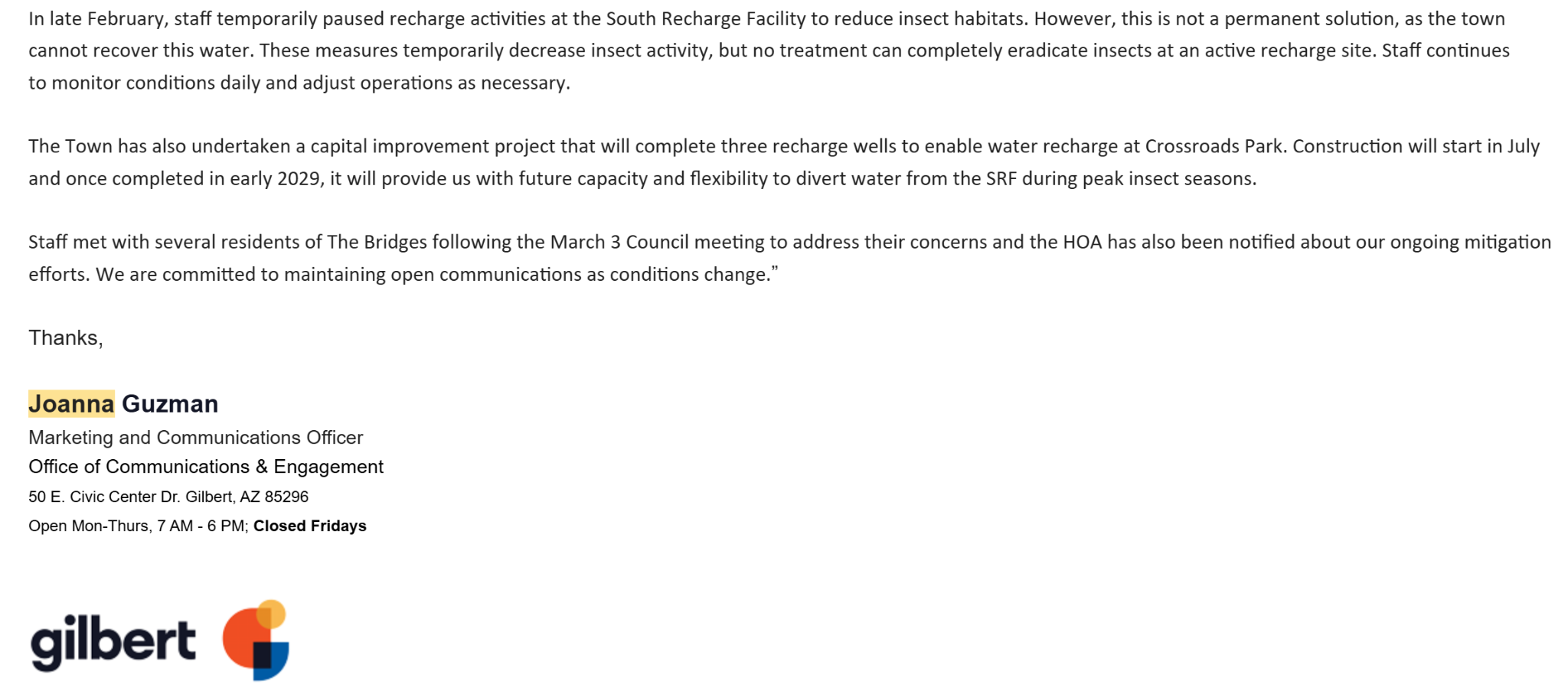
Photo Credit: Teri Tracy / Gmail
However, a capital improvement project intended to complete other recharge wells will hopefully yield some results – and relief – for nearby communities, allowing staff to divert water to other sites as needed. This project, unfortunately, isn’t expected to be completed until late 2029, leaving three years before a viable, more permanent solution is available.
OpGov.news has reached out to several Bridges community members via NextDoor but has yet to receive a response.
To add to or correct information in this report, please contact me at tracy.t@lead4earth.org and leave a comment below with your thoughts.
0
0

Comments