(CHARLOTTE, N.C.) — At the April 20 meeting of the Charlotte City Council, members advanced a series of rezoning petitions through consent approvals while also deferring, withdrawing, or conditionally approving several development proposals—highlighting ongoing tensions between procedural efficiency and land-use oversight.
Consent agenda approvals continue to shape zoning outcomes
A majority of rezoning petitions were approved without discussion after receiving unanimous recommendations from staff and the Zoning Committee, and no recorded public opposition at prior hearings.
While this approach streamlines Council proceedings, it also limits discussion at the final approval stage.
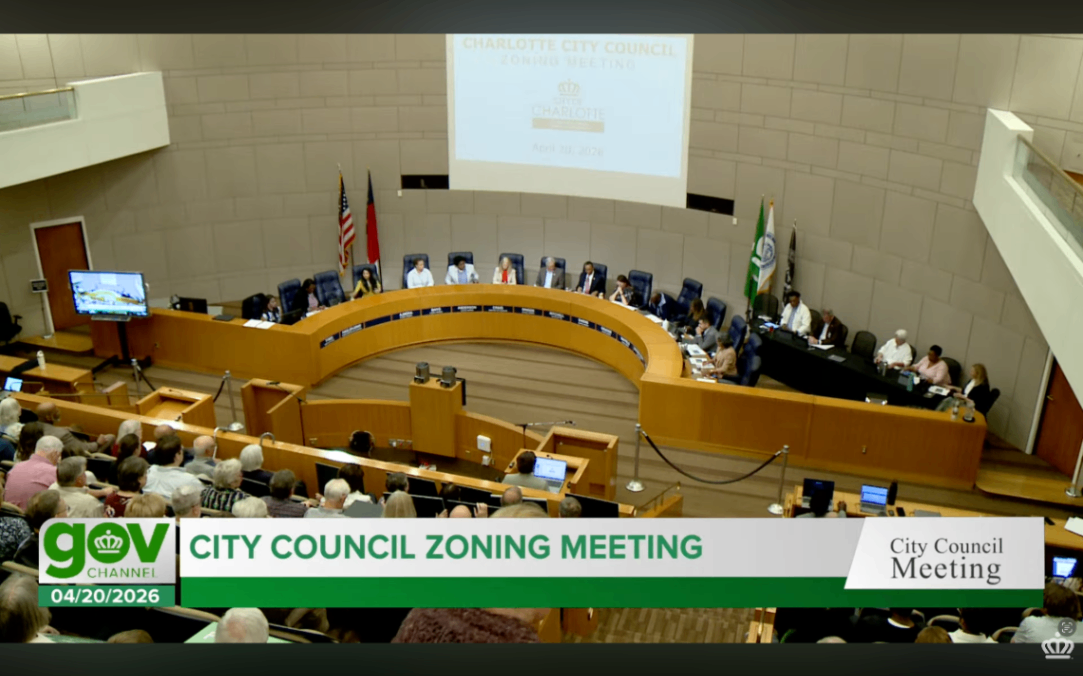
The Charlotte City Council deliberates on a range of rezoning petitions during its April 20 meeting, a session marked by a high volume of consent agenda approvals and discussions on procedural efficiency.
(Photo Credit: City of Charlotte)
Similar governance patterns have been observed in other municipalities. In a recent OpGov report, “San Ramon Celebrates Accomplishments At Recent City Council Meeting,” by Yashi Sharma, routine proclamations and administrative approvals dominated the agenda, raising questions about how much substantive policy discussion occurs when items are bundled into procedural votes.
This trend aligns with research from the Pew Charitable Trusts, which finds that streamlined municipal approval processes can improve efficiency but may also reduce transparency and limit opportunities for meaningful public engagement.
Withdrawals and deferrals signal development pipeline strain
Several rezoning petitions were either withdrawn by applicants or deferred to future meetings, suggesting gaps in proposal readiness before reaching Council consideration.
One institutional rezoning was postponed to a later date, while additional residential and infrastructure-related proposals were delayed or removed from the agenda entirely.
These outcomes reflect broader challenges in municipal development pipelines. In “Sacramento's District 8 Left Behind in Housing Production Under New Ordinance,” by Sarah Denos, reporting highlighted how zoning decisions and approval patterns can create uneven development outcomes across cities when policy implementation and project readiness are misaligned.
National research from the Urban Land Institute similarly identifies infrastructure constraints and incomplete applications as common causes of zoning delays and project inefficiencies.
Conditional approvals raise sequencing concerns
Three petitions were recommended for approval only after unresolved issues related to transportation infrastructure, environmental impact, or design compliance are addressed.
During the discussion of Petition 25-077, Paul Penell, representative of Kyle Short of Short Development, addressed community concerns and technical revisions to the project, stating, “The next slide here that we provided community members and wanted to include in our presentation tonight shows a lot of topography and how it will be addressed on site.”
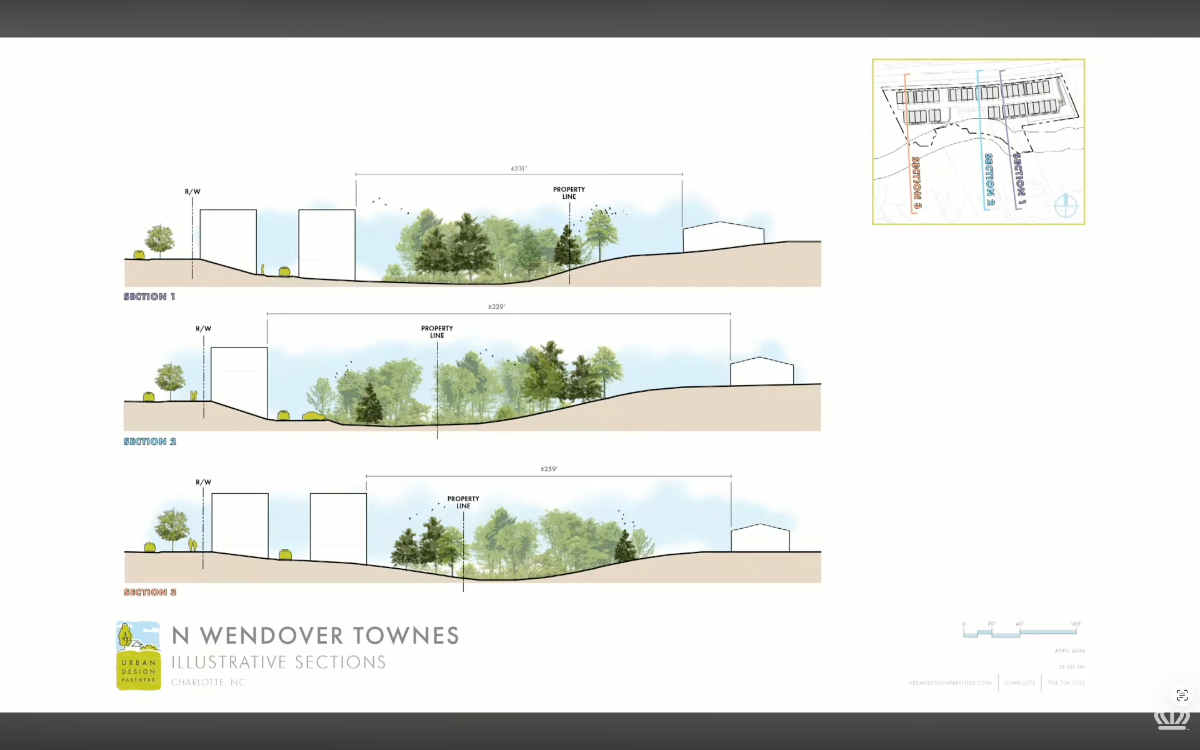
An illustrative section for the N Wendover Townes project (Petition 25-077), presented to the City Council to demonstrate how topography and existing vegetation will be managed on the development site.
(Photo Credit: City of Charlotte)
While conditional approvals allow development to proceed, they also raise questions about sequencing—particularly whether key planning concerns are being resolved before Council action or deferred to later stages of implementation.
Split recommendations highlight zoning complexity
Two rezoning petitions received formal recommendations for denial from both staff and the Zoning Committee, while others advanced with unanimous approval.
In discussion of the Manor Center redevelopment, Bridget Grant, land use consultant with Moore & Van Allen, described the proposal’s structure as distinct from standard rezoning, stating, “This one is a little more unique because it’s more of an alignment rezoning.”
The variation in outcomes underscores a zoning system balancing routine administrative approvals with more complex or contested land-use decisions.
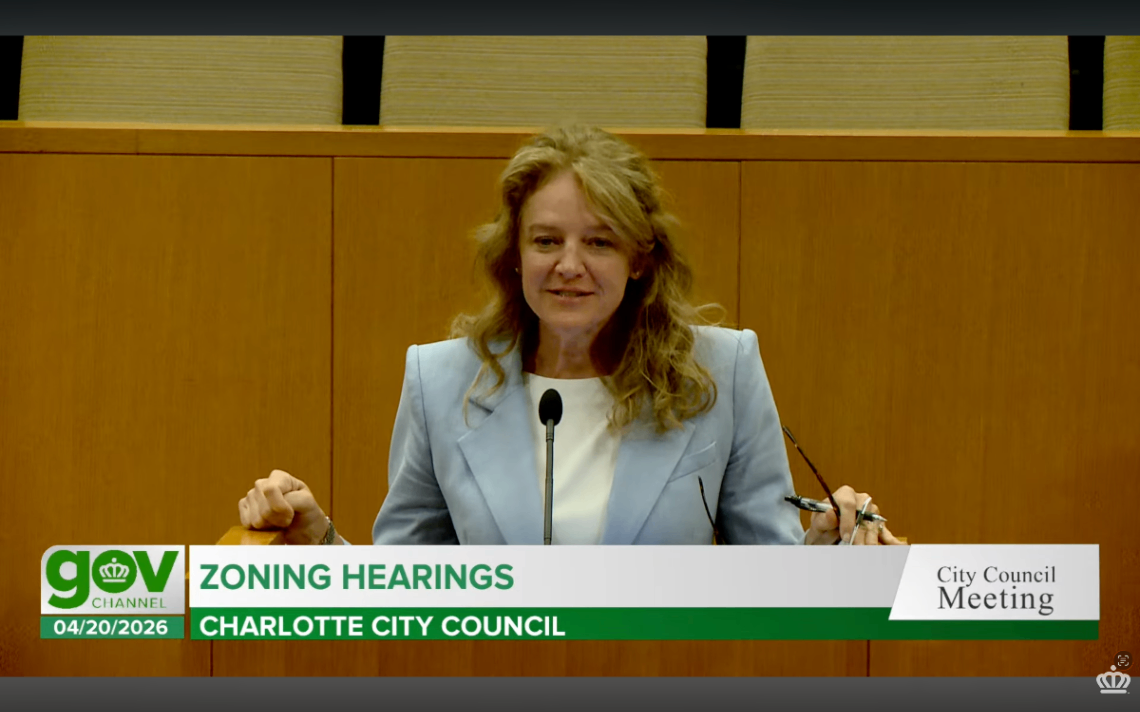
Bridget Grant, land use consultant with Moore & Van Allen, speaks during the April 20 zoning hearing regarding the Manor Center redevelopment, which she characterized as a unique "alignment rezoning."
(Photo Credit: City of Charlotte)
Broader pattern of procedural governance
Across all agenda items, a consistent theme emerged: Council decisions are increasingly shaped by procedural efficiency, with less emphasis on open debate at the final stage and greater reliance on committee and staff recommendations.
As seen in comparable OpGov reporting across multiple municipalities, including San Ramon and Sacramento, local governments are navigating similar tensions between administrative efficiency, transparency, and public accountability in land-use governance.
What’s next
Deferred and conditional petitions are scheduled to return at the May 18 Council meeting, where unresolved technical and planning issues will be reconsidered.
As Charlotte continues to grow, the balance between streamlined approvals and transparent governance is likely to remain a central policy challenge.
OpGov.news made multiple attempts to contact members of the Charlotte City Council for additional comment on the topics discussed during the April 20 meeting. As of publication, no responses were received.
The full meeting agenda and materials are available through OpGov.news at the City of Charlotte Meeting.
You can reach Victoria Osborne at victoriao@lead4earth.org.
(Thumbnail Photo Credit: City of Charlotte/YouTube)
0
0

Comments