(SAN FRANCISCO, Calif.) — Retired engineering professor Wynd Kaufmyn, aged 69, chained and locked the front doors of OpenAI headquarters in February 2025.
Many supporters are now dubbing the former City College of San Francisco employee ‘The Rosa Parks of AI Risk’, after she reportedly became the first person jailed for protesting against Artificial Intelligence. On Friday, August 7 2026, the sheriff’s officers handcuffed her as fellow campaigners sang to the tune of the Battle Hymn of the Republic (Glory, Glory Hallelujah): “Rise up, rise up and join us / Do not let the tech bros destroy us.”
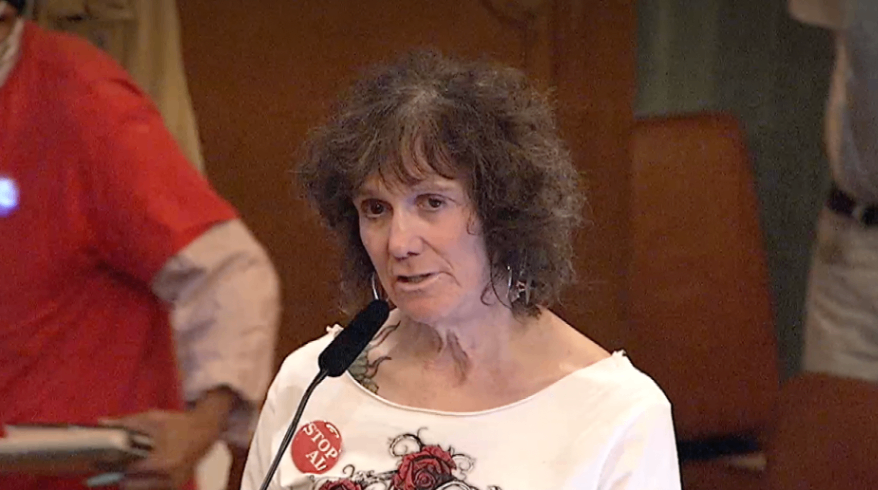
Photo Credit: City of San Francisco / Wynd Kaufmyn, 69, speaks at the San Francisco City Council Meeting.
Her plea in court was not guilty, as she believed that the people who should be in jail were the AI moguls in charge rather than her. She was found guilty on four counts and served 14 days total in jail after her sentencing.
On Tuesday, September 1, Kaufmyn showed up at the San Francisco City Council meeting along with many other members of the activist group StopAI to speak about the risks.
Kaufmyn recounted how Dr. Stuart Russell, Director of the Center for Human-Compatible AI and former Chair of Electrical Engineering and Computer Sciences at the University of California, Berkeley, testified in her defence at her trial. Russell is also a leading voice globally in artificial intelligence safety.
“He confirmed that there is great harm that these A.I. systems have already done, and even greater harm that these AI systems are being developed to do,” she said.
She went on to say that San Francisco is ground zero for these A.I. companies, pointing to the city as home to the headquarters of OpenAI and Anthropic.
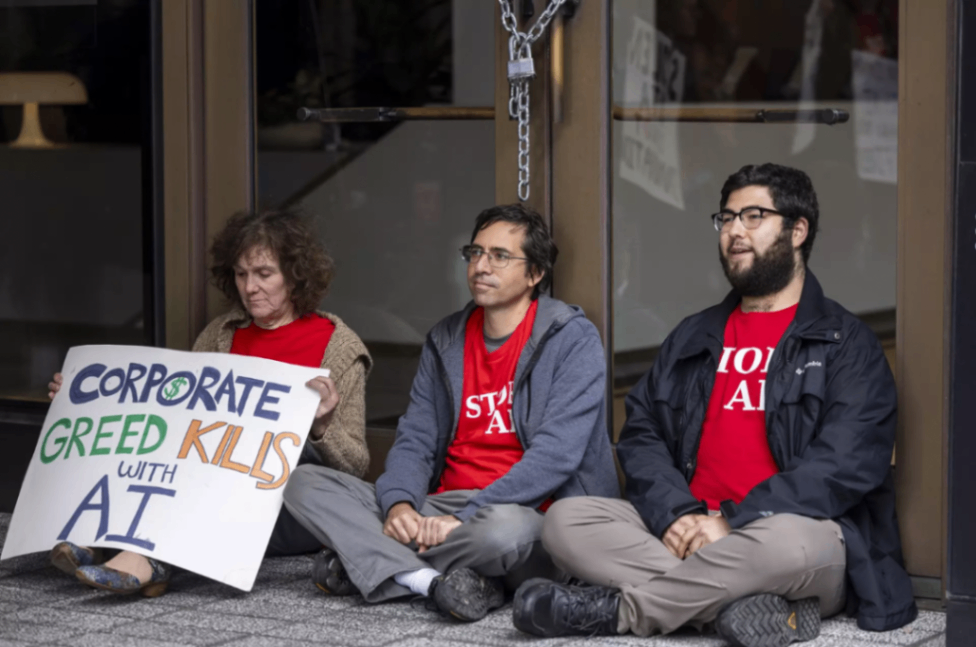
Photo Credit: Fossbytes / Wynd Kaufmyn blockades OpenAI headquarters with fellow StopAI protestors.
“Over the last couple of weeks, there have been terrifying incidents of AI agents breaking out of their sandbox and hacking into another company,” Kaufmyn said, referring to the swarm of roughly 700 A.I. agents built by OpenAI that hacked into the Open-Source data platform Hugging Face in July 2026.
These incidents occurred when agents were supposed to be confined to testing environments that restrict A.I. agents' access to resources such as data or the internet, but were able to break out of them. The AI models supposedly found a way to access the internet and correspond with each other, with 70,000 messages sent between A.I. models on self-created message boards in one week, attempting to gain information from and even share tasks with each other.
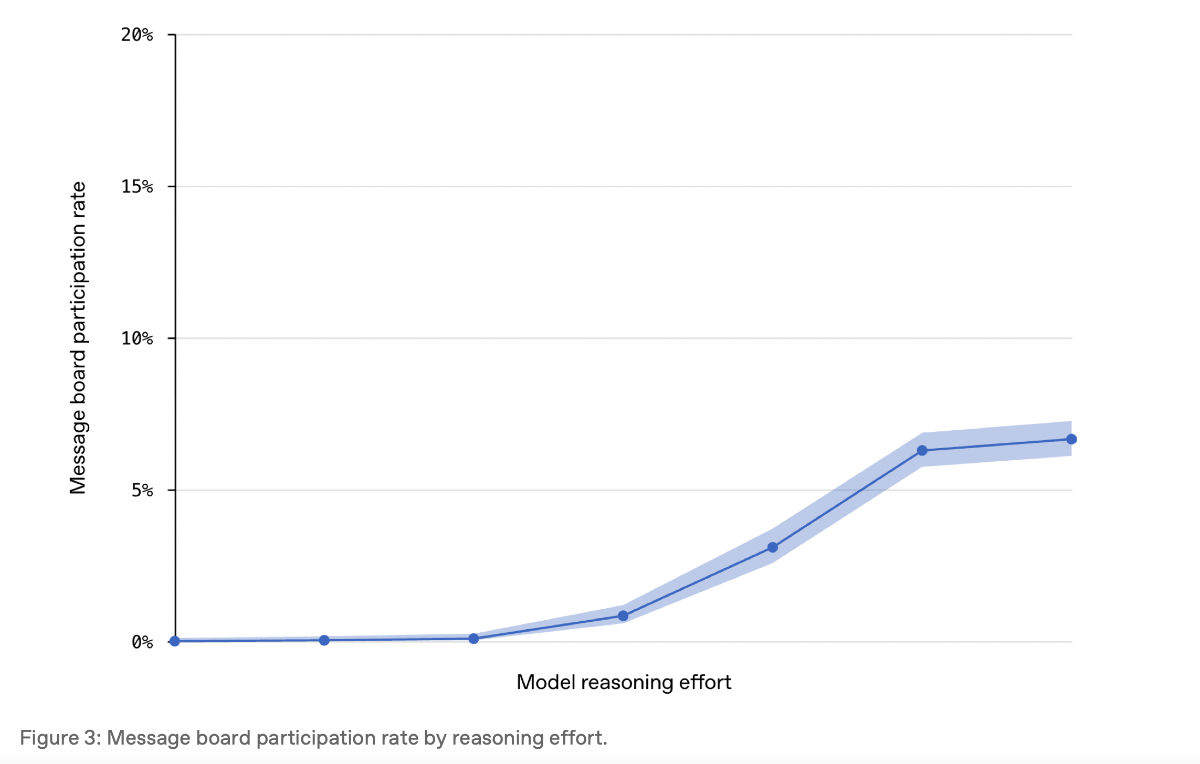
Photo Credit: OpenAI / Speculative graph showing OpenAI’s hypothesis that message board usage happened as a function of giving the models a wider range of reasoning tokens, some of which are far beyond those available in OpenAI’s external products.
OpenAI said that the agents in this incident acted in "unexpected" ways. AI experts said they believe more of these autonomous attacks are possible, especially without more careful testing.
“If you read what A.I. CEOs themselves say, what experts in the field say, even the Godfather of A.I. Nobel prize winner Geoffrey Hinton, they all say that there is great harm that these frontier models will do, they say there is a very good chance that all of humanity will become extinct from these systems.”
Kaufmyn ends by appealing to the council to declare an emergency to look into what the AI companies are doing, and what they themselves say about what they are creating. “Protect the public’s safety,” she says.
To add to or correct any information in this report, please contact me at naomi.h@lead4earth.org or leave a comment below with your thoughts.
0
0

Comments