(OPGOV GLOBAL) --- America is learning about new cultures during the 2026 FIFA World Cup.
From the Scots outdrinking the Irish in Boston to Japanese fans leaving the stands spotless, America is learning a little more about how people around the world live.
Matches all over the U.S. have drawn global fans, with the Scottish Tartan Army making their mark in June when two group state matches in Beantown.
BBC reports that “Devon Savage from Boston Beer, which owns the Samuel Adams Taproom, said the Tartan Army had 'drunk them dry,’” and “a number of other local pubs also reported record sales, beating major events like the super bowl and St Patricks Day.”
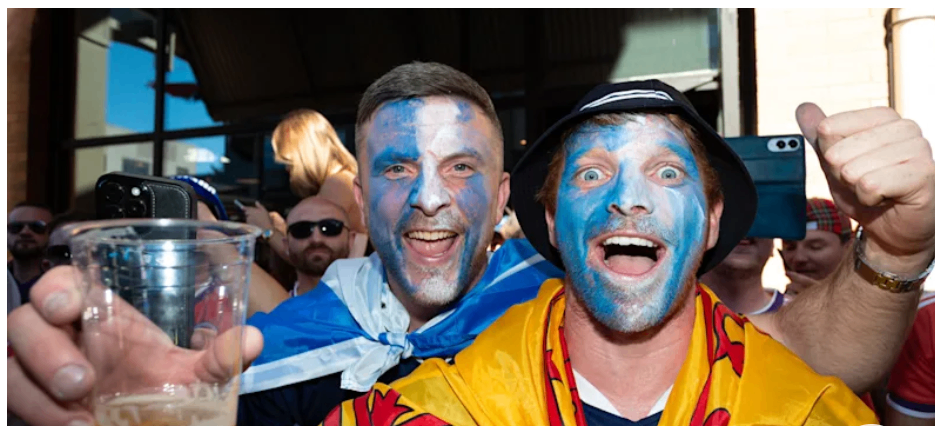
(Photo credit: Burt Granofsky/Cal Sport Media via AP Images)
Bostonian Steve Castigilone spoke for many locals who gathered with the Scots during the matches.
"You have brought so much joy to our city and we don't ever want you to leave," Castigilone said. "I'm not a soccer fan, but I'm now a dedicated Scotland fan."
Yahoo Sports confirms that after one of the matches against Haiti, the Tartan Army's influence in the Northeast was unprecedented.
“Federal Wine & Spirits in Boston's Financial District also reported selling out of certain beer brands as Scottish supporters flooded the area before and after the match,” Yahoo Sports reports.
While the Scots showed they could party harder than the American Irish, the Japanese proved they could maintain their etiquette even after losing a World Cup match.
Unlike American fans, notorious for leaving a mess under their chairs at sporting events, Japanese fans have a longstanding habit of cleaning up after themselves, according to ESPN.
“Japan first played at a World Cup in 1998, in France, when their supporters were spotted tidying up the stadium before exiting,” ESPN reports in June, adding that Japan fans also do the same at the Olympics.
One Osaka professor explained why it is a cultural habit in a 2018 BBC report.
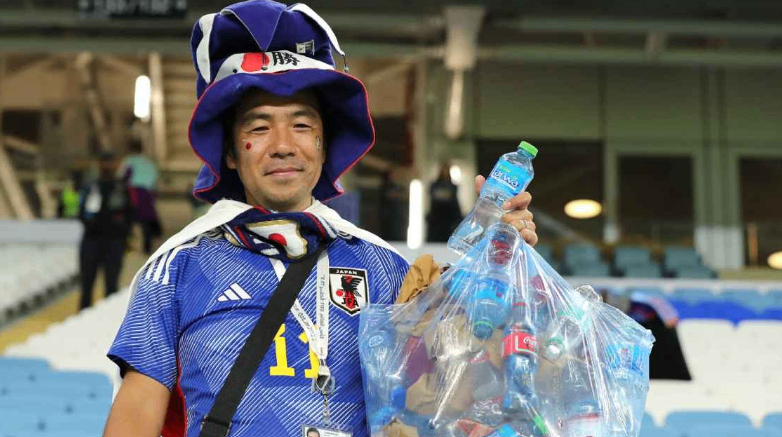
(Photo credit: Getty Images)
"Cleaning up after football matches is an extension of basic behaviours that are taught in school, where the children clean their school classrooms and hallways," Scott North said. "With constant reminders throughout childhood, these behaviours become habits for much of the population."
Lastly, while the Scots outdrink Americans and the Japanese prove they are far more polite than U.S. citizens when it comes to cleaning up, Norway fans show that fan support is collective action, not singular screams, with the “Viking Row.”
“The action, which generally starts with the blowing of a Viking horn, involves sitting down as if in a longboat and – to an accelerating drumbeat – drawing an imaginary oar through water while chanting “Ro” (Norwegian for “row”),” the Guardian reports.
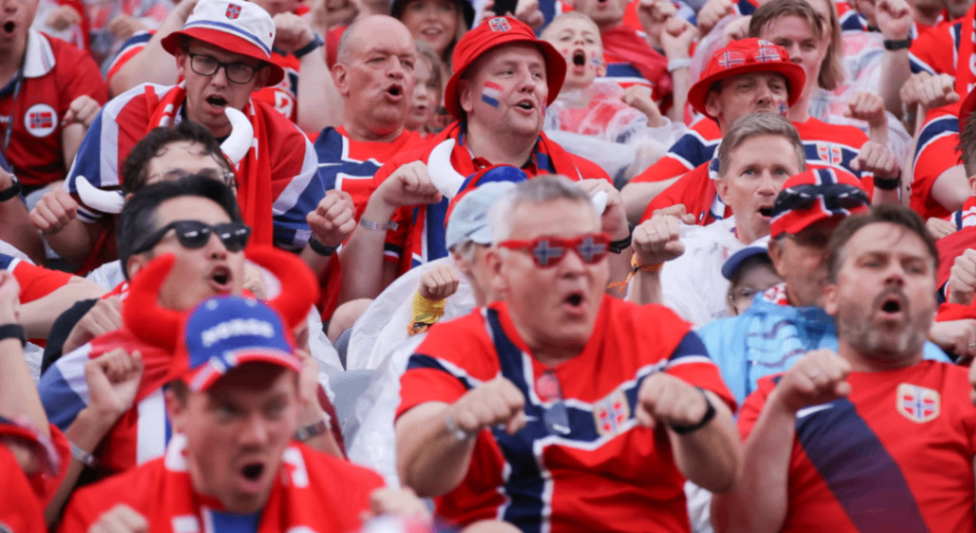
(Photo credit: James Gill/Danehouse/Getty Images)
ESPN pinpoints exactly when the famous state team row became a sensation after Ole Frøystad invented it.
“The story of how it was created -- and how it became a World Cup phenomenon -- starts in a bar less than six months ago, with a notepad of songs, and one particular Norway fan fixated upon creating a chant that would put his country on the football map and take over the World Cup,” ESPN reports.
“I wanted it to be short. I wanted it to be easy. I wanted it to be hard. I wanted to have culture in it, and I wanted it to have a massive impact,” Frøystad told ESPN.
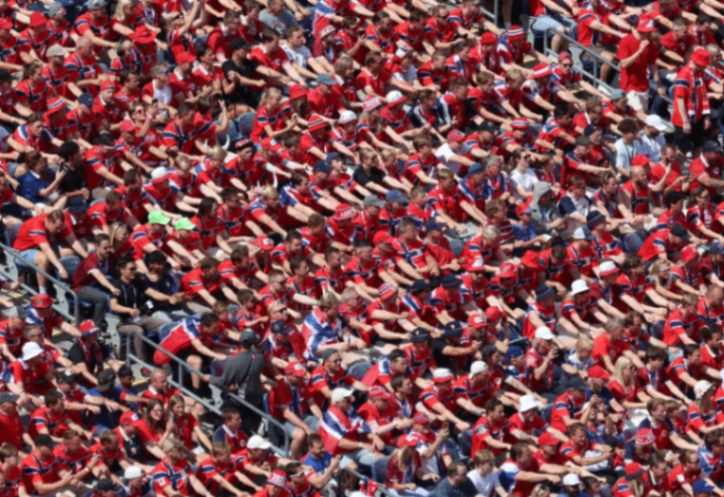
(Photo credit: Mark Stockwell/AP)
It did make a massive impact, along with the other countries' contributions to the 2026 FIFA World Cup. No matter who wins or loses in international football matches, all fans walk away with a little more culture as American and global fans sit side by side in stadiums throughout the country.
2
0

Comments