(WILLITS, CA.) - Mendocino County residents were shaken awake this morning by a magnitude 5.6 earthquake, according to the United States Geological Survey (USGS), causing power outages and leading emergency officials to assess damage and injuries across the region.
The epicenter was located roughly 11 kilometers north of Redwood Valley, and was about 12 kilometers away from Willits, with a depth of 8.9 kilometers.
A ShakeAlert notification went off on the phones of residents all over the Bay Area, reaching as far as San Jose, which is about 195 miles away from Mendocino County.
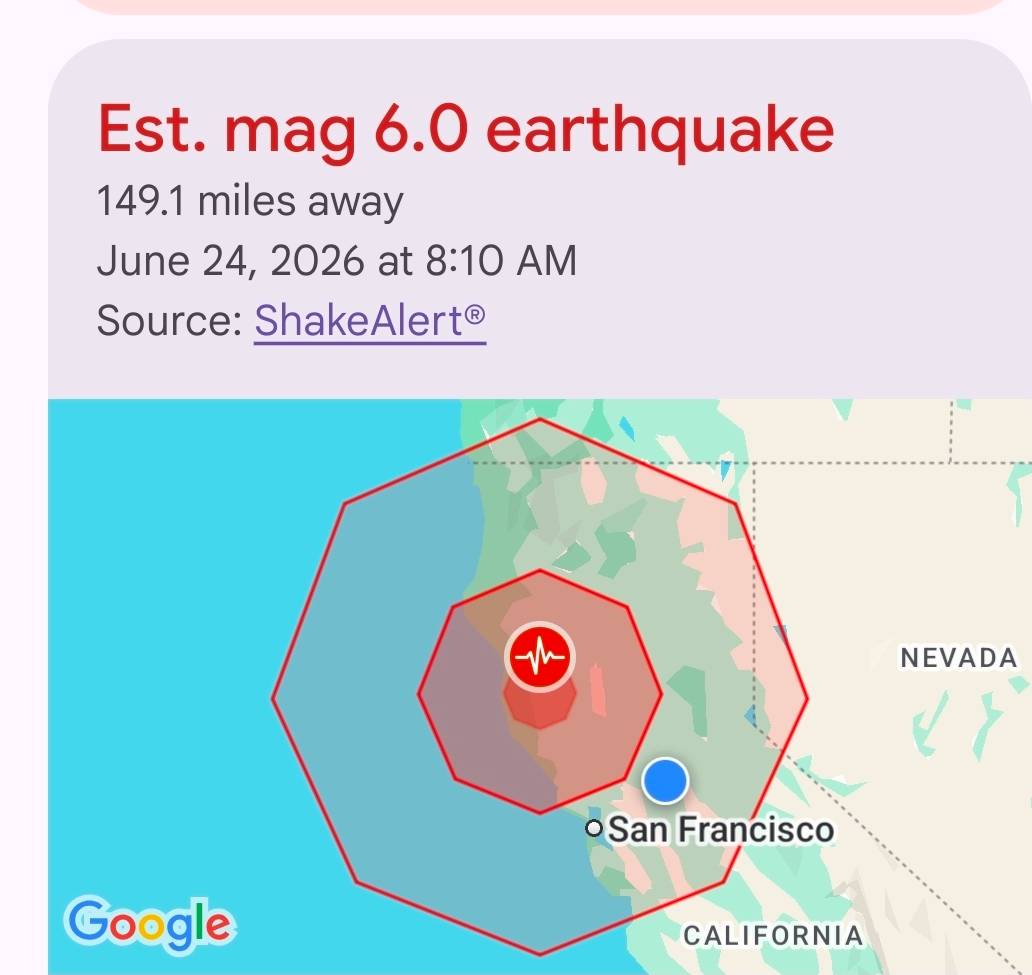
Photo Credit: OpGov.News
The USGS also reported that “approximately 80,000 people experienced Moderate (MMI V) to Very Strong (MMI VII) shaking, and around 10 million people felt Weak (MMI II-III) to Light (MMI IV) shaking.”
The region had been experiencing tremors in the week leading up to the incident, with the magnitudes of these "mini quakes" ranging from 1.0 to 2.8.
Following the main quake, multiple aftershocks were recorded throughout the area. Emergency officials continued assessing the extent of the damage, while utility crews worked to restore power to affected communities.
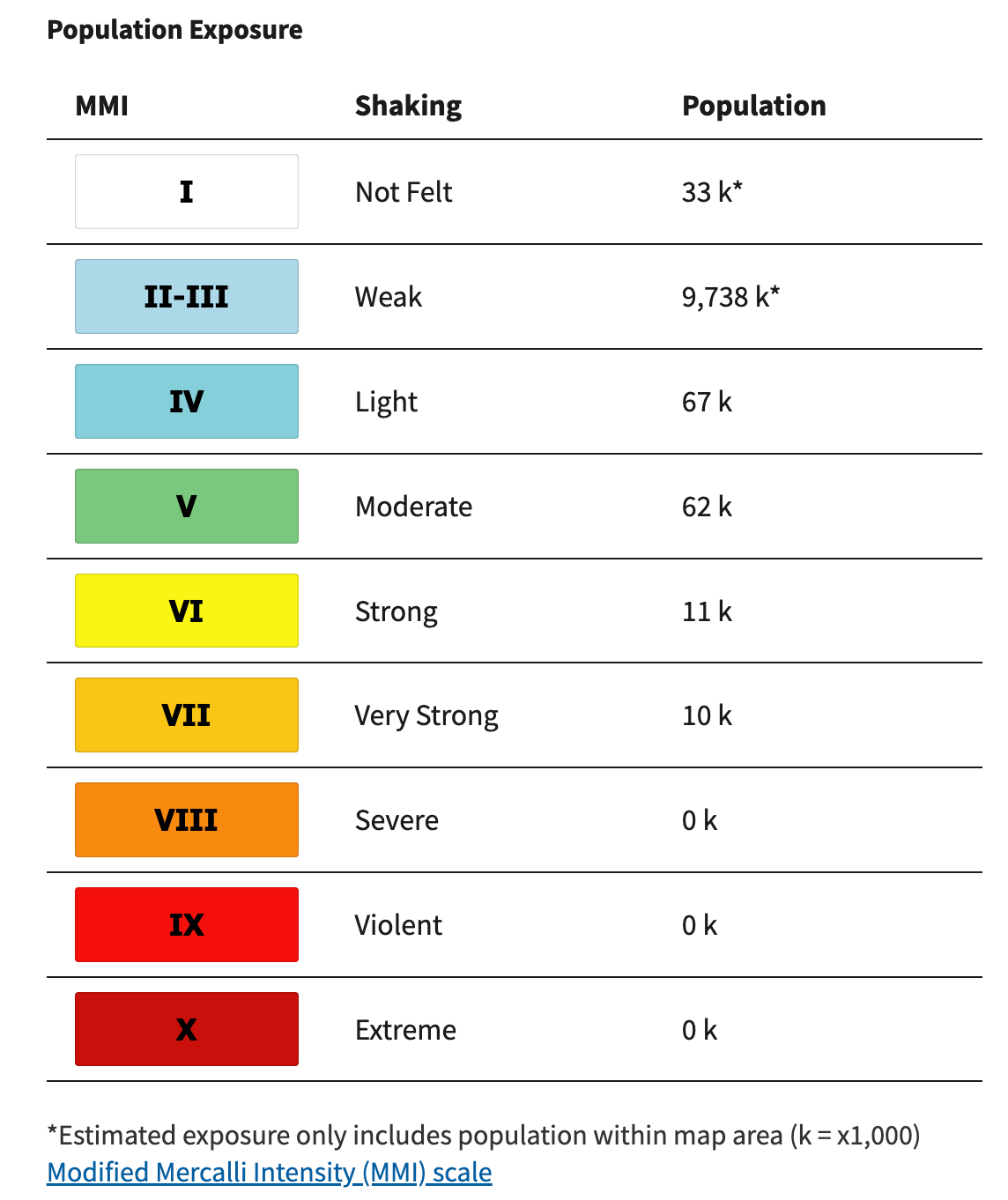
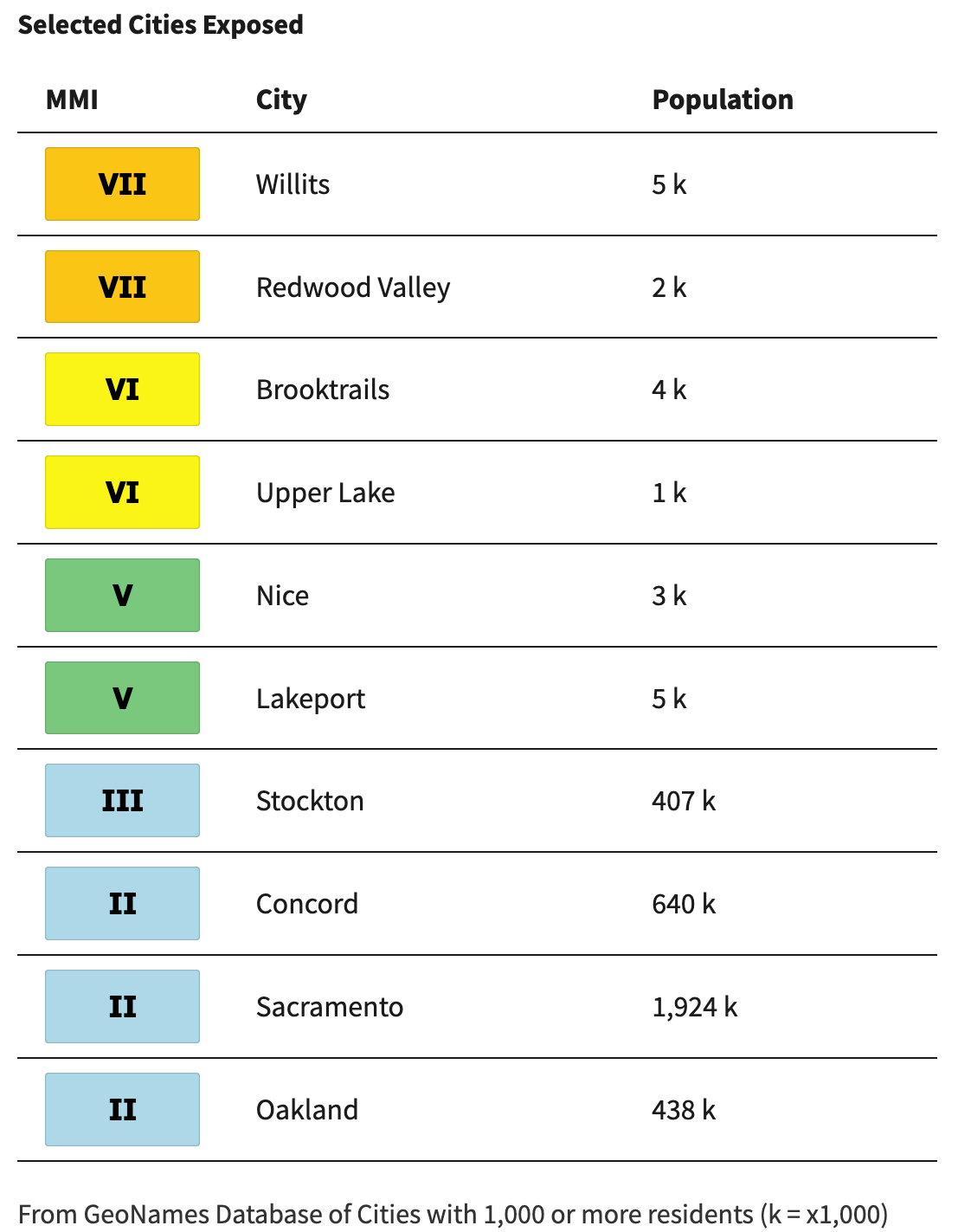
Photo Credit: United States Geological Survey / Tables Showing Shake Intensity for Different Areas in California
Despite the earthquake occurring roughly 200 miles north of the Tri-Valley, many residents reported receiving ShakeAlert notifications and feeling light shaking. This serves as a reminder that earthquakes occurring far from the region can still be felt locally due to California's interconnected fault systems.
While today's earthquake occurred in Northern California and was not connected to Southern California’s San Andreas or San Jacinto fault systems, recent research has highlighted the importance of monitoring stress accumulation along major faults throughout the state.
In fact, according to a study published by the American Geophysical Union (AGU), researchers in the Department of Earth Sciences at the University of Hawaiʻi at Mānoa used computer simulations of earthquake activity from the past 1,000 years to determine that stress accumulated along the San Andreas and San Jacinto fault systems has reached its highest level in 1,000 years.
The model examined how stress builds up along different fault segments and how earthquakes on one fault can affect nearby faults over time. Researchers found that this transfer of stress could make Cajon Pass, located at the junction of the San Andreas and San Jacinto faults, a critical gateway for earthquake activity. The pass could either speed up or block the spread of ruptures between fault segments and neighboring faults.
The study reported that “fault interactions at Cajon Pass may pose a more significant hazard to nearby densely populated regions, including Los Angeles, San Bernardino, Riverside, and Coachella Valley, than previously recognized.”
Ultimately, incidents like this prompt Californians to be mindful of the fact that they live in earthquake country.
While it is impossible to predict when or where the next major earthquake could occur, being prepared remains critical. Residents are encouraged to have emergency kits, develop safety plans with loved ones, and stay informed through credible sources.
Earthquake Safety & Preparedness Information:
To add to or correct any information in this report, please email me at yashi.s@lead4earth.org or leave a comment below.
0
0

Comments