(TALLHASSEE, Flor.) -- November 3 marks Election Day for 2026, where 470 congressional seats will be up for grabs.
Members of the House of Representatives serve two-year terms, meaning in even-numbered years (ex: 2024 and 2026), every seat will be open for election. Senators serve staggered six-year terms, with 35 seats up for grabs on November 3.
2026 is especially busy this year, with 36 governor races to conclude in November as well.
With election season coming to a close, Elon Musk is making headlines for a cumulative $276 million in Republican donations, contributing to an already large discrepancy in media spending.
Republicans have outspent Democrats by nearly $400 million in Midterm campaigns.
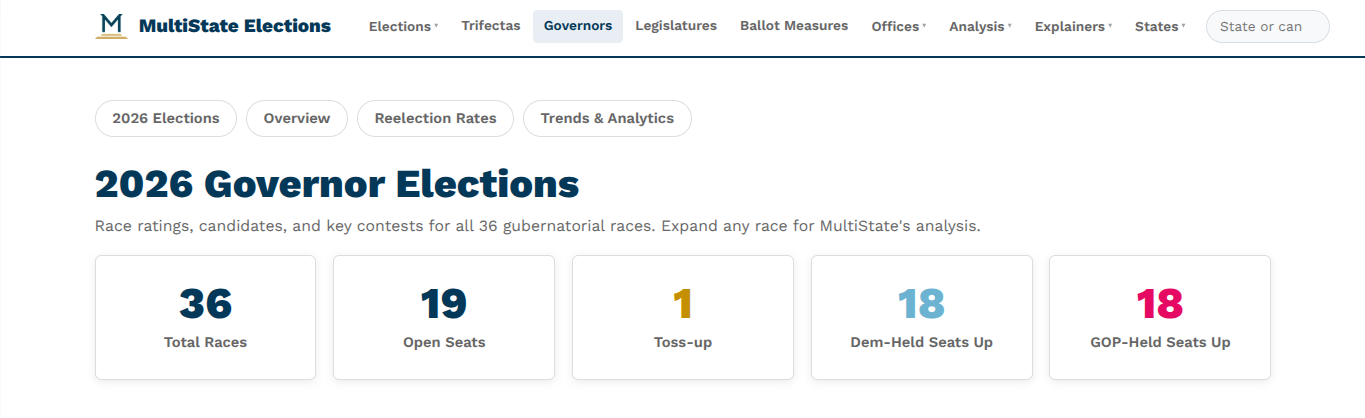
Photo Credit: MultiState Elections
With the possibility of so much personnel turnover, the congressional elections will dominate the media cycle. As the news is reported, it is important to ask what impact the new Congress may have on your community and the country.
As Republicans hope to retain a majority in Congress, major news corporations are keying in on the shortcomings of the 119th (current) Congress.
The House of Representatives has received attention, in part due to the U.S. conflict in Iran. Both the Senate and the House of Representatives voted to pass the Lindsey Graham Act of 2026.
The act was made to extend the sanctions imposed on Russia and Iran through 2031. The act stems from the Iran Sanctions Act of 1996, and was signed by (Republican) President Donald Trump in September.

Photo Credit: FDD Action / Alexandria Paolozzi Moore, Senior Director of Government Relations
“The Iran Sanctions Act has been the legal foundation of America’s ability to keep foreign firms out of Iran’s oil fields. Letting it expire wouldn’t just create a gap in the law, it would tell Tehran and Moscow, at the worst possible moment, that Washington’s pressure campaign has an off switch.”
Just a few months after the U.S. and Iran conflict, which has reportedly cost America billions, the Republican-led Congress extended the Iran Sanctions Act. The act was set to expire on December 31, and was a 262-159 vote in the House.
The act also branches to Russia and gives the executive office extended power to levy sanctions. The ultimate effect of the bill is to limit and prevent foreign investment in Iranian energy.
The conflict in Iran has and will continue to dominate the mid-term media cycle, as many headline issues are a direct result.
In September, the Senate attempted to pass the Iran War Powers Resolution, but narrowly failed in a 49-to-50 vote, where a democratic senator was unable to attend the vote.
The House had already passed the resolution, but despite the Republican majority in the Senate, the vote only nearly passed.
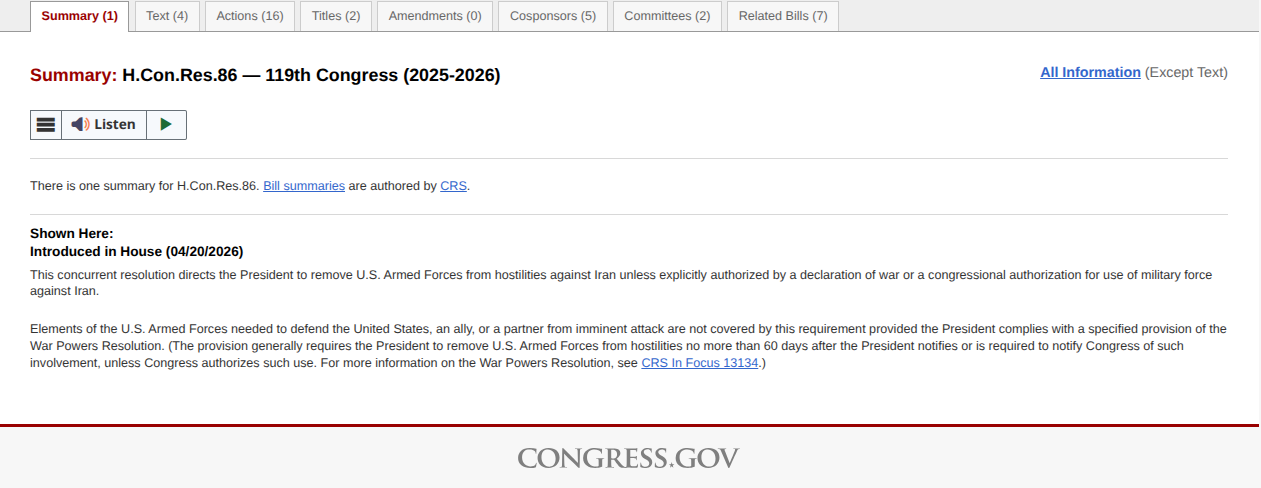
Photo Credit: Congress
The potential War Resolution is significant, as the legislation was filed as a concurrent resolution.
Unlike regular bills, concurrent resolutions do not need the president’s signature. Concurrent resolutions send a formal message to the executive office. In the same breath, Concurrent Resolutions are considered ‘unconstitutional and unenforceable’.
In essence, four Republican senators voted for the War Powers Resolution, despite acknowledging the president would not have to comply.
Susan Collins of Maine and Thom Thillis of North Carolina voted for the resolution and are up for reelection in the coming November cycle.
Although each election happens individually, and a Representative from Virginia will never be on your Florida ballot, party alignment and success is important in elections. Party affiliations are indicators of which legislation and politicians a candidate may support.
More often than not, Republican congressman will vote alongside their party on bipartisan topics. The same logic follows democrats, who are hoping to take control of Congress.
National security is a focus in general Republican media, while Democrats have emphasized domestic affordability, particularly gas prices.
Beyond national issues, Congressmen have functions in the areas they were elected to. Representatives can source and direct funds to local projects, such as community renovations.
Senators confirm State Judges and handle broader-scale economic issues, such as interstate road construction.
To see all of the candidates and elections happening near you, go to https://www.ballotready.org/ and scroll to the bottom to select your state.
If you have any questions or concerns, please comment and email me at jason.f@lead4earth.org
0
0

Comments