PLEASANTON, Calif. — Pleasanton’s newest sidewalk inspectors don’t carry clipboards. They have wheels.
Small robots called Daxbots are starting to make their way along the city’s sidewalks and pedestrian paths this fall, traveling at roughly walking speed while examining the infrastructure beneath them. Their assignment: help Pleasanton figure out where getting around town is harder than it should be.
To residents who encounter one, the machines may look like autonomous delivery vehicles that have lost their lunch order. What they are collecting is considerably less appetizing: cracks, steep slopes, uneven pavement and other features that can turn an ordinary sidewalk into an obstacle for someone using a wheelchair, walker or stroller.
And they have plenty of ground to cover.
The city plans to assess about 360 miles of sidewalks and trails, 1,850 curb ramps, 125 signalized intersections and 266 transit stops, with fieldwork expected to continue through November. The work is part of Pleasanton’s update to its Americans with Disabilities Act Self-Evaluation and Transition Plan.
Daxbot says its sidewalk-assessment technology uses precision lasers, GPS and an inclinometer to measure surface defects, running slopes and cross-slopes. It can also evaluate curb ramps for features such as width, slope, and landing space. The results are organized into GIS-ready data, giving engineers a map of where accessibility problems are and how serious they may be.
For Pleasanton, however, finding a problem isn’t the same as fixing it.
A robot that discovers a cracked sidewalk won’t summon a repair crew on the spot. The survey is meant to build a citywide inventory that officials can use to decide which barriers should be addressed first, how much the work could cost, and how repairs should be phased over time.
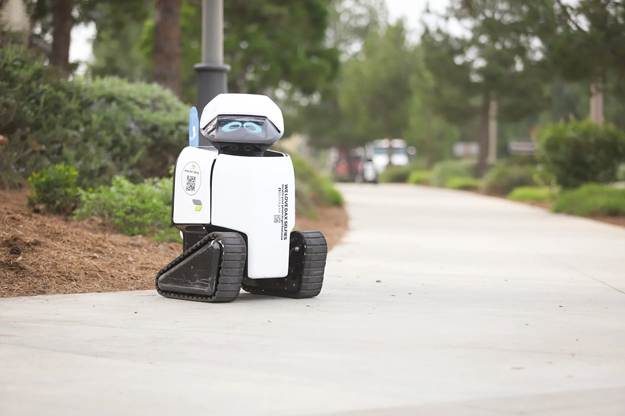
Daxbot uses tracked robots equipped with sensors to survey sidewalks and curb ramps for accessibility barriers.
Photo: Daxbot
That is a bigger task than the sidewalk patrol alone. Pleasanton’s review also covers city facilities, parks, parking lots, programs and policies. City documents say the finished transition plan is supposed to include a method for prioritizing barriers, estimated repair costs and an implementation schedule.
The city is updating work that has been on the books for a while. Pleasanton’s existing ADA transition plan dates to 2002, while its previous sidewalk and curb-ramp assessment was completed in 2009.
Sidewalks, unlike software, don’t automatically install updates.
The city’s public announcement doesn’t lay out which neighborhoods the Daxbots will survey first or exactly how one cracked sidewalk will rank against another. Those decisions will matter once the robots finish roaming: with hundreds of miles of pedestrian infrastructure, Pleasanton isn’t going to repair every defect at once.
The price tag is also larger than an earlier capital-budget figure might suggest. The broader project carries a price tag of up to $435,276 under a professional-services agreement with Bureau Veritas Technical Assessments listed in the City Council’s March agenda. That amount covers the larger ADA planning effort, not just the Daxbot survey, so public documents don’t provide a stand-alone price for the robots themselves.
The updated plan is targeted for completion in March 2027.
The machines also aren’t making the final calls. Pleasanton is working with Bureau Veritas and Daxbot, and the robotic survey is designed to collect measurements more quickly while reducing the amount of fieldwork people have to perform in or near traffic. Engineers and city officials still have to interpret the findings, set priorities, and decide where public money goes.
Then there is the question that tends to follow almost any machine rolling through a neighborhood: What exactly is it recording?
The city says the Daxbots are collecting information about infrastructure, not the people using it, and that they do not store personal information.
So if a small robot rolls past you on a Pleasanton sidewalk in the coming months, there is little reason for alarm.
It isn’t delivering dinner, issuing parking tickets, or judging your landscaping.
It may, however, have some concerns about the curb ramp.
To add to or correct any information in this report, please contact me at james.l@lead4earth.org.
0
0

Comments