(SACRAMENTO, CA.) — Sacramento is moving forward with a financing strategy that could use future property-tax growth to help pay for infrastructure needed to transform the former Sleep Train Arena site into Innovation Park, a massive North Natomas development anchored by a proposed teaching hospital.
The Sacramento City Council on July 28 took up a Resolution of Intention to establish the Innovation Park Enhanced Infrastructure Financing District, or EIFD, beginning a multistep process that could ultimately direct future property-tax growth generated within the district toward roads, sewer systems, storm drainage, water facilities and other public infrastructure.
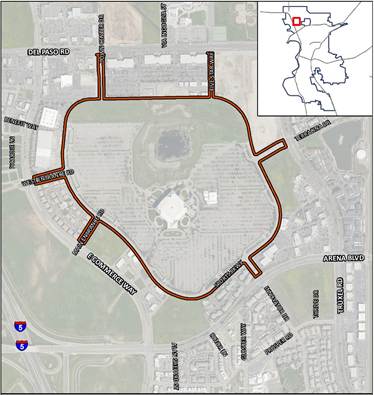
Map of the Innovation Park planned unit development. (Credit/City of Sacramento.)
The proposed district covers Innovation Park, the approximately 183-acre redevelopment of the former arena site approved by the city in 2022. Plans divide the development into three mixed-use districts, including a health district centered around a proposed California Northstate University hospital.
City staff told the Council the hospital is envisioned as a 350- to 400-bed teaching hospital and part of a roughly $1.5 billion CNU project that could bring significant employment to the area.
Economic Investment Manager Leslie Fritzsche described the project as an opportunity to increase health care access for Natomas and the surrounding region. (Credit/Metro Cable 14 YouTube.)
"This would be the first hospital in the North area," Economic Investment Manager Leslie Fritzsche, told the Council, describing the project as an opportunity to increase health care access for Natomas and the surrounding region.
Before that development can occur, however, the former arena property needs substantial infrastructure.
According to Fritzsche, a 2024 estimate placed the cost of just the site's backbone infrastructure at approximately $130 million to $150 million, including roads and other improvements needed to support development.
That's where the proposed EIFD comes in.
Rather than imposing a new tax, the financing mechanism would establish a base year for property-tax revenue within the district. As development occurs and property values increase, a portion of the additional property-tax revenue generated above that baseline — known as tax increment — could be directed toward eligible infrastructure within the district.
The distinction is important: Sacramento is not proposing to charge property owners a new tax to generate the money, nor has the city approved spending $130 million to $150 million on Innovation Park.
Instead, the city is considering whether future growth in property-tax revenue generated by development at the site should help finance the infrastructure needed to support that development.
Supporters argue that investment is necessary to finally transform a site that has remained largely dormant since the Sacramento Kings left the arena for downtown.
Sacramento-Sierra Building & Construction Trades Council Director Kevin Ferreira supported the EIFD as proposed by the Sacramento Kings. (Credit/Metro Cable 14 YouTube.)
Kevin Ferreira, director of the Sacramento-Sierra Building & Construction Trades Council, which represents 21 unions and 30 apprenticeship programs, told the Council that organized labor supported the EIFD as proposed by the Sacramento Kings, with California Northstate University’s proposed hospital serving as the catalyst for development at Innovation Park.
“We are here to support the EIFD as proposed by the Sacramento Kings that highlights CNU as the catalyst project to jump-start Innovation Park development,” Ferreira said. “We believe the CNU hospital is the only project that will be the jump-starter for Innovation Park. For us, anything outside of that, we will be highly opposed to.”
Ferreira warned that an alternative proposal from the city could jeopardize both the development and the employment opportunities labor organizations expect it to create.
“It will kill the project. It will kill thousands of jobs for construction workers and then the permanent jobs in medical facilities,” Ferreira said. “We have been good partners with the city in putting people to work, and I would like to continue and partner with the city.”
Ferreira argued that losing the project would leave Sacramento without a comparable development ready to replace those jobs.
“There is not another project coming around for the city to replace those lost jobs if this goes the wrong way,” Ferreira said. “We ask for your support to do the right thing. Put people to work. That is what people are asking for.”
Other supporters focused on the need for medical services in North Natomas.
UA Local 447 Plumbers & Pipefitters in Sacramento Business Manager Todd Schiavo said the hospital would provide far more than construction employment. (Credit/Metro Cable 14 YouTube.)
"I can't get a doctor's appointment or see a specialist for three to six months," Todd Schiavo, business manager for UA Local 447 Plumbers & Pipefitters in Sacramento, told the Council. "There is a shortage of doctors, nurses, and CNU teaching hospital is going to produce more."
Schiavo said the hospital would provide far more than construction employment, pointing to "custodial, clerical, sales jobs, all kinds of jobs," before telling the Council, "I stand in strong support EIFD for CNU project only."
That last qualification highlights one of the important questions surrounding the proposal: although much of the public discussion centered on CNU's hospital, the proposed financing district is not itself limited to financing that particular private development.
The EIFD would be a broader infrastructure financing mechanism covering Innovation Park, meaning the district and the hospital proposal are related but separate.
President of North Natomas Community Coalition Lynn Lindsey argued that Innovation Park could help Sacramento diversify its economy beyond state government. (Credit/Metro Cable 14 YouTube.)
That distinction surfaced during public testimony when President of North Natomas Community Coalition Lynn Lindsey said, "I am a little confused. I thought we were talking about EIFD to get it passed, not specific project."
Lindsey also pointed to similar financing mechanisms associated with Sacramento's Railyards and Aggie Square developments and argued that Innovation Park could help Sacramento diversify its economy beyond state government.
According to that testimony, the proposed Innovation Park EIFD also includes safeguards requiring a new "catalytic development project" to increase revenue and provide additional investment before reimbursement, which Lindsey described as "protecting city, taxpayers and Natomas."
“We need this in North Natomas,” Red Baines told the Council. “We had promises given to us.”
Baines, who said he lives near the former Sleep Train Arena and serves on his condominium board, described uncertainty among residents who have watched the property sit largely dormant.
“This is so important to our community,” Baines said. “People are living there wondering, ‘What is going on here?’”
He pointed to Sacramento’s previous use of similar financing mechanisms and argued that North Natomas deserves the same opportunity for investment.
“It has been used before in the city,” Baines said. “I think this is a deserving need that we have for our community.”
Baines closed by asking council members to support the proposal, saying, “I thank you for your consideration and your yes vote.”
Still, despite the discussion of the hospital, jobs and potentially hundreds of millions of dollars in infrastructure, the July 28 action represents only the beginning of the financing process.
The city's agenda specifically called for adoption of a Resolution of Intention to establish the Innovation Park EIFD, along with establishment of a Public Financing Authority and other actions needed to move the process forward.
That means critical financial details remain to be determined before Sacramento ultimately establishes the district and begins committing future tax increment to infrastructure.
Those decisions will determine how much future property-tax growth is directed into Innovation Park, which infrastructure projects qualify for financing and how the city structures the relationship between public infrastructure investment and the private development expected to generate the new revenue.
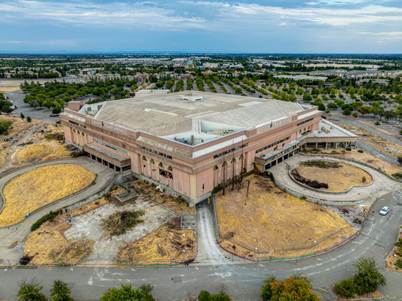
An aerial view shows the former Sleep Train Arena and surrounding property in North Natomas, where Sacramento is advancing plans for Innovation Park. (Photo Credit: Stephen Leonardi/Pexels)
For supporters, the financing district represents a way to turn a former arena site into an economic engine built around health care, jobs and new development.
For taxpayers, however, the central question moving forward is more specific: how much future public revenue will Sacramento commit to Innovation Park, what will that money pay for and what must private developers deliver in return?
If you’d like to add or correct anything in this report, feel free to reach out to me or leave a comment below. Submit Sacramento tips and story ideas to Sarah Denos at sarahkdenos@gmail.com.
0
0

Comments