(ESCAMBIA) --- Median-area income matters when it comes to dispersing Community Redevelopment Agency (CRA) funds.
The point was made at the July 23 meeting, when the Board of Escambia County Commissioners raised concerns about annual income for residential improvements. The Residential Improvement Grant Program Funding and Lien agreements covered five properties on the agenda, ranging from $9,200 to $14,200.
The primary change to the income-based financial criteria is raising the area median income threshold from 80% to 120%, reflecting rising housing costs and the overall cost of living.
Staff informed officials that the revisions are intended to allow more income-qualifying participants to enter the program, since many county applicants are on the threshold, keeping them from receiving roof replacement assistance.
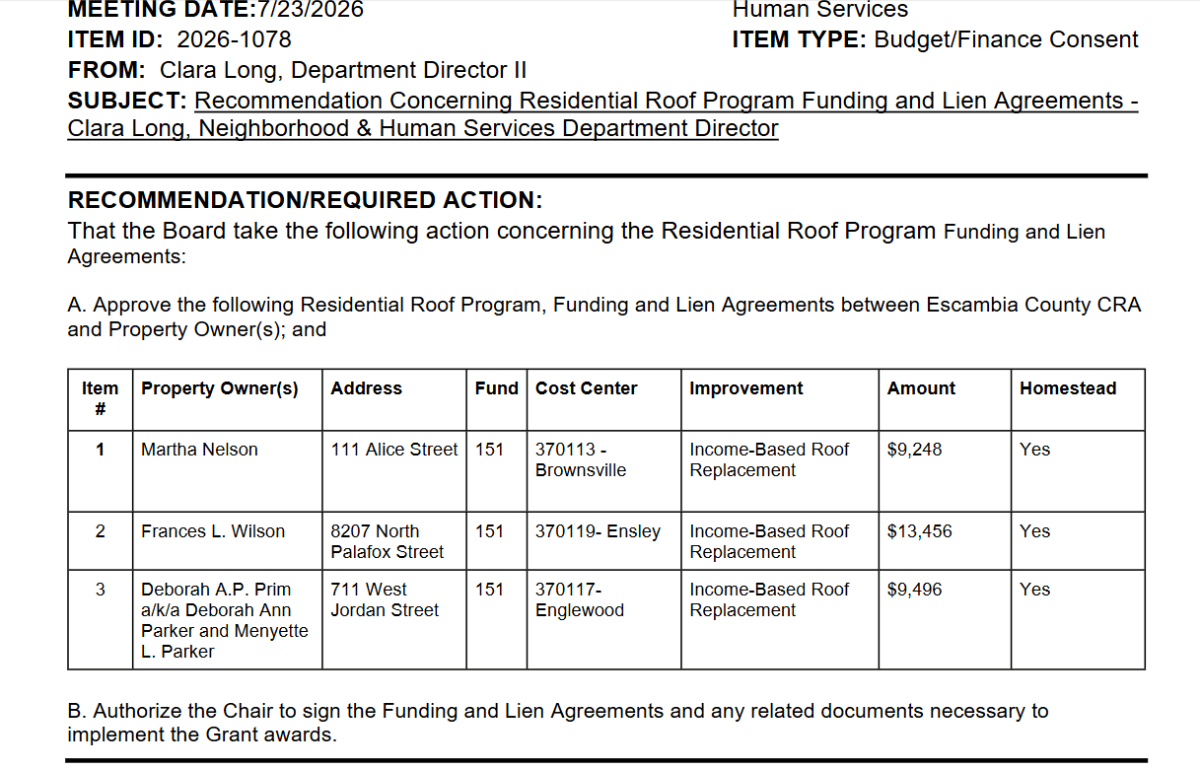
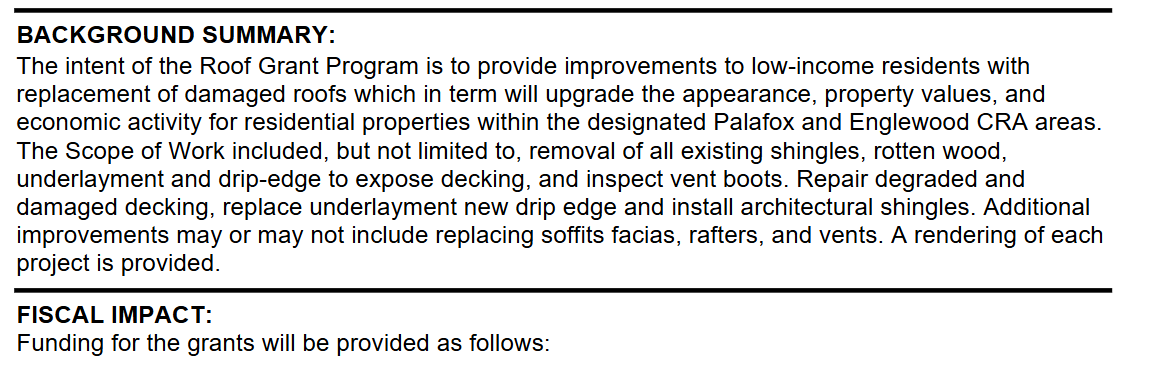
(Photo: Summary of Income-Based Roof Replacement program properties up for approval by the Escambia County Board of Commissioners)
The rise goes from a single-household at 80%, earning $54,900 annually, to 120%, raising single-household income to $78,300. The 120% raise for a two-person household is $89,420.
However, Commissioner Mike Kohler confirmed that doing so may impact other CRA funding opportunities, including affecting the Tax Increment Financing (TIF) fund.
While the revision allows more financially stable households to receive assistance, Commissioner Lumon May said the median income in his district is not $78,000.
"A lot of people who work for this county that don’t even make $50,000 a year in a leadership position, and now I am going to be subsidizing someone who makes $80,000 dollars,” May said. “I would like the data to back it up on how many we are missing.”
CRA funds are intended for the “less-fortunate,” May said.
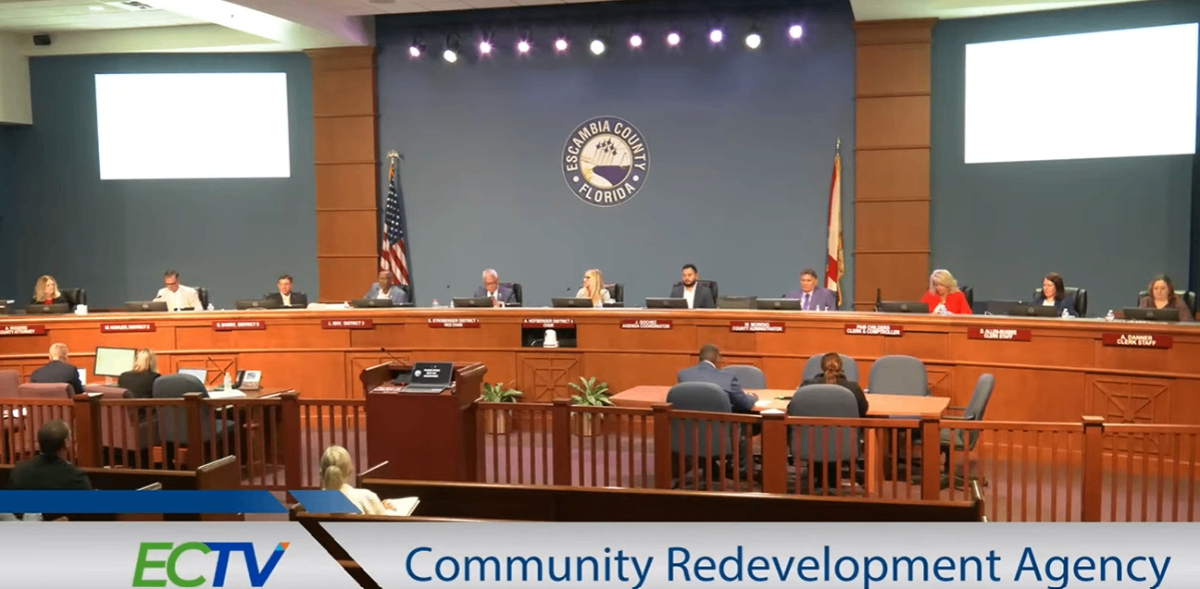
(Photo: Community Redevelopment Agency discusses median-home income threshold for Neighborhood & Human Services roof projects)
Kohler confirmed the same.
“We are subsidizing people that are in the median income now for the whole county, and I don’t know if that is right either," Kohler said. "I think we should rethink this."
Commissioner Ashlee Hofberger also said she wanted to “put on the radar," an additional need.
“I have had people who own group homes that have reached out to me, like Capstone and other places that provide housing to those who are mentally or physically disabled, so they have expressed concern that they are not eligible for the wheelchair ramp installation or the home generator," Hofberger said, adding home generators are also needed due to refrigerating medication.
"If there is a way to work with them so they have access to these dollars, I would appreciate that," Hofberger said.
Additionally, some homes need shower chairs and grab bars to comply with the Americans with Disabilities Act. May mentioned adding Commissioner Steve Barry to his suggestion.
“Can’t the solution just be that they are eligible,” Barry said, adding the importance of serving those who are disabled. "The group homes are nothing but a clustering of some of our most needy citizens."
May said he believes ramps could be built for free by neighboring churches and ministries, prompting him to defer to Clara Long, Director of Neighborhood & Human Resources, for the CRA to assist those who rightfully need ramps, including group homes.
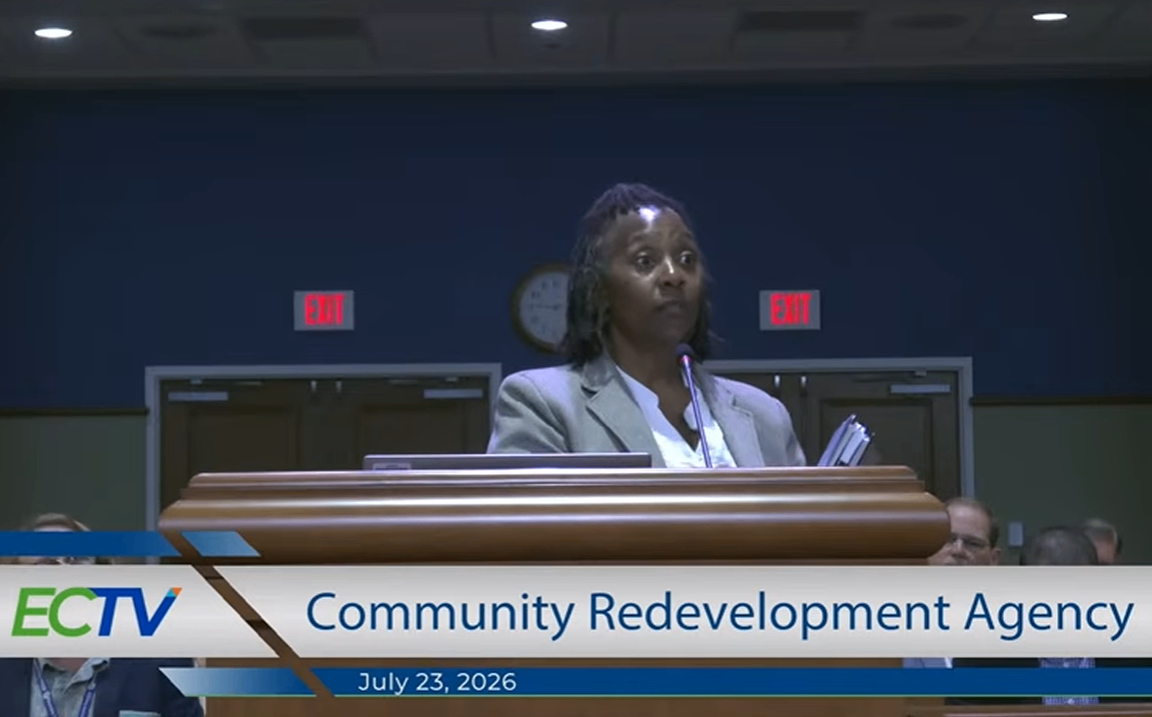
(Photo: Clara Long, Escambia County Neighborhood & Human Services Department Director at the July 23 CRA meeting)
“We can have a commissioners day, and I am pretty handy with a hammer,” May said.
0
0

Comments