(LONGVIEW, WA.) -- In a final update provided by the Washington Department of Ecology, on July 1, 37 days after the initial tank failure, Unified Command made the decision to disband and transition the response out of emergency status.
This update is in response to the incident that took place on May 26, 2026, when white liquor, a chemical mixture with a pH of 14 used to break down wood into paper pulp, was released from a storage tank at Nippon Dynawave pulp and paper mill in Longview, WA.
The 900,000-gallon tank was about two-thirds full of white liquor at the time of the spill. The exact amount of product spilled remains unknown.
Eleven employees died during the incident. Seven other workers and one firefighter were also injured.
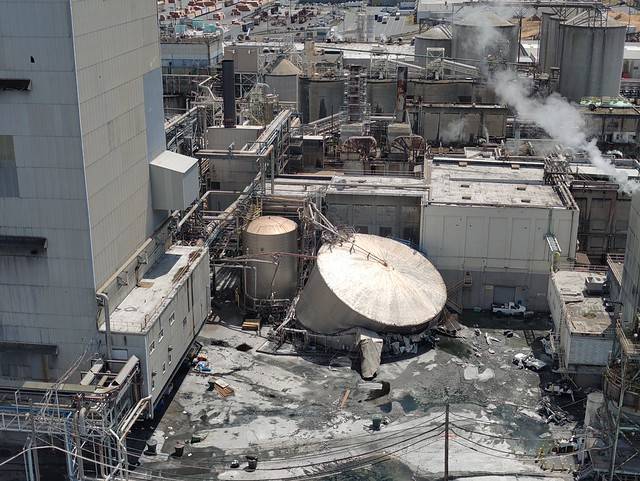
Photo Credit: EcologyWA Flickr
The update included information on site cleanup, environmental monitoring, and next steps.
“On July 1, crews removed the last of the liquid from Tank G, the failed white liquor tank. Approximately 12-thousand gallons of white liquor was pumped from the tank over the course of three days and will be handled by the on-site water treatment facility. Tank E, which contained black liquor and shared pipework with Tank G, has been emptied and will be secured in place for the remainder of the investigation,” Public Information Officer Anna Izenman said.
Decontamination of the affected area has been completed, with crews prioritizing the restoration of safety systems and operations at facilities with a shared infrastructure.
The following update was given concerning air monitoring.
“EPA monitored air quality in the community, watching for hydrogen sulfide after the incident and throughout the flushing operation. Hydrogen sulfide is a gas released when the chemicals in white liquor combine with water. Community air monitoring was stopped on June 4 after 10 days of 24-hour monitoring. A total of 51,629 air quality readings were collected at fixed monitoring stations and 1,039 readings from roving handheld monitors. Hydrogen sulfide has an extremely low odor threshold and while the smell was noticeable in the community, concentrations remained low enough to result in zero detections by monitors.”
“Air monitoring has continued at a reduced level, with 24/7 fixed monitors along the facility fence line. From June 4-30 the monitors continued to collect an additional 161,424 samples with zero detection of hydrogen sulfide. Monitoring will continue until Tank G has been dismantled,” Izenman said.
Water contamination has also been a concern after the incident. Water began being flushed through the dike and ditch system on Jun. 3 to dilute and safely discharge contamination from the system.
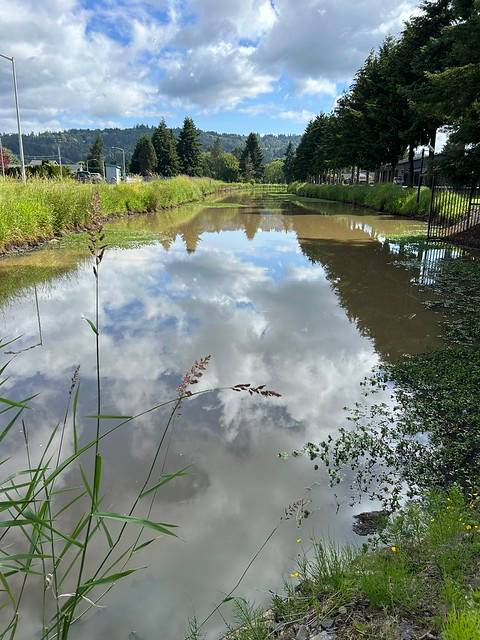
Photo Credit: EcologyWA Flickr
Looking ahead, authorities say that investigations into the incident are still being conducted by the Washington Department of Labor and Industries (L&I) and the U.S. Chemical Safety Board (CSB).
“L&I has a maximum of 180 days from the date of incident to complete their investigation and release a report of their findings. That deadline is Sunday, Nov. 22, 2026. CSB anticipates an update to their investigation will be released before the end of September with a full report next spring around the one-year mark,” Izenman said.
Furthermore, the Washington Department of Ecology’s compliance staff will determine if there were violations of permits or state and federal rules and laws related to air and water quality or dangerous waste management. This process will include a review of written reports, interviewing personnel, and visits to the site.
If you would like to add to or comment on this report, please email me at rory.h@lead4earth.org.
0
0

Comments