(ATLANTA) --Why do warming centers not keep homeless people warm for long?
Nobody knows nor asks, just remaining grateful for a place to sleep in warm peace.
Imagine being invited into a building to sleep under a blanket in habitable conditions, knowing that as soon as the sun rises, you will face a day outside in temperatures that you were just sheltered from hours before.
Not a comforting thought.
Homeless people only have a limited window to take advantage of the warming centers when temperatures fall below 35 degrees. While the Peach State is doing its part to provide shelter as temperatures drop, the question remains. Why do they have to leave?
In the meantime, there are some warming centers available in multiple counties across Georgia, including Cherokee, Fulton, Cobb, DeKalb, and Gwinnett. Gateway Center in Atlanta and Must Ministries in Marietta are a few places that have provided warming centers this month.
Many locations open around 6 p.m. and ask homeless people to leave the following morning.
Old Adamsville Recreation Center was open on Dec. 8 and 9, operating from 8 p.m. to 6 a.m.
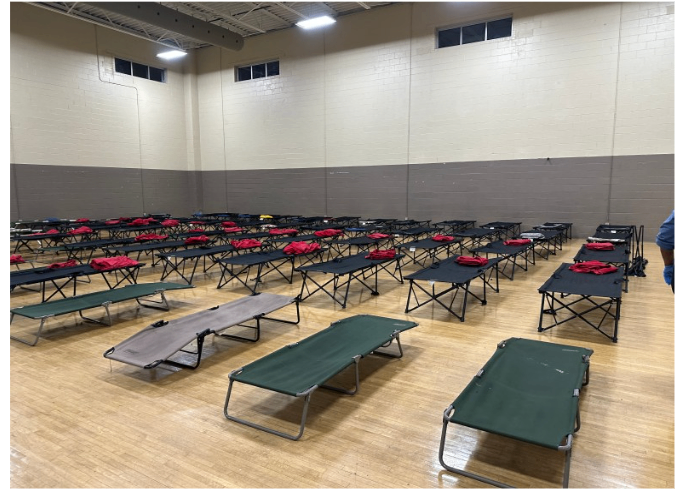
Cots at the Old Adamsville Recreation Warming Center (Photo: Atlanta Voice)
Temperatures range between 36-50 degrees during the day, meaning homeless people will most likely be cold without warm clothing.
While those sheltered can turn on their heaters and bundle up to combat the cold, the homeless must walk back out into the harsh weather.
Experiencing cold weather along with wind, rain, and chills can’t be fun for those unsheltered.
OpGov.ai reached out to Gateway Center Director of Residential Services Tonya Boose.
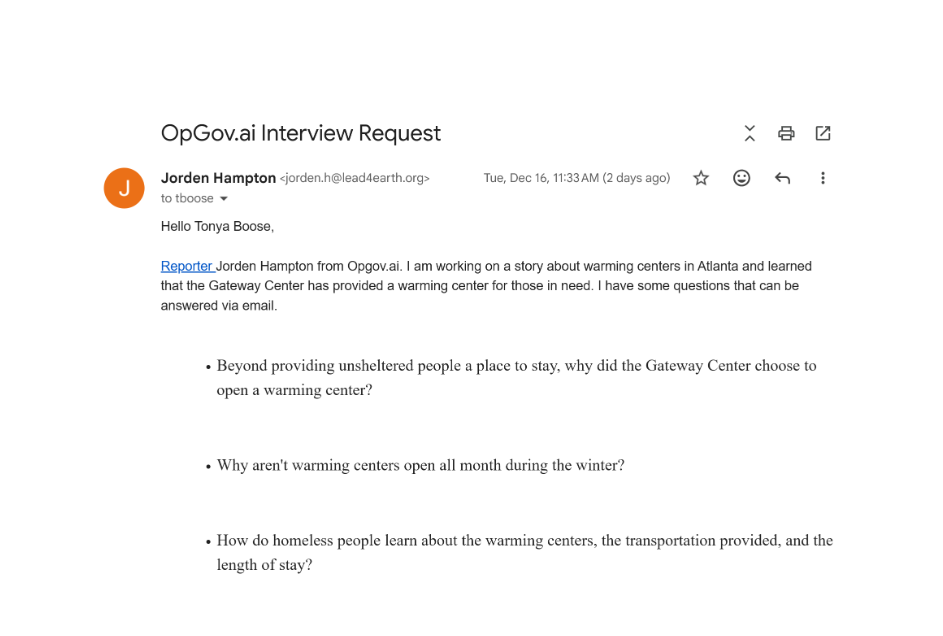
Initial email sent to Tonya Boose
Boose didn’t respond to the email request, so this real-time reporter followed up with a voicemail.
The Gateway Center website states that its mission is to connect people experiencing homelessness with the support they need to become self-sufficient and find a permanent home.
Yet, they ask the unsheltered to leave till later. Does not sound like they are fulfilling that mission statement while it's freezing outside.
The average low temperature in Georgia in the winter is 37 degrees, according to Wanderlog, with wind speeds also reaching 11.8 miles per hour.
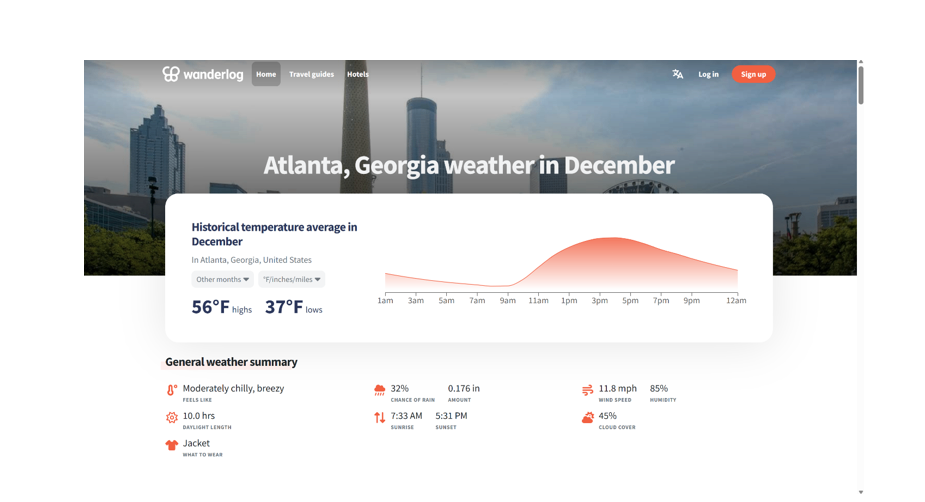
Cold weather in Atlanta during the winter (Photo: Wanderlog.com)
OpGov.ai reached out to the North Georgia United Methodist Housing and Homeless Council Director Stacey Rushing. Like Boose, Rushing didn’t respond. OpGov.ai followed up by leaving a voicemail.
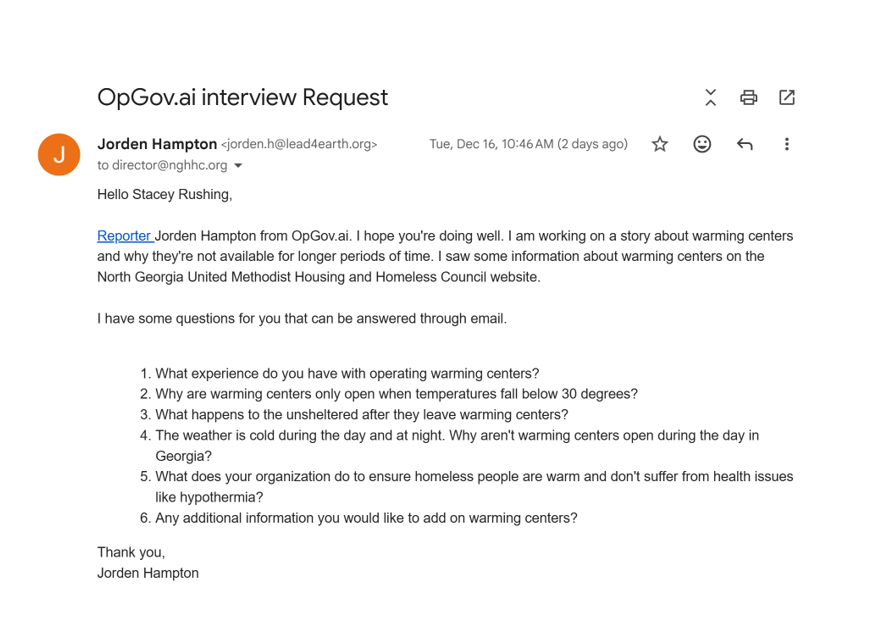
Initial email sent to Stacey Rushing
The lack of responses from Boose and Rushing is disappointing because homeless people need warmth for extended periods during the cold winter months.
The organization has a simple mission related to helping homeless people.
“Helping the church serve our neighbors in need,” The North Georgia United Methodist Housing and Homeless Council website states.
Residents have agreed that homeless people need daytime shelter.
OpGov.ai heard from them via NextDoor.
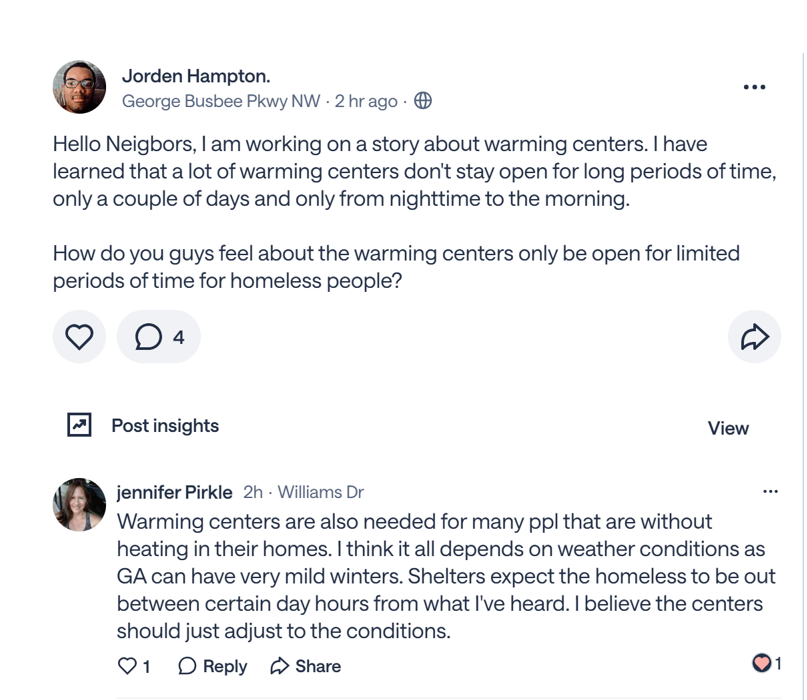
(Photo: Jorden Hampton NextDoor account)
Over 30 comments have been left on the post, showing how important the issue is.
Two comments stood out.
“It’s a facade to keep donations coming in,” NextDoor user Cody M said.
“My church takes overflow from MUST when a warming center is needed but the space serves other purposes during daytime hours thus can’t let people be there all day,” NextDoor user Joe Paonessa said.
Homeless people can make use of the warming centers to prevent serious health issues like hypothermia.
“Each year, 700 people experiencing homelessness are killed from hypothermia in the United States,” according to neighbor.org.
The numbers show how challenging it can be for those living outside in the cold.
Hypothermia can be prevented.
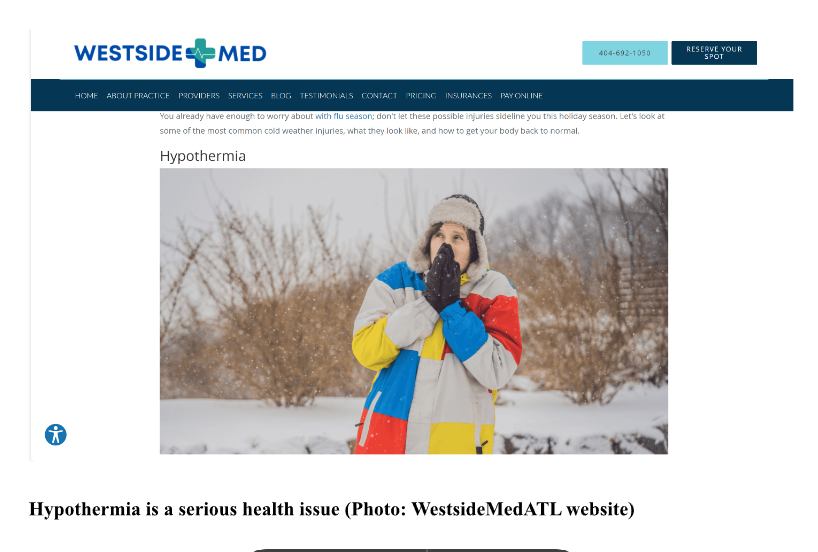
(Photo: WestsideMedATL website)
“Skin-to-skin contact, warm drinks, and removing wet clothing are all solid ways to stave off hypothermia and prevent a loss in body temperature,” according to the WestsideMedATL website.
Warming Centers have been around for years, dating back to 1945. After World War II, churches, libraries, police, and fire stations were used as warming centers.
OpGov.ai wants everyone to have a good holiday season and to be comfortable and warm.
The platform and its reporters will continue to cover homeless-related topics. If you have any additional comments, questions, or concerns, please contact jorden.h@lead4earth.org.
0
0

Comments