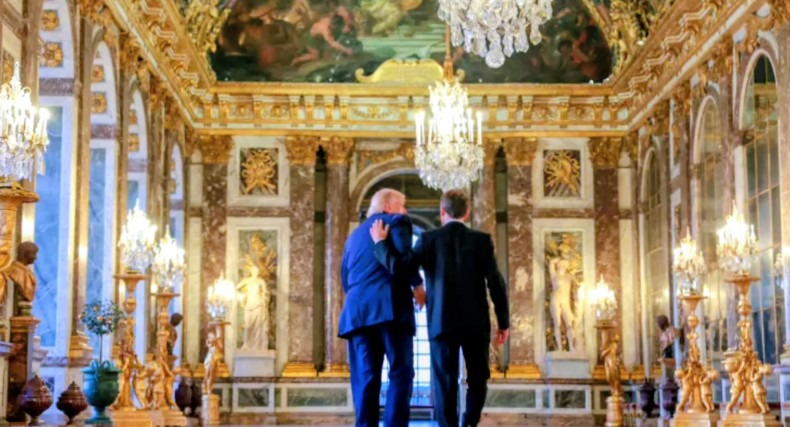
Photo Credit: Getty Images Pool / Anna Moneymaker - Pres. Trump and Pres. Macron
(OPGOV GLOBAL) - A US-Iran agreement, which President Donald Trump initially secured over text, has been physically signed into a formal Memorandum of Understanding (MoU). The agreement is already causing tensions, as Isreal did not receive the agreement text in advance of the documentation being drawn up. As the original agreement was obtained via text, the wording of the text wasn’t written into the MoU. Text messages are generally considered back-channel communications, which are informal lines of communication, as this form of communication is often vague and non-committal.
Video Credit: YouTube / CBS News
Prime Minister of Pakistan Shehbaz Sharif, who was endorsed mediator by the U.S. and Iran, said the agreement would take effect immediately. Pres. Trump physically signed the MoU with Iran on June 17 at a dinner with French President Emmanuel Macron in the Palace of Versailles, during the G7 summit in France. U.S. Vice Pres. JD Vance and Iranian officials had digitally signed the MoU June 15. Iran’s Supreme Leader, Mojtaba Khamenei, has not yet physically signed any documents, but did approve and endorse the agreement terms. An official signing ceremony for the US-Iran MoU is scheduled for June 19 in Switzerland, and will be mediated by Pakistan and Qatar.
Sharif noted the first steps in the agreement were to end the U.S. Naval blockade and reopen the Strait. True to the MoU, Iranian ships were seen moving through the Strait as of June 15, not long after the agreement was digitally signed. Since the blockade has effectively ended, Iran is expected to allow toll-free transit via the Strait for at least 60 days. The immediate opening of the Strait is critical to the global oil trade, as a fifth of all commercial oil trade passes through the strait. Closing the Strait skyrocketed oil and gas prices, as well as shipping costs. Reopening it decreases the risk to global energy markets and helps stabilize gas and oil prices for consumers.
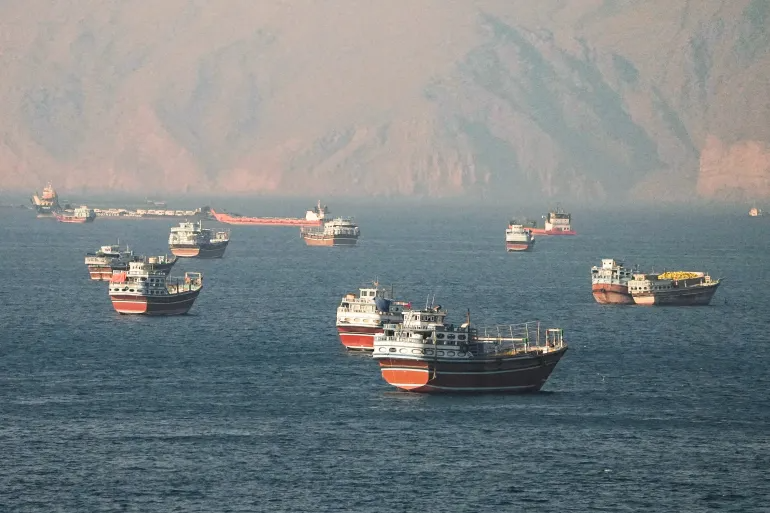
Photo Credit: Stringer / Reuters – Iranian ships move through the Straight of Hormuz
Other major elements addressed in the US-Iran agreement include nuclear negotiations and potential inspections, sanctions, maritime security surrounding the Strait of Hormuz, and regional security issues, including the wider need for stability in the Middle East. As for nuclear concessions, Iran will be expected to decrease its current stockpile of enriched uranium.
The agreement leaves room for both parties to negotiate other nuclear commitments at a later date. For its part, the U.S. would waive Iran sanctions, but not permanently remove them; a move that allows flexibility while still giving the U.S. leverage to act if Iran doesn’t comply with the agreement.
Lebanon was also a point of order within the agreement, with concerns about Israel’s military operations against Hezbollah addressed and territorial integrity reaffirmed. The agreement reaffirms that Lebanon’s borders are concrete, and cannot be violated or altered by any other nation via threat or use of force.
To add to or correct any information in this report, please contact me at kristin.h@lead4earth.org.
0
0

Comments