(OPGVOV GLOBAL) – Nearly all commercial health insurance markets in the United States remain highly concentrated, with a small number of companies controlling substantial portions of enrollment across the country. The findings raise questions about competition, affordable healthcare, and the choices available to consumers.
According to the American Medical Association (AMA) Nov. 17, 2026, report, “Competition in Healthcare Research: A Comprehensive Study of U.S. Markets,” 95% of metropolitan commercial health insurance markets were highly concentrated in 2025. The study examined enrollment data across 385 metropolitan areas, all 50 states and the District of Columbia.
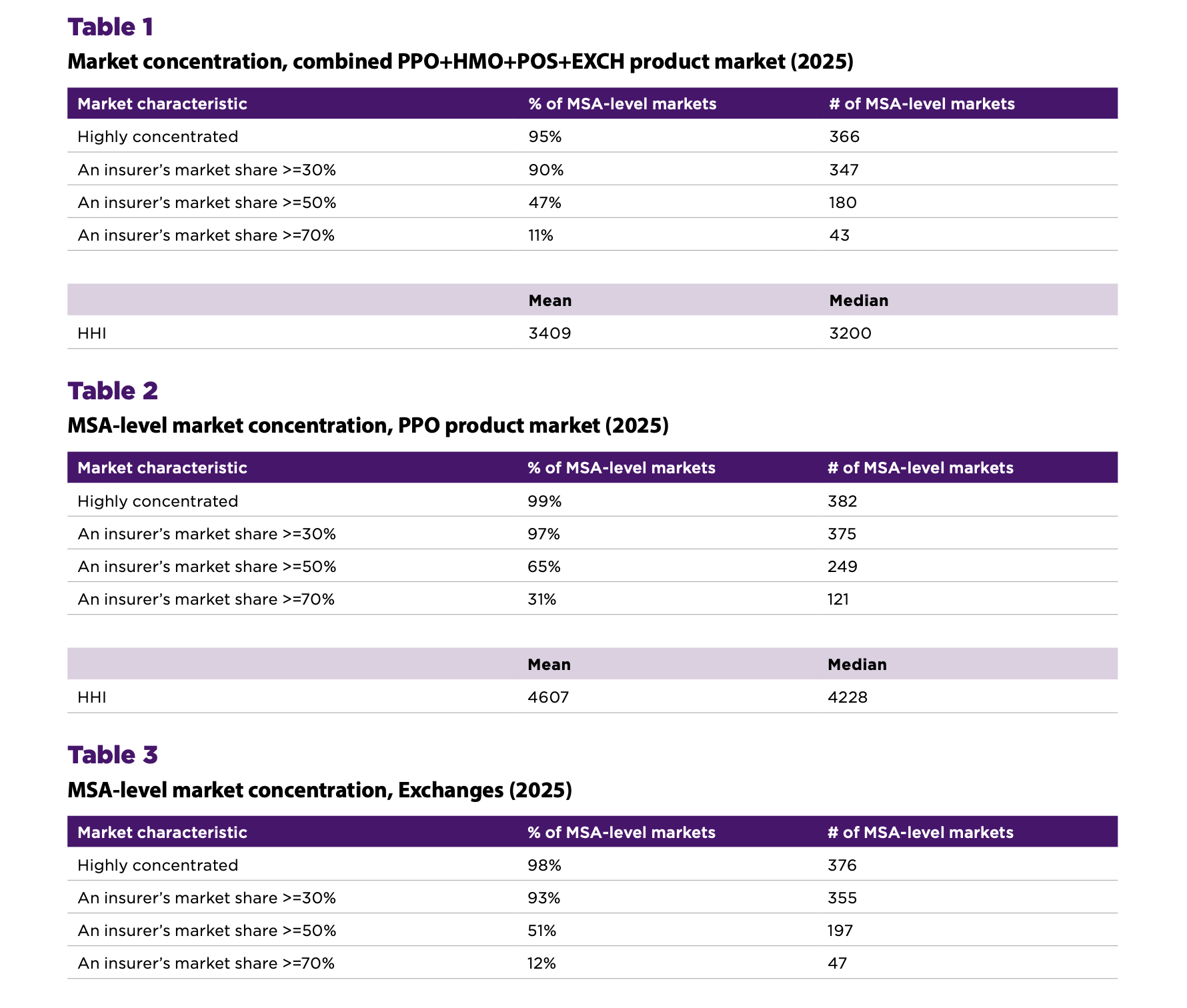
Photo Credit: American Medical Association (AMA) / https://www.ama-assn.org/system/files/competition-health-insurance-us-markets.pdf / AMA market concentration data reveals 95% of combined commercial metropolitan markets. 99% of PPO markets, and 98% of ACA exchange markets were highly concentrated in 2025.
The percentage remained unchanged since 2014. The research also found that 47% of the metropolitan areas had at least one insurer controlling 50% or more of the commercial market, while at least one insurer held a market share of 30% or greater in 90% of metropolitan areas.
These findings suggest that consumers in many communities may have limited alternatives when selecting healthcare coverage.
UnitedHealth Group maintained the largest individual market share of the national commercial health insurance market in 2025, accounting for 15% of enrollment. CVS Health’s Aetna and Elevance Health each held 12%, followed by Cigna and Health Care Service Corp., which each accounted for 8%.
Blue Cross Blue Shield (BCBS) insurers collectively represented 42% of national coverage enrollment and held the largest market shares in 84% of metropolitan areas examined.
The concentration of insurance companies also varies geographically. Connecticut, Illinois, Indiana, Montana, South Dakota, and West Virginia experienced their highest levels of commercial insurance market concentration coverage in a decade.
The AMA argues that limited competition can allow dominant insurers to exercise greater market power, potentially contributing to higher premiums, fewer coverage options, and reduced negotiating power for healthcare providers.
Market concentration extends beyond traditional commercial insurance.
The AMA found that 97% of metropolitan Medicare Advantage markets were highly concentrated in 2025, compared to 99% in 2017. UnitedHealth Group held the largest national market share at 30%, with Humana following at 17% and Aetna at 12%.
Affordable Care Act (ACA) exchange markets also experienced significant concentration, with 98% classified as highly concentrated in 2025.
Centene held 24% of the national market for ACA exchange in 2025, compared to 2% in 2014. Despite changes in individual companies’ market positions, a relatively small number of organizations continue to account for substantial enrollment.
The concentration of health insurance markets comes amid broader concerns about accessibility and affordability of medical care.
An earlier OpGov.News report, “Are Americans Turning To Supplements Amidst Declining Healthcare Accessibility?” written by Teri Tracy, examined how rising healthcare costs and accessibility concerns are contributing to increased interest in supplement and wellness products. The article highlighted projections that the global nutraceuticals market could reach $1.12 trillion by 2034.
State governments are also navigating increasing healthcare funding pressures. Another OpGov.News article, “California’s $2 Billion Medi-Cal Gamble Is Now in Washington’s Hands,” authored by Harika Viswanatham, researched California's proposed $2 billion managed care organization tax on commercial health insurance plans. The proposal seeks to generate additional funding for Medi-Cal through federal matching dollars, although federal approval remains necessary and the approach could affect health insurance premiums.
Together, these developments illustrate how healthcare affordability extends beyond insurance coverage, involving questions about medical access, prescription costs, and the sustainability of public healthcare funding.
The federal government has authority to review mergers and acquisitions that may substantially reduce competition.
The U.S. Department of Justice’s Antitrust Division enforces federal antitrust laws, including the Clayton Act, which addresses mergers and acquisitions that may lessen competition or create a monopoly.
Photo Credit: The U.S. Department of Justice’s Antitrust Division / https://www.justice.gov/atr / The U.S. Department of Justice Antitrust Division enforces federal antitrust laws to review and challenge health insurance mergers that could reduce competition or create monopolies.
In 2017, federal courts blocked the proposed Anthem-Cigna and Aetna-Humana mergers following antitrust lawsuits brought forth by the Justice Department.
The AMA maintains that persistent marketplace concentration warrants continued scrutiny of proposed insurance mergers and business practices. However, insurers and industry representatives have also pointed to consolidation among hospitals and healthcare providers as contributing factors to rising medical costs.
As insurers continue to expand their influence across commercial coverage, Medicare Advantage, and ACA exchanges, questions surrounding consumer choice, insurance affordability, and access to care remain central to discussions about the future of the U.S. healthcare system.
To add to or correct any information in this report, please contact me at victoria.o@lead4earth.org.
Thumbnail Photo Credit: American Medical Association (AMA) / https://www.ama-assn.org/system/files/competition-health-insurance-us-markets.pdf / An American Medical Association map highlights the 10 states with the least competitive commercial health insurance markets in 2025, led by Alabama and Kentucky.
0
0

Comments