PENSACOLA, Fla. — OpGov.News first reported Oct. 23, 2026, that President Donald Trump, following a request from Gov. Ron DeSantis, approved a federal emergency declaration after Hurricane Isaias. That declaration was upgraded to a major disaster declaration Oct. 27, 2026.
Photo Credit: Google.com
Rep. Jimmy Patronis, R-Fla., announced the development on his X account Tuesday evening. The declaration, identified as FEMA-4955-DR, makes federal funding available for eligible disaster recovery efforts. Although the declaration was upgraded, assistance to individuals and households, known as Individual Assistance (IA), has not yet been approved. That request remains under review.
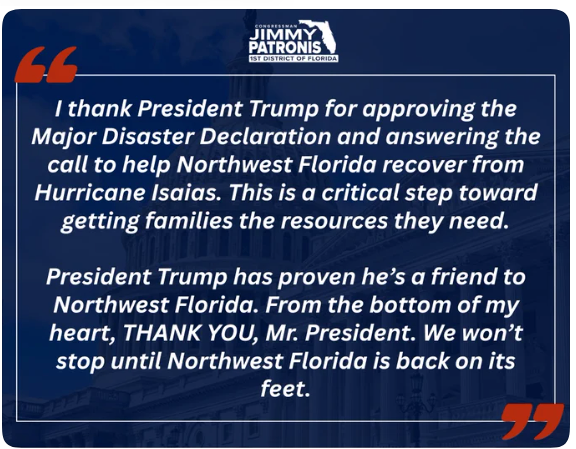
Patronis thanked Trump for the declaration, saying:
Source: Rep. Jimmy Patronis' X account.
The counties of Bay, Calhoun, Escambia, Franklin, Gadsden, Gulf, Holmes, Jackson, Jefferson, Liberty, Okaloosa, Santa Rosa, Wakulla, Walton and Washington are eligible for public assistance for authorized emergency work and the repair or replacement of disaster-damaged facilities under FEMA-4955-DR.
The approved assistance is intended to support recovery efforts, including eligible public infrastructure repairs, emergency protective measures, debris removal, and other disaster-related public costs. Temporary housing and other direct assistance to individuals and households remain subject to separate federal approval.
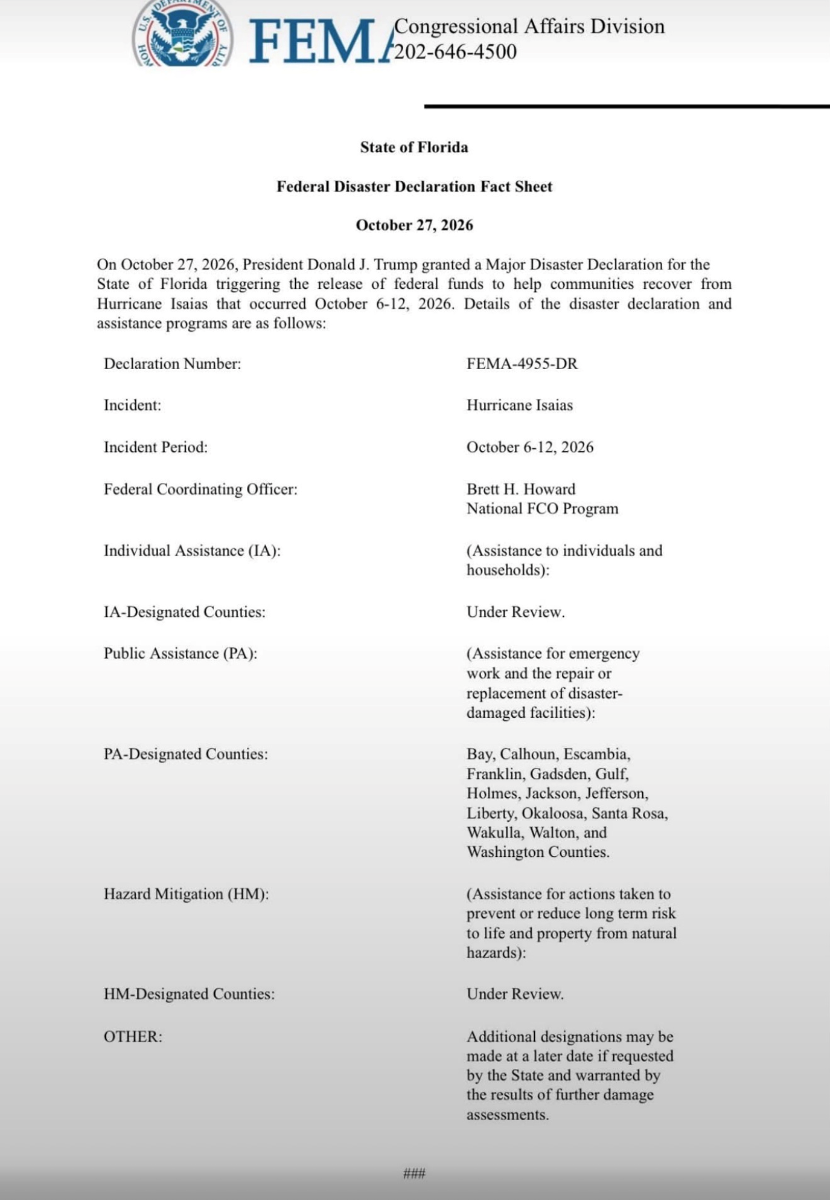
Photo Credit: FEMA disaster declaration fact sheet, Oct. 27, 2026
At the time of publication, it remained unknown whether Individual Assistance would be authorized. Trump's approval of the major disaster declaration represents a key step in the recovery process, but Individual Assistance is still under review.
For Florida Residents, the Wait for Direct Assistance Continues
While federal funding has been approved to support recovery efforts, residents whose homes and personal property were damaged by Hurricane Isaias are still waiting to learn whether direct financial assistance will become available.
For many families, the immediate concern is repairing damaged homes, replacing essential belongings, and managing unexpected expenses. Although Individual Assistance remains under review, residents can begin preparing now.
Photographs of damaged roofs, flooded rooms and other property losses may become important when filing insurance claims or applying for future assistance. Residents should also keep receipts for temporary repairs, generators, fuel, debris removal and hotel stays.
Those with homeowners, renters, or flood insurance are encouraged to contact their insurance providers as soon as possible and maintain records of claims, payments, and any coverage denials.
FEMA generally cannot provide financial assistance for losses already covered by insurance. However, if Individual Assistance is approved, eligible residents may qualify for help with certain uninsured or underinsured disaster-related expenses.
For now, residents should continue monitoring announcements from FEMA and Florida emergency management officials. Updates on eligibility and application procedures will be available through DisasterAssistance.gov.
The major disaster declaration marks progress for Northwest Florida's recovery, but the question of direct financial assistance for affected households remains unanswered.
Emergency vs. Major Disaster Declaration
Emergency declarations help state and local governments respond to immediate threats by supporting emergency protective measures and other necessary response activities.
A major disaster declaration can provide broader federal assistance for disaster recovery, including support for repairing damaged public infrastructure. It may also provide grants to eligible individuals and households when Individual Assistance is specifically authorized by FEMA.
Open Governance News will continue to publish updates as developments occur.
For corrections or additional information about this report, contact james.b@lead4earth.org or leave a comment below.,
0
0

Comments