(SAN FRANCISCO, CA) — Crucial cuts were made to healthcare budgets under Mayor Lurie, healthcare workers and patients urge city leaders to halt planned closures of three specialized public-health clinics that serve some of the city's most vulnerable residents.
San Francisco will see the closure of three public-health clinics in the coming months; Mission Southeast Geriatric Clinic, Cole Street Youth Clinic, and the Michael Baxter Larkin Street Youth Clinic.
Residents are angry, saying it will impact vulnerable seniors, homeless youth, and LGBTQ youth and leave them without care.
At a recent SF Board of Supervisors meeting, speaker after speaker warned that the city is dismantling services that cannot easily be replaced.
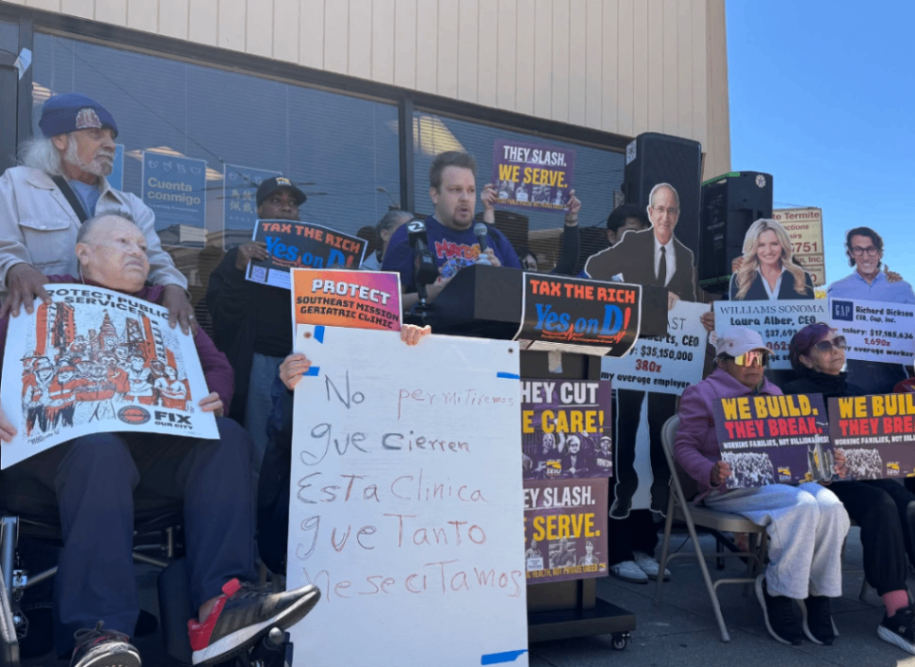
Photo Credit: Instagram account for SEIU 1021.
Seniors and clinicians protest closure outside of Mission Southeast Geriatric.
"This is not just an administrative adjustment," said Omar Falling, San Francisco Field Director for SEIU Local 1021. "They are dismantling life-saving services."
Falling argued that the closures would eliminate critical healthcare infrastructure that took decades to build. He warned that the loss of trusted provider relationships would be "immediate and long-lasting.”
"There is no equivalent system waiting to absorb these patients," he told supervisors.
The City's Last Specialized Geriatric Mental Health Clinic
Among the most controversial closures is the Mission Southeast Geriatric Clinic, which clinicians describe as San Francisco's last remaining outpatient mental-health clinic serving older adults.
Francisca Oropeza, a clinician who has worked at the facility for 25 years, told supervisors the clinic provides essential services to vulnerable seniors, including immigrants who have survived war, political violence, and other traumatic experiences.
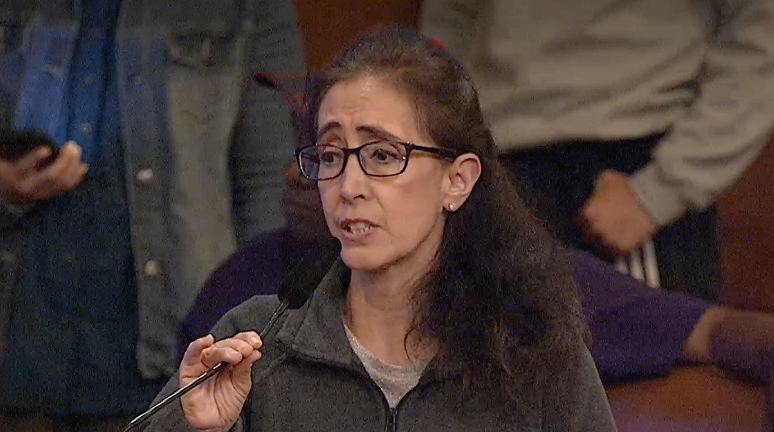
Photo Credit: OpGov.News.
Mental Health Clinician Francisco Oropeza, speaking at the 16 June SFBOS meeting.
"If you allow this clinic to be closed, this will be the last geriatric outpatient mental-health clinic for our seniors," Oropeza said.
She also spoke more about the matter in an emotional Facebook video, “We as San Franciscans are better than this.”
Behavioral health clinician Leslie Weatherby echoed those concerns.
"The one thing that I hear from our seniors more than anything is that they feel safe coming to us," she said. "For a vulnerable population, safety is always going to be the most important thing."
Advocates argue that forcing those patients into unfamiliar systems risks disrupting years of carefully established trust.
Youth Clinics Face Closure Amid Mental Health Crisis
Community advocates also condemned plans to close the two youth clinics, located in the Tenderloin and Haight-Ashbury.
The clinics provide medical, reproductive-health, and mental-health care specifically designed for adolescents, including unhoused youth and LGBTQ young people.
"We are in the midst of a youth mental-health crisis," said Susan Zeiger, a behavioral health clinician at the Michael Baxter Larkin Street Youth Clinic.
Zeiger explained that the clinics' effectiveness stems from their integration within broader youth-service organizations.
"In a single visit, young people can address the full complexity of their lives," she said. "There are no other clinics like these in San Francisco."
Advocates repeatedly challenged city claims that the clinics are underutilized.
Sofia Padilla, a behavioral health clinician with the Michael Baxter Larkin Street Clinic, argued that years of chronic understaffing created the appearance of lower demand.
"You cannot reduce staffing, leave positions vacant, limit appointments, reduce clinic hours, and then point to lower service numbers as evidence that a clinic is not needed," Padilla said.
"What we are seeing is not underutilization. It is the predictable result of underinvestment.”
LGBTQ Youth Could Lose Critical Lifelines
Multiple speakers warned that LGBTQ youth would face particularly severe consequences if the clinics close.
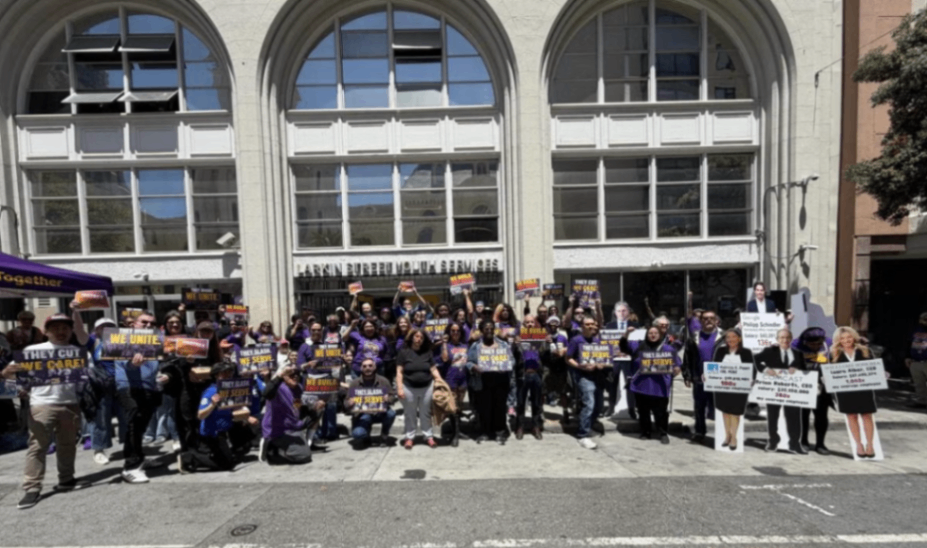
Photo Credit: SEIU 1021.
Workers and clients rallied outside Micheal Baxter Larkin Street Youth Clinic.
Huckleberry Youth Programs, which operates the Cole Street clinic, is one of San Francisco's longest-running youth service providers and has served homeless and LGBTQ youth for decades.
One community member at the SFBOS meeting described relying on these specialised clinics while navigating family rejection, transphobia, and mental-health challenges.
"I can still count the times in my life that this center, that hotline, or that organization has saved me," the speaker told supervisors.
Another youth-services worker read testimony from a 22-year-old former patient who described the Huckleberry clinic as a rare source of confidential and affirming healthcare.
"Defunding the clinic is getting rid of a safe space for youth," the statement read. "When you take away health services, you are taking away their access and abandoning their basic right to medical services and health education.”
Critics Say Cuts Will Increase Long-Term Costs
Many speakers argued that the proposed closures make little financial sense.
Mission Southeast Geriatric Clinic receives substantial federal reimbursement through Medicare, around 80%, meaning the city would forfeit federal dollars.
Meanwhile, the burden would shift towards state and city-funded resources.
Marnie Regan of Larkin Street Youth Services argued, ”These service cuts don't save money," Regan said. "They shift the cost to emergency rooms, jails, and crisis response while worsening suffering on our streets."
Zeiger noted that the projected savings from closing the youth clinics amount to roughly $700,000 per clinic - a fraction of San Francisco's overall budget shortfall.
"But the losses for these vulnerable youth are immeasurable," she said.
Clinicians and clients urge city leaders to reconsider the cuts before the closures take effect.
0
0

Comments