(CHARLOTTE, N.C.) — Thousands of demonstrators filled Uptown Charlotte on Saturday, March 28, joining nationwide protests under the “No Kings” banner to oppose what participants describe as authoritarian policies pursued by the Trump administration.
The Charlotte rally, held at First Ward Park, drew activists from across the region and focused on immigration enforcement, U.S. involvement in foreign wars, and broader concerns about democratic governance.
The Charlotte demonstration was one of more than 3,000 rallies held across the United States on Saturday, according to organizers and local media. Participants marched through central Charlotte, carrying signs and chanting slogans opposing “endless wars,” restrictive immigration actions, and what they described as the overreach of executive authority.
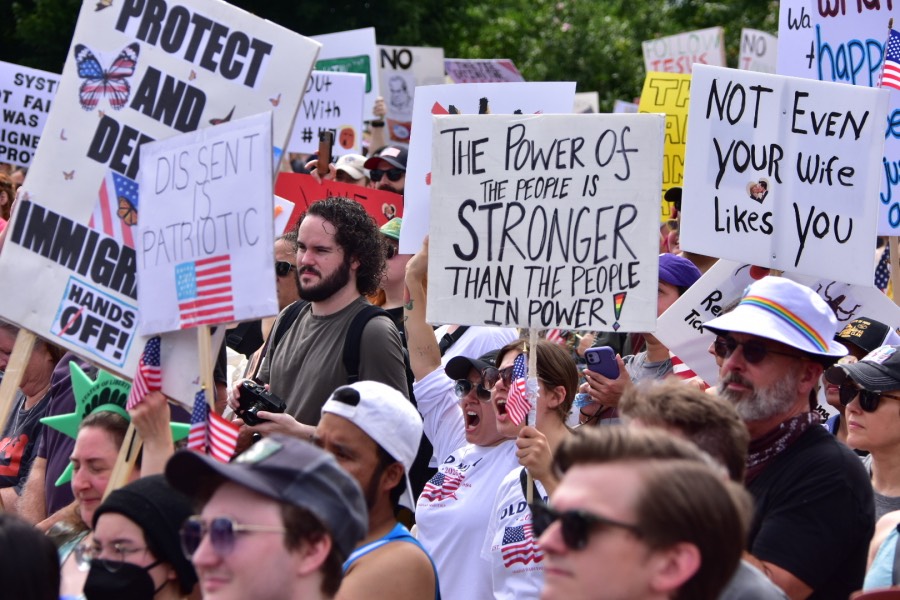
Thousands of activists gathered at First Ward Park to voice concerns over democratic accountability, immigration policies, and civil liberties.
(Photo Credit: CBS 17)
Similar demonstrations took place in surrounding communities, including Concord, Fort Mill, and Rock Hill, the Charlotte Observer reported.
“We’re here because people across America are worried about the direction of this country,” said Maria Lopez, a volunteer with the Carolina Migrant Network. “When immigration policies tear families apart, and foreign conflicts drag on without accountability, citizens feel compelled to speak out.”
The protest caused minor delays in public transportation and regular Uptown traffic, but no major incidents were reported. Law enforcement officers helped manage crowds and intersections, ensuring the march proceeded peacefully.
National Themes and Research Context
The “No Kings” movement has grown into a major civic action nationwide, framed as resistance to expanded executive authority and perceived threats to democratic norms. Organizers emphasize that the protests are not solely about the current administration but represent broader civic concerns.
Reporting from OpGov.News by Angela Underwood highlighted that participants in Pensacola and other cities connected the “No Kings” message to a wide array of issues, including gun violence, civil liberties, and democratic accountability.
The piece emphasized that rallies often stem from local experiences and community concerns that extend beyond criticism of any one political figure.
Academic research underscores the broader significance of such public demonstrations. A 2019 review in The Science of Contemporary Street Protest: New Efforts in the United States found that protests serve as important signals of public concern, shaping media coverage, influencing legislators, and affecting political discourse even when immediate policy changes do not occur.
Large-scale civic action can amplify citizen priorities and draw attention to issues that might otherwise remain marginal in national debates.
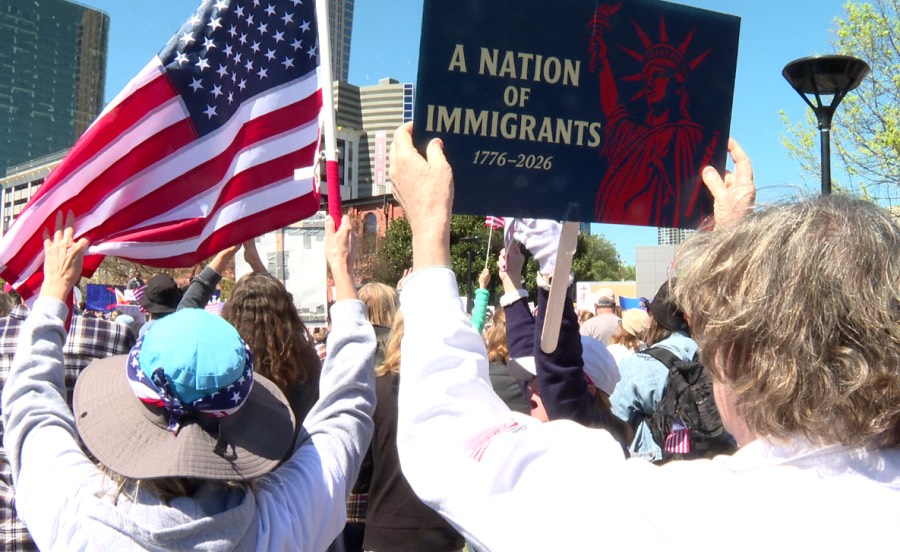
Protesters wave American flags and carry signs celebrating the nation’s immigrant history as part of the nationwide "No Kings" movement.
(Photo Credit: Queen City News)
Additional research highlights the specific connection between protest participation and attitudes toward immigration and public policy. A 2025 study titled Political Participation and Civic Engagement in the U.S. found that individuals engaged in protests are more likely to support comprehensive policy reforms, including immigrant protections, and are more likely to participate in further civic activities such as voting, advocacy, and community organizing.
This reinforces the role of movements like “No Kings” not just as symbolic gestures, but as mechanisms for sustained political engagement and shaping public opinion.
Voices from the March
Charlotte participants described a wide range of motivations. Kevin Taylor, a local father, carried a handmade sign opposing war and immigration raids. “I came because I don’t want my children to grow up in a country where basic rights are optional,” he said. Others cited federal enforcement operations across the country as immediate triggers for their participation.
Local organizers emphasized the peaceful, highly organized nature of the demonstration. “We want our voices heard without causing harm,” said Thomas Grant of Indivisible Charlotte. “These marches are about accountability, transparency, and defending the principles of democracy.”
Across the nation, protests against immigration enforcement have continued in 2026 following controversial federal actions in cities such as Minneapolis and Portland. Critics argue that aggressive enforcement tactics and expanded executive authority have eroded trust in government institutions and civil liberties, fueling movements like “No Kings.”
Looking Ahead
Organizers said they hope the energy of Saturday’s rallies will translate into ongoing civic engagement. “Protesting is just one step,” Grant said. “Our work continues through voter mobilization, local civic forums, and holding policymakers accountable.”
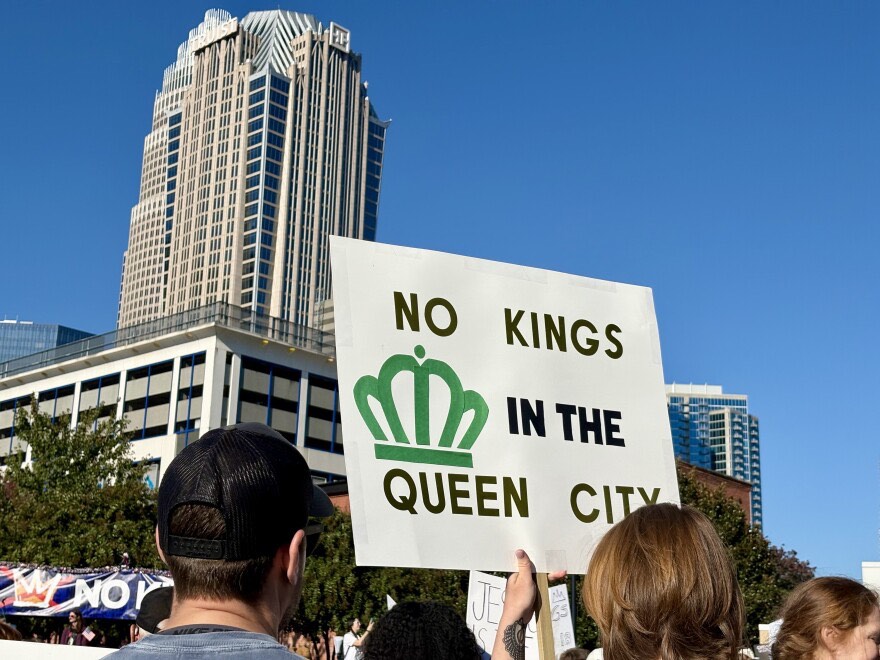
A demonstrator in Uptown Charlotte holds a "No Kings in the Queen City" sign during the March 28 rally against executive overreach.
(Photo Credit: WFAE)
Analysts note that while protests rarely produce immediate legislative change, they are a longstanding tool of American democracy for shaping public narratives, amplifying citizen concerns, and signaling to elected officials what issues matter deeply to constituents.
In a polarized political climate, movements like “No Kings” demonstrate the power of collective civic action to draw attention to multiple issues simultaneously and foster ongoing engagement.
(Thumbnail Photo Credit: WFAE)
0
0

Comments