The aftermath of District 4 Supervisor Joel Engardio’s recall continues.
While debate continues in San Francisco over whether or not the district supervisor’s recall was warranted, many Sunset constituents see it as an overdue correction.
It wasn’t just Engardio’s support of Proposition K, which permanently closed a section of the Upper Great Highway to create Sunset Dunes Park, but the way he went about it: quietly and without genuine engagement in his own district.
In November 2024, San Francisco voters passed Prop K by 54.7% support, establishing Sunset Dunes Park on what was once the Upper Great Highway; however, the most directly affected residents of District 4 opposed the closure.
By April 2025, the park was in place. Five months later, Engardio was out of the office.
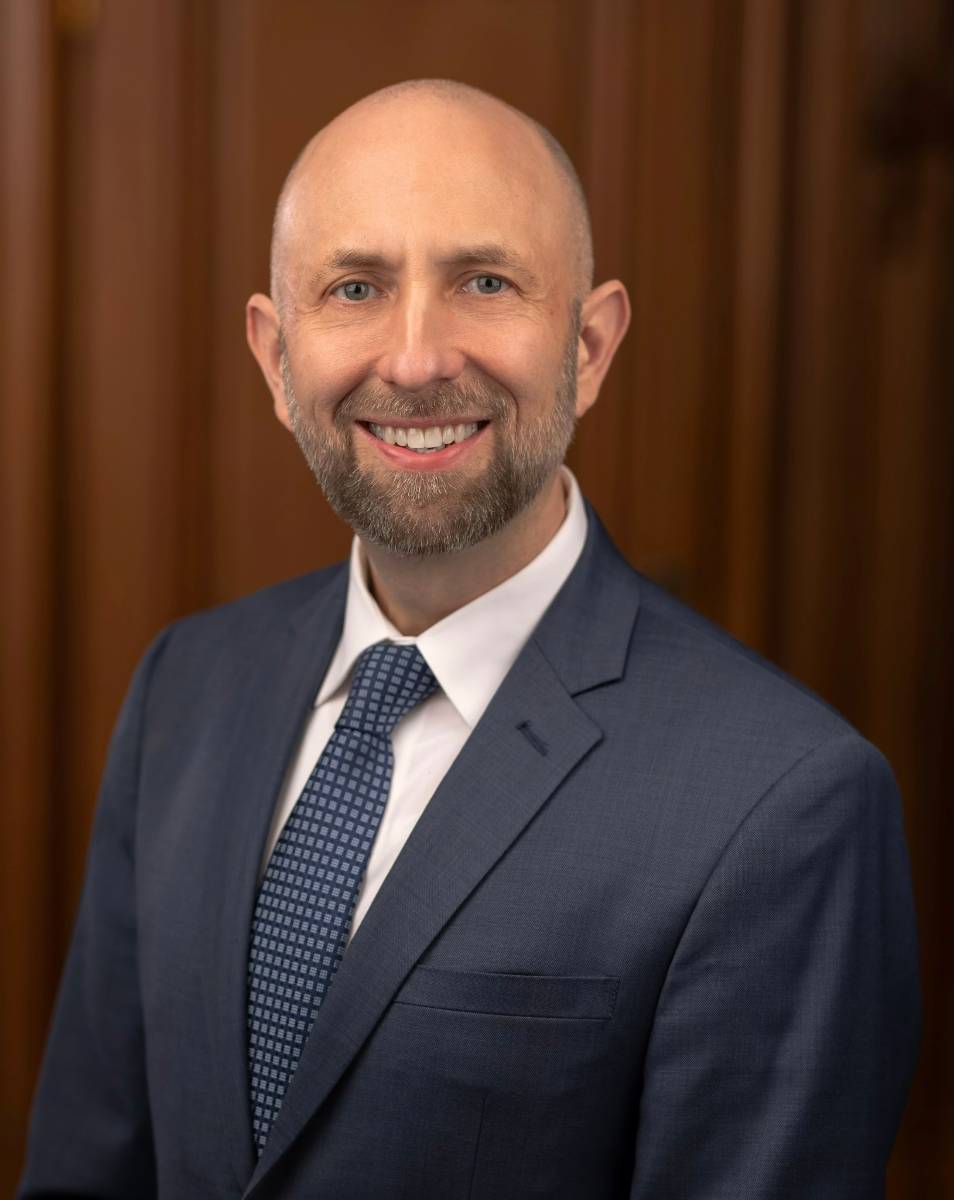
Photo of former Supervisor Engardio
Under Article II of the California Constitution, citizens are guaranteed the right to recourse, provided a majority petition can be achieved. However, Engardio supporters and District 7 Supervisor Myrna Melgar suggest the recall was heavy-handed.
“Recalling elected officials who have not committed crimes or malfeasance destabilizes local government and has a cost,” Melgar said in The Standard.
Despite that criticism, many in the Sunset say the recall was about accountability, transparency, and responsiveness, not destabilization.
The case of Matthew Boschetto, et al. v. San Francisco could determine whether the Upper Great Highway might eventually reopen while Sunset Dunes supporters maintain that the park serves both environmental and recreational purposes.
The San Francisco Estuary Institute describes the park as a tool for rehabilitating coastal dunes that help buffer the shoreline from sea level rise.
Local frustration over the project remains with some residents citing ongoing traffic congestion and safety issues and others arguing decisions were made without sufficient public input.
The way they see it, the people of District 4 have finally been heard, but not truly listened to. Tokala Halsey, a Sunset resident and recall supporter, criticized both the park’s impact and traffic impact.
According to the Tokala Halsey, “when it got changed to Sunset Dunes, traffic in the area got noticeably worse, and it felt like accidents became more likely.”
“He tried to justify the whole Sunset Dunes mess by saying he talked to people in the Sunset and that ‘everyone agreed with him,’” Halsey said. “But let’s be real — Joel doesn’t even live out here.”
Despite repeated requests, the San Francisco Mayor’s Office and Board of Supervisors did not respond to OpGov.ai’s request for comment.
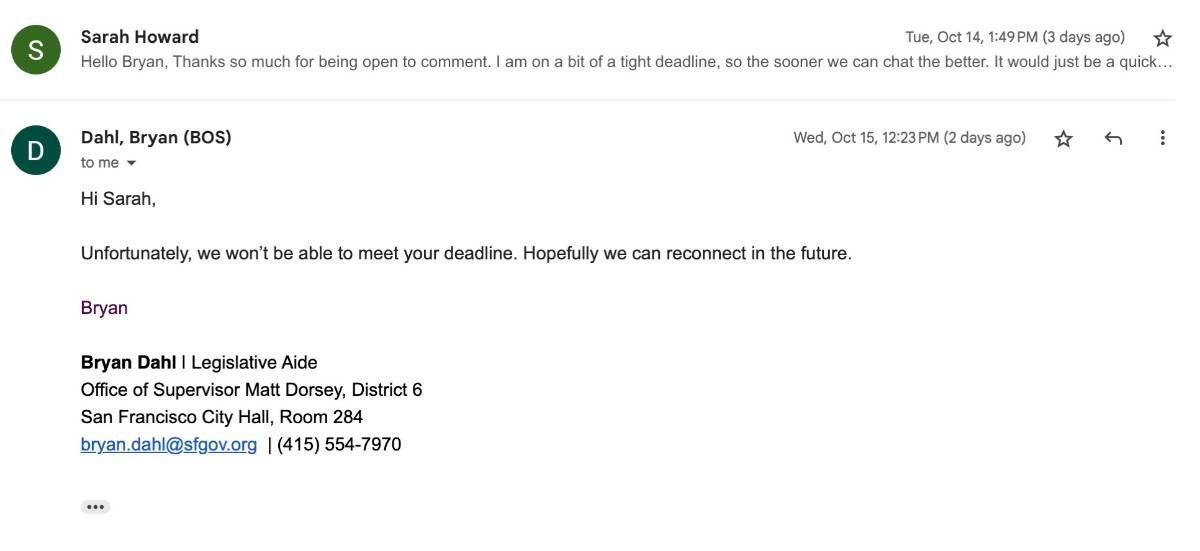
Email exchange between OpGov.ai and Supervisor Dorsey’s office
A resident who asked to have his last name removed spoke with OpGov.ai, noting he supported the recall because Engardio backed a weekday/weekend compromise early in his term, but later advocated for full closure.
Engardio said that he only voted for the compromise because it was up against a measure that would fully re-open the highway to cars in an AP article from September.
“[Engardio] pulled a fast one by doing this,” Rob S. said. “I’m glad he got recalled; I voted for the recall. It’s not just that he did it, but the way that he did it and what it meant for the way he was going to represent us.”
Rob also disagrees with the park’s aesthetics.
“No matter what you do to it. It’s really boring to walk along,” Rob S. said, adding the space offers dynamic scenery for motorists, but the path is underwhelming and offers unchanging stretches for walkers.
The chatter from online neighborhood forums and opgov.ai’s sources confirms that the recall was a necessary correction in Sunset residents’ view—but it hasn’t resolved the larger tension between District 4 and City Hall.
The Sunset isn’t giving up.
“We may have won the battle, but I feel as if we haven’t won the war,” Halsey said. “We’ll keep on going till it’s open once again for the people who actually live here and not from a distance.”
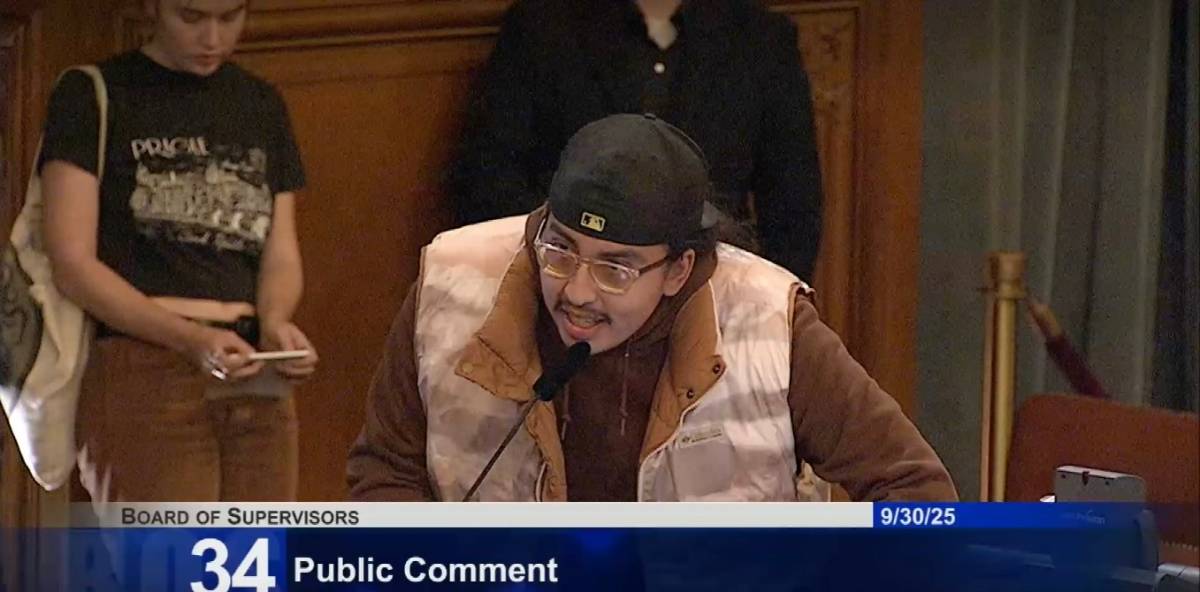
Photo of Tokala Halsey, Board of Supervisors Meeting
The road ahead for District 4 remains uncertain.
As housing policy, transportation access, and environmental planning continue to intersect in San Francisco’s west side, Sunset residents say they are more organized than ever.
This wouldn’t be the first time San Francisco has permanently removed a major highway from its waterfront. After the Loma Prieta earthquake damaged Route 480, a freeway that once loomed over the Embarcadero, the city chose not to rebuild it.
At the time, the decision was controversial but today many residents can’t imagine a highway blocking views of the bay or cutting off access to the Ferry Building.
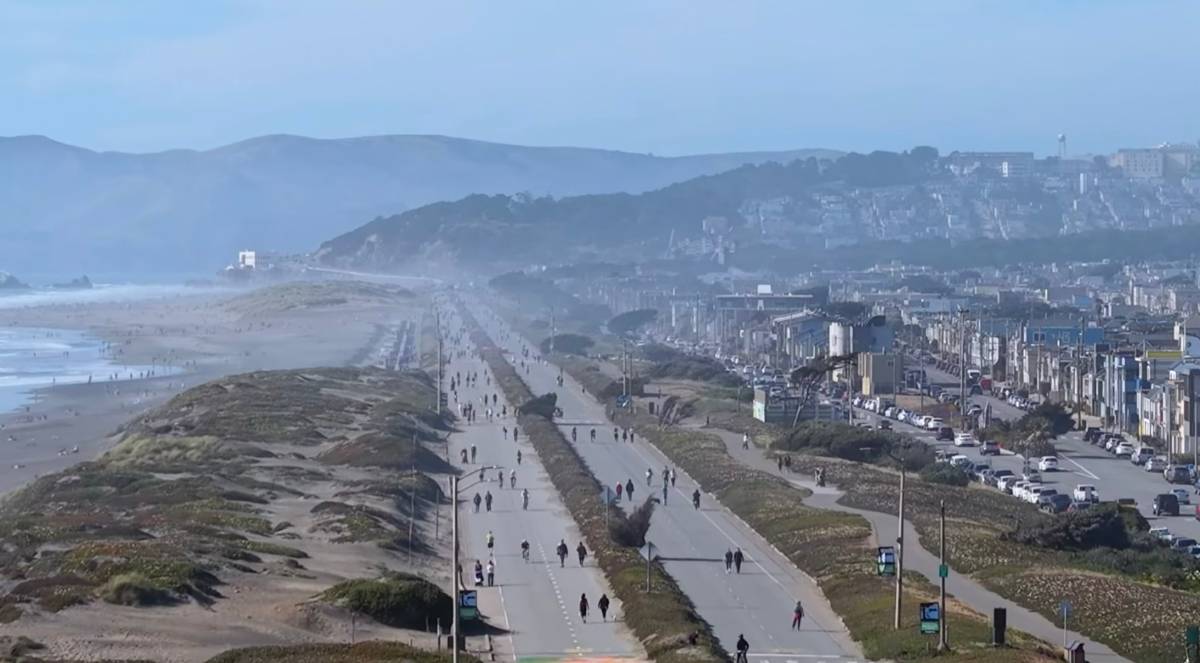
4K Drone Footage of Sunset Dunes Park from YouTube video DreAerialDrones68
Supporters of Sunset Dunes believe the Great Highway may eventually be viewed the same way: not as a loss of infrastructure, but as a gain in public space and environmental foresight. For many, the park represents the trade-offs a society must make in the face of climate change.
They argue that climate resilience, pedestrian safety, and public space are long-term investments worth making, even if they cause short-term disruption. For many, the recall was not a fight about environmental response, but a demand for representation that reflects their lived experience, and practicality above idealism.
Even if Sunset Dunes was inevitable, this recall reminds our politicians that they are beholden to their constituents and that they must prioritize transparency and responsiveness in decision-making processes or face the consequences.
0
2

Comments