(OPGOV GLOBAL) — The U.S. Supreme Court ruled Tuesday that federal limits on coordinated campaign spending between political parties and their candidates violate the First Amendment, marking one of the most significant campaign finance decisions in more than a decade and reshaping how parties may support candidates in future federal elections.
The decision highlights the judiciary's continuing role in interpreting laws that shape public policy, similar to OpGov.News' recent coverage of "Justice Solomon Said Key Redevelopment Documents Were Not Before Him When Reviewing Asbury Park Casino Dispute," written by Sarah Denos, which examined how judicial review and legal interpretation can influence disputes involving government action.
In a 6-3 decision in National Republican Senatorial Committee v. Federal Election Commission, the court held that federal restrictions on coordinated expenditures between political parties and their candidates unconstitutionally burden political speech protected by the First Amendment. Justice Brett Kavanaugh authored the majority opinion, joined by the court's five other conservative justices.
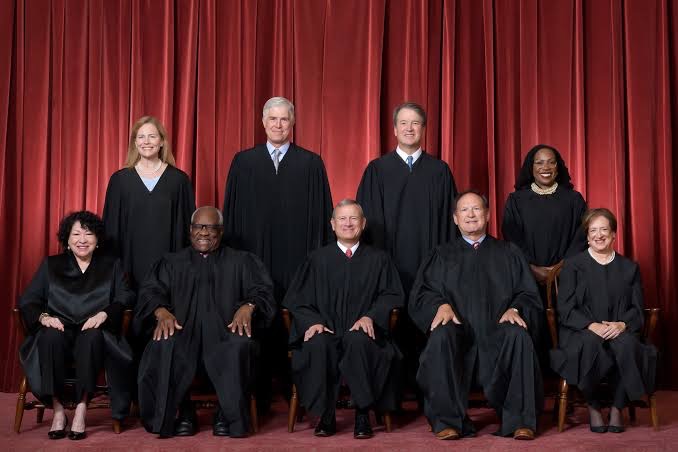
The U.S. Supreme Court justices divided along ideological lines in a 6-3 vote to strike down decades-old campaign finance restrictions.
Photo Credit: Supreme Court Historical Society
The ruling overturned a 2001 Supreme Court precedent that upheld limits on coordinated party spending. As a result, national and state political parties may now spend unlimited amounts in coordination with their federal candidates, removing one of the last remaining federal restrictions governing how parties financially support nominees during election campaigns.
Before the ruling, the Federal Election Commission established annual coordinated expenditure limits based on the office sought and state population. For the 2026 election cycle, Senate coordinated spending limits ranged from $130,600 to more than $4 million, depending on the state, while House limits were generally either $65,300 or $130,600.
Those limits are no longer enforceable following the court's decision.
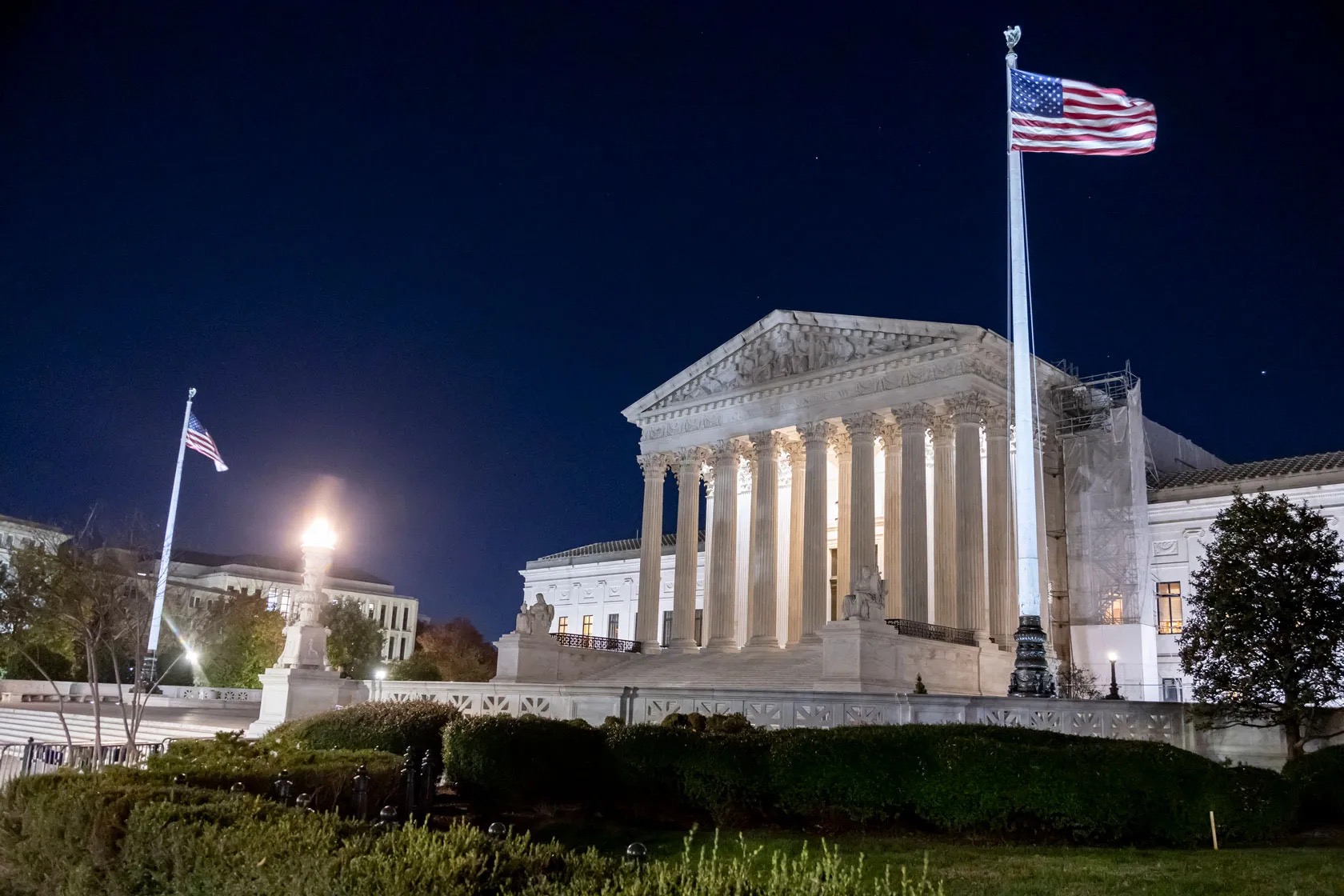
The landmark decision removes strict limits on how much national and state political parties can spend in direct coordination with their federal candidates.
Photo Credit: Center for American Progress
The lawsuit was brought by the National Republican Senatorial Committee, the National Republican Congressional Committee, and two Republican Senate candidates, who argued the coordinated spending limits placed political parties at a disadvantage compared with outside organizations such as Super PACs, which may spend unlimited amounts independently of candidates.
Supporters of the ruling argued that political parties deserve the same constitutional protections afforded to other political speakers. They contended the existing limits prevented parties from fully supporting their own nominees while allowing outside groups to play an increasingly influential role in federal elections.
Opponents argued that eliminating the restrictions could increase the influence of wealthy donors by allowing more money to flow through political parties directly supporting candidates.
In dissent, the court's three liberal justices said the ruling weakens longstanding campaign finance safeguards designed to reduce corruption and the appearance of corruption in federal elections.
The decision builds upon a series of Supreme Court rulings expanding constitutional protections for political spending. Most notably, the court's 2010 decision in Citizens United v. Federal Election Commission held that corporations and labor unions have a First Amendment right to make unlimited independent political expenditures, fundamentally changing the nation's campaign finance landscape.
Campaign finance experts and legal organizations have long debated whether coordination restrictions are necessary to prevent wealthy donors from circumventing federal contribution limits.
According to the Campaign Legal Center, coordinated spending limits have historically served as an anti-corruption safeguard by preventing donors from routing large sums through political parties directly to candidates. Supporters of Tuesday's ruling, however, argued that those restrictions infringed upon constitutionally protected political speech.
The decision could also expand the role parties play in campaign advertising, voter outreach, and election strategy.
The ruling also reflects broader questions about how government institutions adapt longstanding legal frameworks to evolving public policy challenges. Similar themes appeared in OpGov.News' "California AI-Unemployment Tracker First In Nation," written by Kristin Hassel, which examined how policymakers are responding to emerging technological developments through new oversight tools while balancing constitutional rights, public accountability, and government transparency.
The decision arrives as campaign spending continues to reach record levels during federal election cycles.
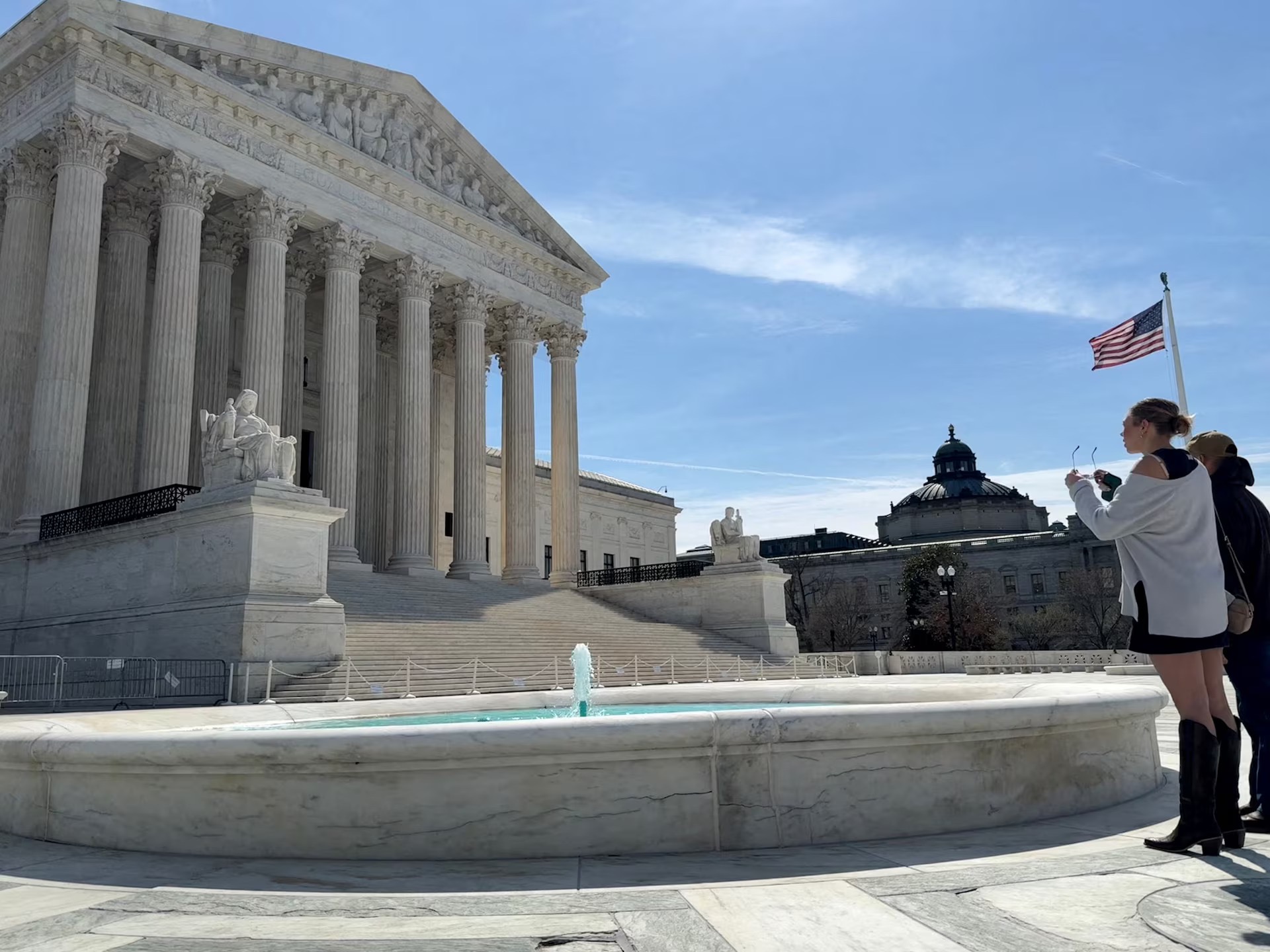
Election law experts predict the ruling will fundamentally alter fundraising and spending strategies ahead of the 2026 midterm elections.
Photo Credit: Reuters
The full impact of the decision is expected to become clearer as political parties prepare for the 2026 midterm elections.
To add to or correct any information in this report, please contact me at victoria.o@lead4earth.org.
Thumbnail Photo Credit: Supreme Court of the United States
0
0

Comments