Three seats on the San Ramon Valley Unified School District board were up for election. Only one was contested; incumbents Amanda Butland and Susanna Wong Ordway are running unopposed.
Rachel Hurd and Joel Woods are competing for the San Ramon Valley Unified School District’s Area 5 board seat. Hurd, elected in 2006, is seeking another term; Woods, a substitute teacher, is making his first run for office. Their campaign statements focus on the district’s finances, declining enrollment, classroom resources and how the board should communicate with the community. Woods campaign focuses on fiscal responsibility and advocates on no new taxes on the residents.
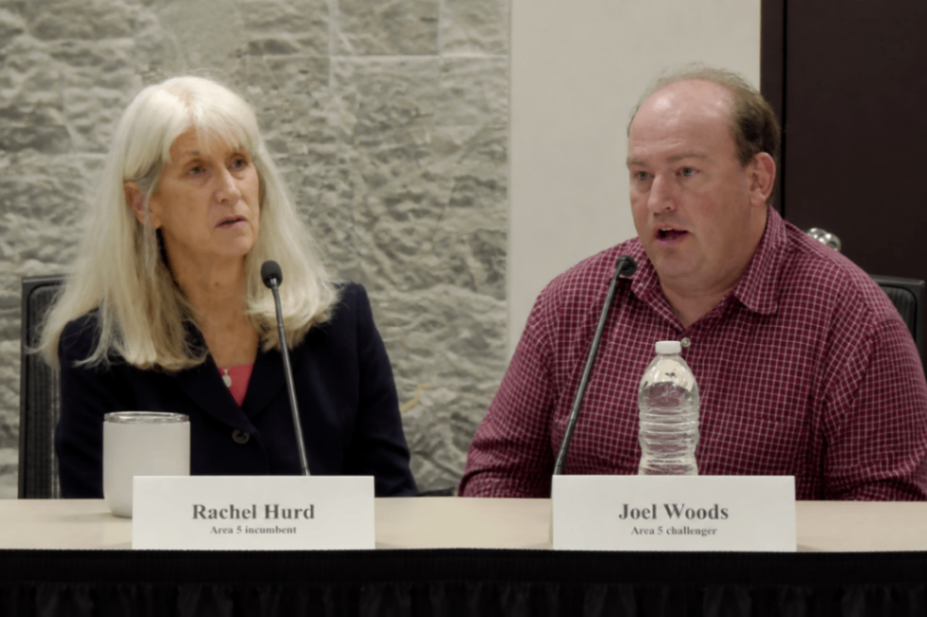
Credit : DanvilleSanRamon.com forum on Sept 17, 20262
This summary was prepared by Tri-Valley Voice based on candidate forums, reports from multiple news organizations, SRVUSD board meeting transcripts, and coverage by DanvilleSanRamon.com and The Mercury News. Joel Woods run for office started with participation in the Leadership workshop conducted by Tri-Valley Voice(OpGov.News).
The district’s financial outlook has changed over time. In 2025, trustees approved a budget-reduction plan of about $26 million, implemented during the 2025–26 school year. District projections for 2026–27 showed a small surplus, with structural deficits expected to return after the reduction plan ends. Later, unaudited figures showed the unrestricted fund ended 2025–26 at about $5.95 million, higher than the roughly $703,000 previously estimated. The figures describe different stages of the budget process; they show both the effect of cuts and continued uncertainty about future finances.
Hurd has said the board must balance fiscal sustainability, employee compensation and educational quality. She has also cited declining enrollment as a financial pressure. For a first-year priority, she supports developing a common bell schedule for the district’s four comprehensive high schools, which she says could help students access specialized courses offered at other campuses. She has supported a priority-based budget review and says she would consider another parcel tax if polling indicated community support.
Woods proposes a “classroom-first” budget review. In responses published by Patch, he called for examining administrative costs and vendor contracts, seeking grants and other outside funding, and issuing plain-language quarterly budget reports. He says he would prioritize teachers and other classroom staff, academic and elective programs, special education and manageable class sizes. Those are campaign proposals; their potential savings and revenue would depend on the district’s analysis and on whether outside funding is available.
The candidates also differ in emphasis on local taxes. Voters renewed Measure Q in November 2024. The measure continues a $144 annual parcel tax, expected to provide about $6.8 million a year for nine years for teacher recruitment and retention and academic programs. Hurd supported the renewal. Woods has emphasized grants, partnerships and spending reviews as ways to seek resources and limit pressure on taxpayers. Grants can be restricted or temporary, while parcel taxes provide local revenue under the measure’s terms.
Several contentious issues from Hurd’s tenure remain part of the campaign backdrop. In January 2021, a recall effort targeted Hurd and two other trustees after the board delayed a planned return to in-person instruction during the COVID-19 pandemic. Recall supporters criticized the decision; the board’s action came amid public-health restrictions and concern about safety. In 2023, a board meeting drew public comment over library materials and complaint procedures. The district has also debated Pride flags and LGBTQ-related activities, with residents expressing differing views about student inclusion, parental expectations and the role of schools. These episodes involved board decisions and community debate; they should not be treated as actions by one trustee alone.
Both candidates say they want to protect student learning, though they propose different approaches. Hurd points to the district’s existing systems, employee needs and the challenge of maintaining programs within available revenue. Woods emphasizes reviewing spending, pursuing outside funds and protecting school-site resources. Any proposed reductions or new revenue would need to be assessed against the district’s obligations, projected costs and effects on students and staff.
Voters can compare Hurd’s record as a trustee with Woods’s proposals for change. Key measures include enrollment and attendance, reserve levels, staffing and class sizes, access to courses and student services, and whether budget decisions are clearly explained. The central question is how the board can maintain a sustainable budget while supporting students, educators and taxpayers.
0
0

Comments