SAN FRANCISCO, CA - One by one, HIV survivors stepped to the microphone at City Hall to thank San Francisco for saving their lives - and to plead with officials not to dismantle the system that did it.
In a meeting that took place on May 19th, 2026, the San Francisco Board of Supervisors unanimously voted to instate HIV Long-Term Survivors Awareness Day (June 5th), while HIV advocates packed City Hall to warn that the city is simultaneously preparing to cut the very prevention and support programs that helped those survivors stay alive.
San Francisco's HIV crisis defined a generation and transformed global public health. While the epidemic brought unprecedented devastation to the city's LGBTQ+ community in the 1980s, local grassroots activism, pioneering medical treatments, and the renowned "San Francisco Model of Care" eventually turned the tide, turning the city into a global leader in HIV prevention.
Many speakers belonged to the HIV Advocacy Network, a coalition of long-term survivors, service providers, and public health advocates that organizes to protect and uphold San Francisco's HIV safety net.
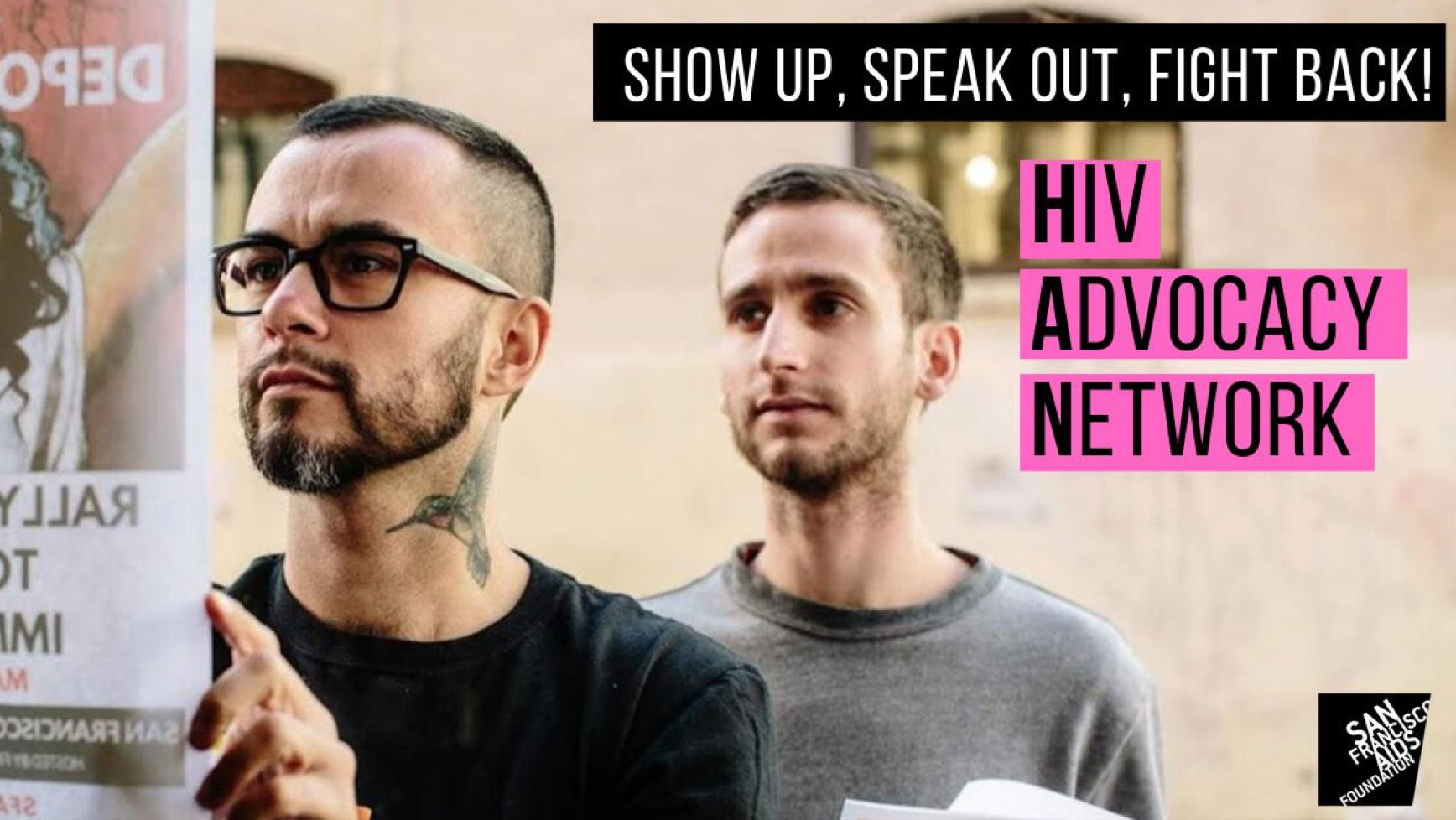
Photo Credit: San Francisco HIV Planning Council
The emotional public comment session exposed a widening disconnect between San Francisco's progressive identity and residents' growing frustration with the realities of governance, as speakers accused Mayor Daniel Lurie's proposed budget of undermining decades of HIV prevention and care infrastructure.
"Commemorative resolutions ring hollow when our actual lifelines are being severed," said Paul Aguilar, a long-term HIV survivor diagnosed in 1988.
Advocates repeatedly praised the symbolic recognition of survivors while urging supervisors to reject proposed cuts to HIV prevention, harm reduction, and aging services. Many described the cuts as a betrayal of commitments San Francisco made during the height of the AIDS epidemic.
John Allen, a member of the HIV Advocacy Network, said he felt like he had been "swimming into a void" after speaking at multiple public meetings about the proposed budget. "In the current proposed budget, HIV prevention programs have been completely gutted," Allen told the Board. "If we let these programs lapse for even a short period of time, then the cost to the city will be much, much greater down the road."
Allen criticized the proposed elimination of funding for PrEP and harm reduction programs run through the San Francisco AIDS Foundation, as well as cuts to automatic HIV testing in emergency units. He said the city was risking a resurgence in infections despite decades of progress in reducing transmission rates.
The tension between symbolic recognition and material support became the defining theme of the hearing.
Supervisor Connie Chan, who introduced the resolution, acknowledged the severe challenges facing aging HIV survivors, including chronic illness, PTSD, financial instability, and social isolation after losing entire networks of friends during the epidemic.
"We are not just offering symbolic support," Chan said. "We are recognizing that these distinct challenges require a distinct, fully funded city response."
But advocates argued the proposed budget contradicted that message.
Michael Rapino, a co-author of the San Francisco Principles and a longtime survivor, said the city was threatening the very systems it once promised to protect.
"We didn't survive decades of this epidemic just to be abandoned to balance a short-term deficit," Rapino said.
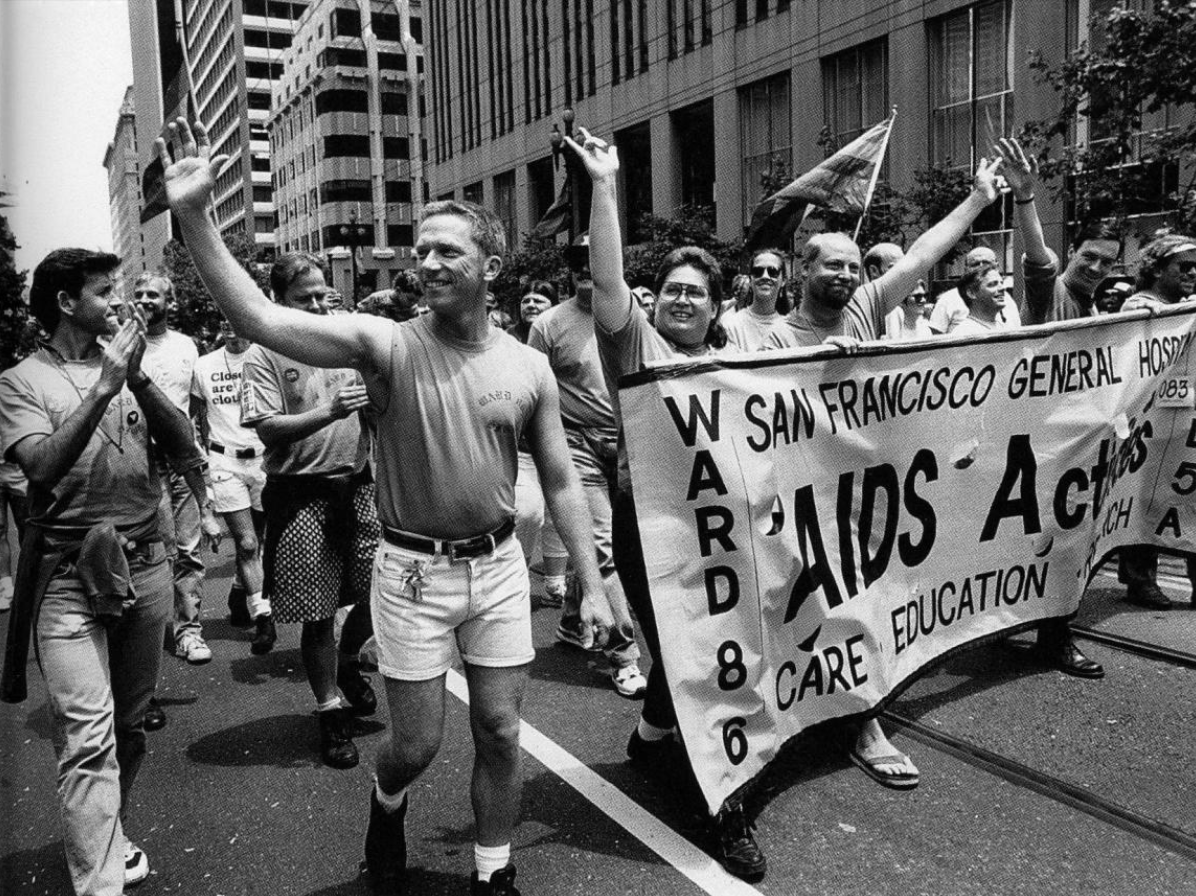
AIDS march in San Francisco, early 1990s (Photo Credit: UCSF AIDS Research Institute)
Several speakers warned that the cuts would disproportionately impact Black, Latino, and LGBTQ communities, as well as older adults living with HIV and younger residents relying on prevention programs.
Trey Turner, a clinical assistant manager at the San Francisco AIDS Foundation, credited older HIV survivors with building the public health infrastructure that allowed him to grow up HIV-negative.
"I stand on the shoulders of the brave elders who came before me," Turner said. "To suggest that we pull vital HIV resources and public health funding away from them as outlined in Mayor Lurie's proposed budget is a disgrace."
The hearing also highlighted how dramatically San Francisco's HIV population has changed. Advocates noted that nearly 75% of city residents living with HIV are now over 50, creating a growing demand for specialized aging services.
Matt Form, executive director of the AIDS Legal Referral Panel, said many long-term survivors are living with lifelong trauma after enduring the deadliest years of the epidemic.
"Back then, HIV was a death sentence," Form said. "The people we are talking about with this recognition resolution are people who largely contracted the virus before effective antivirals."
Despite repeated warnings from advocates, the Board adopted the resolution without directly addressing the proposed budget cuts during the meeting.
For many speakers, the contradiction reflected a broader concern increasingly voiced at City Hall: that San Francisco remains eager to celebrate its progressive legacy while struggling to maintain the public systems that legacy created.
A summating question was put to the Board in a particularly emotional moment by Retired Registered Nurse Joel Ogren –
"I urge you to consider the budget cuts to HIV survivors. To what end will you be making these cuts?"
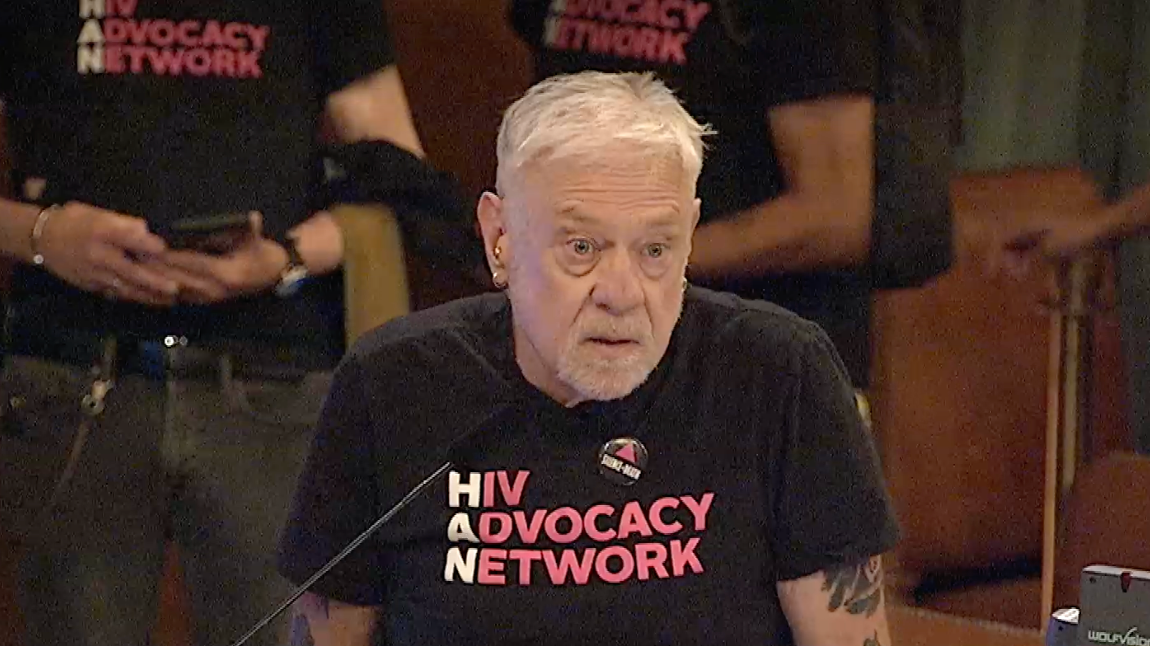
Former RN Joel Ogren Speaks at the San Francisco Board of Supervisors meeting.
0
0

Comments