(SAN RAMON) — Two items continue to draw public interest: procedural updates connected to the removal of Measure G references, and ongoing discussion around the city’s appeal fee structure.
Last week, OpGov.ai reported that San Ramon's developer appeal fees are some of the highest in the nation. These issues have appeared at multiple meetings this year and have prompted questions from both long-time residents and former elected officials about clarity, accessibility, and how local processes affect community participation.
At the Nov., 25 city council meeting, the agenda listed the appeal fee structure. Now, appeal fee concerns resurface with new clarifications. The city’s appeal fee has become one of the most revisited topics of 2025, and recent staff clarifications have brought new attention to how the fee actually works.
In earlier discussions, many assumed San Ramon charged a flat $4,500 fee. Staff recently clarified that the amount is not a final fee, but a deposit toward staff time billed at $330 per hour, with no upper limit.
Depending on the appeal's complexity, the total cost can exceed the initial deposit by a significant amount. Potentially bankrupting the resident.
Here is how other jurisdictions, handle appeal fees.
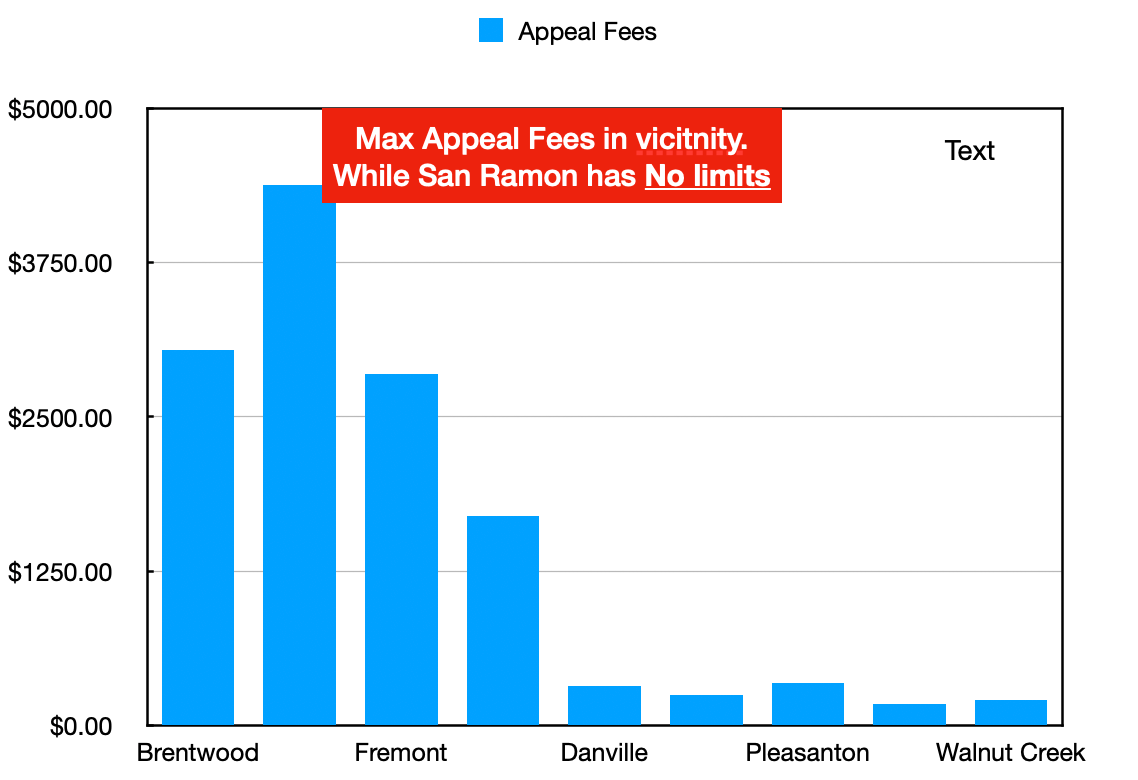
Community Development Director Lauren Barr explained that San Ramon’s appeal system is built on a deposit model, in which the initial payment is intended to cover the early stages of staff work. He noted that this structure places a greater upfront responsibility on the resident filing the appeal, but also ensures the city can fully recover the staff time required to process it.
Barr added that the council is not limited to this approach; it could transition to a flat fee, adopt a hybrid model, implement a tiered system, or consider offering refunds when an appellant is successful. According to the city’s cost study, once staff time and review hours are calculated, the full cost of a typical appeal comes to roughly $6,700, Barr added.
This clarification has shifted how residents understand the process. In previous public comments and OpGov.ai posts, some described the system as effectively “infinite appeal fees,” since the lack of a ceiling can create unpredictable, and potentially unaffordable, costs for residents.
Due to the constants questions, historical context has formed due to the many changes in the system over time:
1. Until 2008, the appeal fee was around $350, similar to other nearby cities. Residents filed appeals roughly three times a year.
2. In 2008, the fee increased to $2,500. Over the next 15 years, appeals dropped to 13 total, less than one per year.
3. The fee later increased to $4,500, but is now classified as a “deposit,” not a ceiling.
4. Staff time billed at $330/hour can exceed the deposit, and the total is not refunded if the appellant prevails.
5. Some residents argued that the unpredictability of the total cost may discourage appeals altogether. Others pointed out that elected officials may appeal decisions at no cost, while the same process for residents may amount to several thousand dollars in billable time.
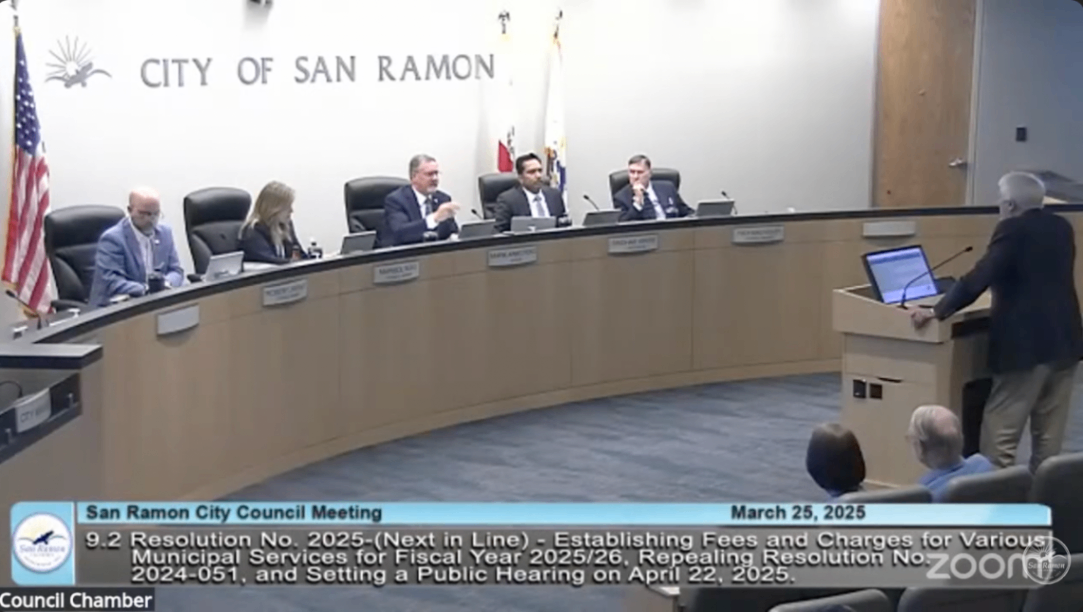
Speakers across multiple meetings have raised questions about cost, accessibility, and regional consistency.
At the March 25 meeting, Former Councilmember Jim Blickenstaff highlighted that Danville charges $311 for the same type of appeal.
Resident Garry Chaban added that the cost could prevent residents from challenging a decision that directly affects their neighborhood. The City Council agreed to bring the appeal-fee structure back for a dedicated discussion after the April 22 hearing on the Master Fee Schedule, where numerous residents raised concerns about how the current system affects accessibility and participation.
Although the fee schedule approved that night did not include any changes to appeal fees, the volume of questions and requests for clarification led the council to ask staff to prepare a follow-up item focused specifically on how appeals are priced and what alternatives might be available.
Blickenstaff suggested a two-tier model separating developer appeals from resident appeals, a structure Pleasanton already uses. Carolyn Wetmore added that the city’s appeal costs have risen by around $2,000 since 2023, and encouraged the city to consider how accessibility factors into long-term participation.
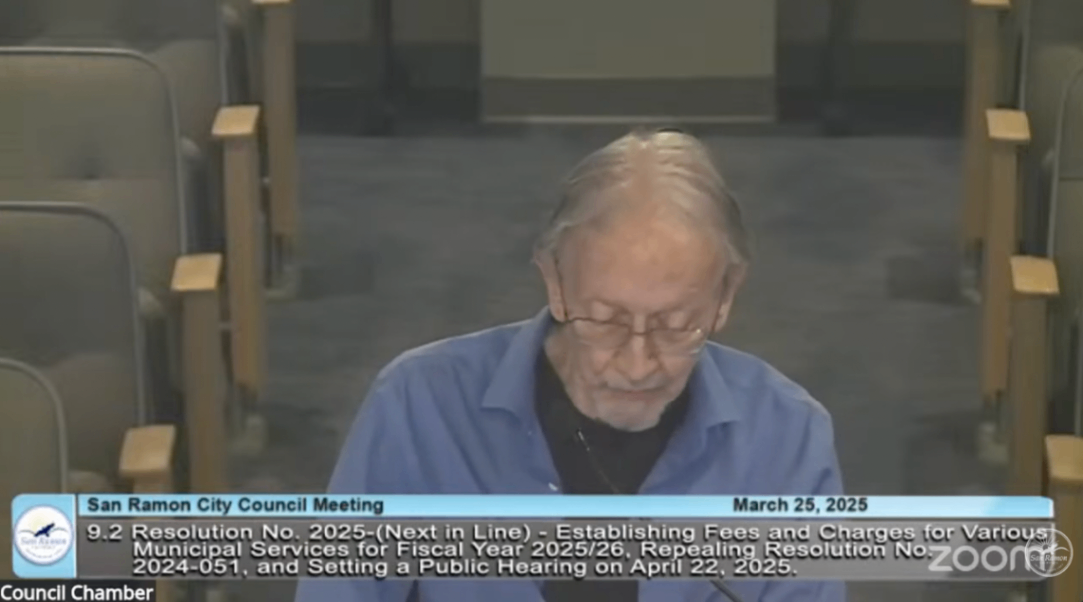
Blickenstaff suggested reviewing fee structures across Tri-Valley cities.
On May 27, OpGov.ai Founder, Chirag Kathrani, noted during public comment that he had filed a referendum on the General Plan update, and that ongoing resident questions about appeal processes and accessibility were part of the broader discussion. An the fact he chose to file referendum was because the appeal fees were cost prohibitive.
OpGov.ai public comment logs show that since March, the appeal issue has been among the most consistently raised topics. Outside formal meetings, conversation has continued on platforms like Nextdoor, where Kathrani’s post explaining the appeal-fee system generated more than two dozen comments.
Residents shared experiences, asked follow-up questions, and compared San Ramon’s costs with those of nearby jurisdictions.

Appeal-fee questions have continued to circulate in the community, as seen here.
Across meetings and public forums, a few consistent themes have emerged, beginning with access to the public process. Residents emphasized that an appeal system with no cost cap may discourage participation, especially compared to neighboring cities with predictable or refundable fees. Next, transparency and predictability have become an issue. Speakers requested more transparent communication on how fees are calculated, how staff time is billed, and how procedural changes, such as those related to Measure G, are decided.
Alignment with regional norms has been brought up. Many urged the city to consider fee models used in Pleasanton, Danville, Dublin, and other nearby jurisdictions.
Lastly, long-term community engagement is raised. Public commenters across all three meetings said that predictability, fairness, and accessibility in the appeal process are essential for ensuring residents feel able to participate in local land-use decisions.
One more resident Susie Ferris Inderkum, who was the last one to file appeal, spoke and raised concerns on why the complete study of Matrix Consulting which was the basis of the appeal fees is not made completely available requested city to make it public. Additionally she also requested investigation on Sunsets role in the appeal fees.
Susie Ferris Inderkum have taken to court City of San Ramon in their decision regarding Marketplace and have consistently fought it for past several years. Her team at CAMPAD, has also put together a site to advocate responsible growth.
This article was prepared using OpGov.ai meeting records, transcripts, and public comment archives to ensure accuracy and accessibility of information for San Ramon residents, please reach out to ananya.s@lead4earth.org for comments.
1
0

Comments