SAN RAMON, Calif. — Three San Ramon candidates outlined their priorities on development, city finances, small businesses and government accountability during a candidate forum hosted by Diya TV’s Ravi Kapoor.
Pascallis Ntatsos, Chirag Kathrani and Jeffrey Joh participated. Kapoor also identified four candidates who had been invited but did not participate: mayoral candidates Mark Armstrong and Emma Chigbu, District 2 candidate Richard Adler and District 4 candidate Marisol Rubio.
Candidates outline their priorities:
Ntatsos emphasized strengthening San Ramon’s small business community. Drawing on his experience as a business owner, he said rising city fees were placing additional pressure on businesses already struggling with costs.
Kathrani, who previously ran for mayor, focused on public participation and council accountability. He criticized the council appointment process following the previous election and said more than 700 community voices went unheard in 2025.
Joh said growing up in San Ramon shaped his desire to preserve the qualities he valued about the city. His priorities included attracting technology businesses and expanding local shopping options.
Credit : DiyaTV Youtube Channel
Measure G and voter authority
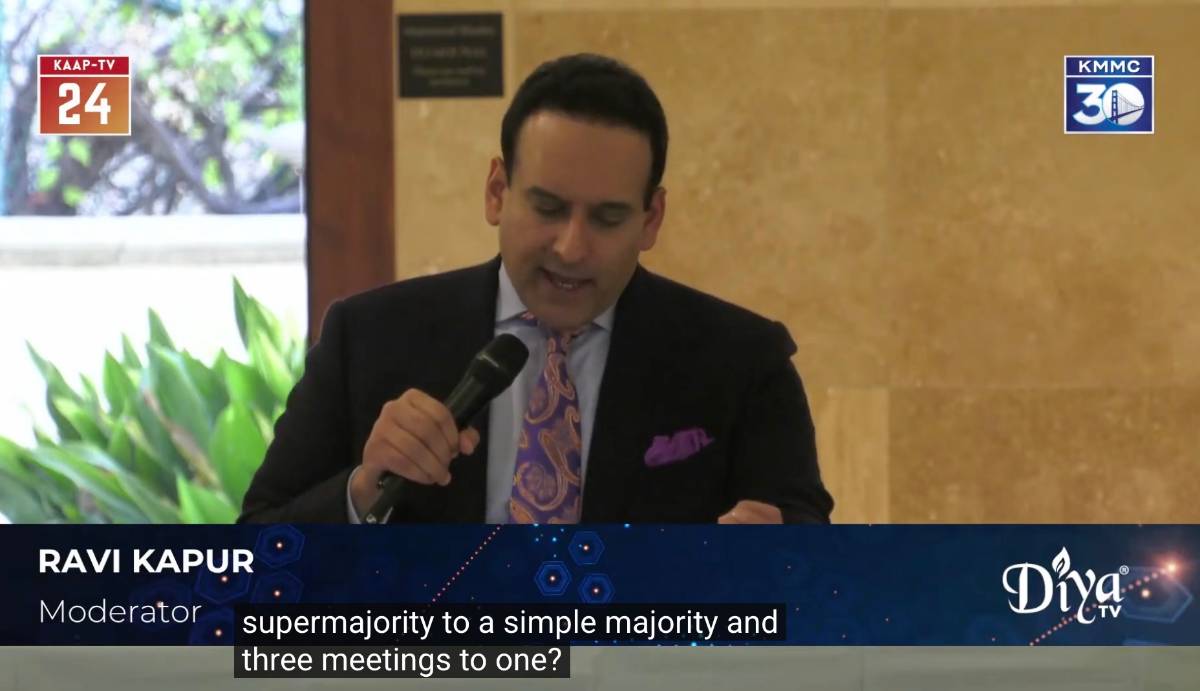
Kapoor asked whether the candidates supported reducing Measure G’s supermajority voting requirements to a simple majority and reducing the required meetings at the Planning Commission and City Council from three to one. He also asked what they would do in their first year to restore its protections if those requirements had already been weakened.
Ntatsos discussed the circumstances behind Measure G’s adoption in 1999 and expressed support for reconsidering its protections.
Kathrani argued that the city’s handling of Ordinances 531 and 532 raised questions about compliance with Measure G’s supermajority requirement. He contended that the Planning Commission vote did not meet that threshold and linked the issue to the city’s subsequent removal of the requirements.
He also criticized the council’s use of the consent calendar to approve the change, saying former elected officials and approximately 25 community members had requested a discussion but were not given one.
Joh emphasized that voters had approved Measure G by a substantial margin. He questioned the council’s decision to remove those protections and said proceeding despite concerns raised earlier in the process left residents feeling unheard.
Campaign funding and endorsements
Ntatsos said he was financing his own campaign and was not seeking donations or endorsements. He argued that campaigns should offer an equal playing field and described endorsements and contributions as potentially creating obligations. He also criticized what he described as a recently increased campaign spending limit of $90,000.
Kathrani said he had responded to organizations offering endorsements to understand their priorities and concerns, but had not actively sought endorsements. He said he wanted to avoid obligations that could affect his independence.
Joh said he was also financing his campaign while seeking contributions from community members.
Term limits and leadership
The candidates offered different perspectives on term limits.
Joh said San Ramon’s more pressing problem was a lack of leadership and independent voices on the council, making term limits a lower priority for him.
Ntatsos expressed strong support for introducing term limits.
Kathrani criticized what he described as a pattern of long-serving elected officials moving between council and mayoral roles, with appointed councilmembers subsequently running as incumbents. He argued that this pattern made it harder for new candidates to compete.
City finances, retail and small businesses
Joh proposed attracting larger technology companies and expanding retail options, particularly in Gale Ranch and Dougherty Valley. He said residents often traveled to Dublin or Blackhawk to shop and expressed hope that the city’s finances could improve enough to repeal Measure N early.
Ntatsos said fees charged to small businesses participating in city recreation programs had recently increased by 14%. He argued that such increases discouraged business participation.
Kathrani said he had helped build more than 10 businesses and mentored others seeking to start their own. He called for city-supported entrepreneurship programs that would help young people build careers locally, including opportunities to connect with residents who serve as senior executives at established companies.
Development appeal fees
Kapoor asked about the cost of appealing city decisions, contrasting San Ramon’s approach with neighboring cities where appeal fees were described as approximately $300.
Joh said appeal fees should be reasonable.
Ntatsos argued that high fees discouraged residents from appealing and supported bringing San Ramon’s fees closer to those of neighboring cities.
Kathrani cited a resident attending the forum who, he said, faced approximately $14,000 in appeal costs. He also questioned a process in which the same council heard the appeal and the resident received only 15 minutes to present his case.
Automatic MCE enrollment
All three candidates opposed automatic enrollment in MCE electricity service, saying participation should require residents to opt in.
The forum also covered Flock cameras and opportunities to reduce city spending.
0
0

Comments