(SAN DIEGO, CA.) –The San Diego City Council May 11 approved the city’s Water Shortage Contingency Plan and Urban Water Management Plan, advanced a long-term Mission Bay Park improvement program, and later joined two national lawsuits in closed session.
City staff said the Water Shortage Contingency Plan explains how San Diego would respond if the city faces water shortages, including scenarios where supply falls up to ten percent below demand. Possible responses could include increasing water supplies, reducing usage, changing operations or enforcing mandatory water restrictions.
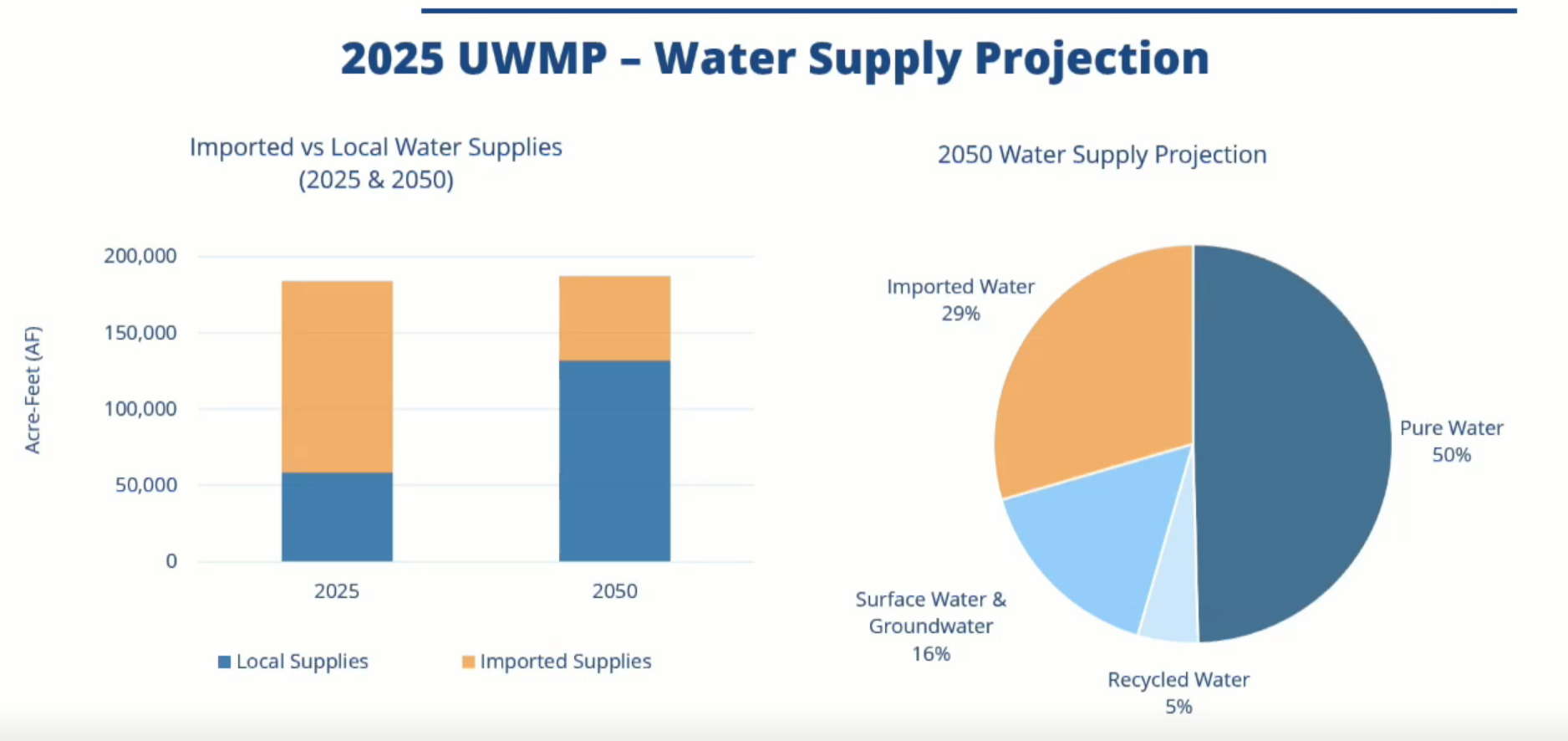
Photo Credit: City of San Diego
The plan also includes the city’s emergency water storage requirements under Council Policy 400-04. The Urban Water Management Plan will be submitted to the California Department of Water Resources by July 1.
The council approved both plans and determined the Water Shortage Contingency Plan did not require environmental review under the California Environmental Quality Act (CEQA).
Councilmember Sean Elo-Rivera asked staff whether the city’s water planning accounted for future population growth.
Elo-Rivera said, “We’ve planned for the population to grow, correct? And everything that we’re mapping out is based on that population and growth, correct?”
He also said lower population growth could increase water rates because system costs would be spread across fewer users.
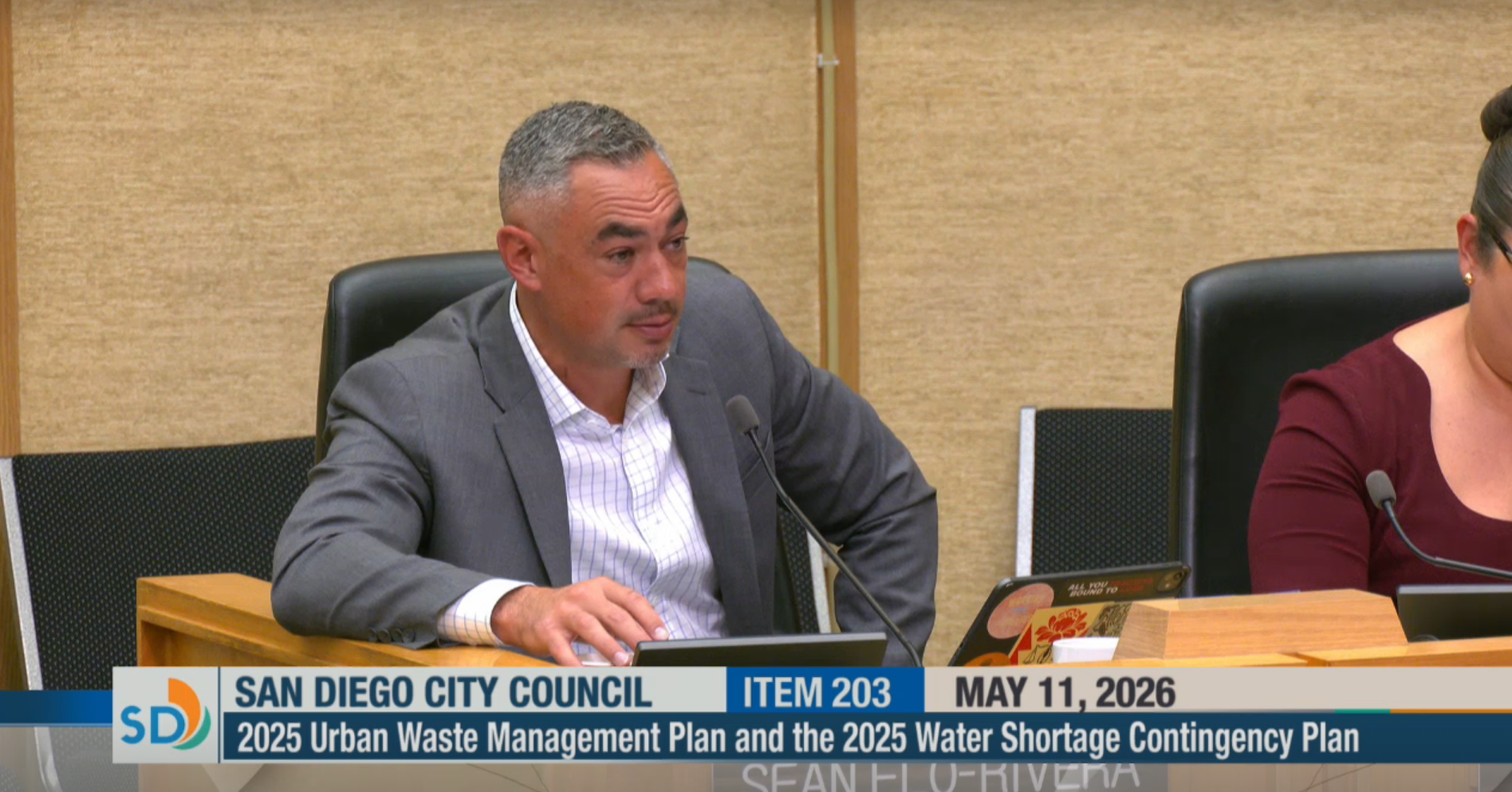
Photo Credit: City of San Diego
Councilmember Raul Campillo said the city is moving toward relying more on local water sources. He said it shows “an entire reversal from predominantly imported water to local supply via Pure Water.” He also said staff “dove deep and really updated the data.”
The council voted 7–0 to approve the water items.
During public comment, several speakers raised concerns about drought conditions and water supplies across the Southwest.
Resident Hector Jimenez said, “Lake Mead is at the all-time lowest level right now,” while resident Andrea Ebbing questioned how water use and loss are being tracked, stating, “30 million gallons of water is basically like not paid for and wasted, and nobody even knew about it.”
The council also approved environmental documents and a long-term improvement plan for Mission Bay Park. The project includes wetland restoration, shoreline improvements, expanded habitat areas and upgrades for cyclists and pedestrians.
City staff said the project was developed over several years through collaboration between multiple city departments, including Parks and Recreation and Planning.
Deputy Director Carrie Purcell said, “The item before you today is the work of many years of hard work of Engineering and Capital Projects staff working in collaboration with staff from Parks and Recreation.”
Program Manager Nancy Graham further explained the proposed benefits of the program, stating, “The program itself has some core elements. Those include wetland and water quality improvements, shoreline restoration, upland habitat expansion, seawall restoration, and bike and pedestrian improvements all within the Mission Bay Park improvement zone.”
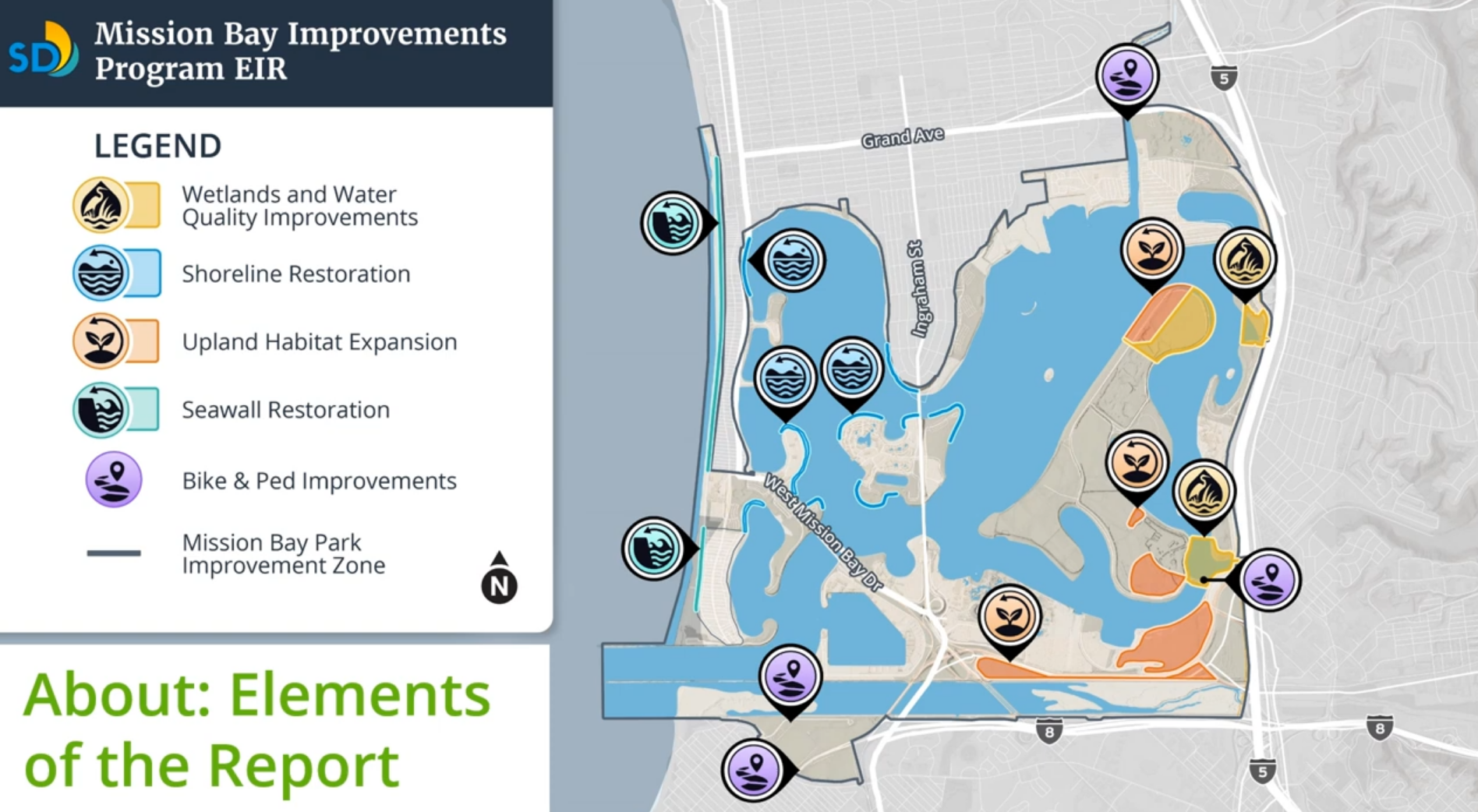
Photo Credit: City of San Diego
Graham noted that construction could temporarily affect wildlife, air quality, noise levels, and park activity, but the city identified measures to reduce those impacts. She said the preferred option includes less pavement and more natural habitat areas.
Public comments focused on park maintenance, environmental issues, and concerns about future development.
Stephanie Saathoff, speaking for the Mission Bay Lessees Association, urged the city to prioritize maintenance before expanding new projects.
She began, “We encourage you to move ahead today with key priorities: the bike and pedestrian path improvements, our safety issues, the wayfinding signage we are very excited is a long overdue and deferred maintenance.”
Kathleen Lippert called for stronger enforcement of beach litter rules, asking, “What good are $1,000 litter fines if no one is ever fined for littering?”
Katherine Rhodes supported the project but raised concerns about future coastal development and sea level rise.
Rhodes said, “I really like EIR and Mission Bay Park improvements and am super supportive of the Rewild PB,” and urged the city to strengthen oversight of future coastal development.
The council unanimously approved the Mission Bay plan.
In closed session, the city attorney reported two litigation votes.
The council voted to join national opioid litigation in federal court in Ohio involving pharmaceutical companies and distributors accused of contributing to the opioid crisis.
The council also voted to join a class action lawsuit in federal court in Illinois against Discover Financial Services. The lawsuit centers on claims involving credit card fees and payment practices affecting merchants.
The meeting ended after the council finished its major agenda items. Remaining public comments were moved to the next day because of time and quorum limitations.
For any question or comments about this article, message me at jenny.r@lead4earth.org.
0
1

Comments