(SAN DIEGO, CA.) - San Diego City Council voted Thursday night to move forward with a plan allowing taller and denser housing projects near major public transit stops across the city under California Senate Bill 79. The vote came after hours of debate over which bus routes should qualify for higher-density development.
The ordinance passed 6-0, with three council members absent, just weeks before the state law takes effect on July 1. Senate Bill (SB) 79 requires cities to allow increased residential density near qualifying public transit stops.
The biggest debate of the night centered on whether major bus corridors like University Avenue, El Cajon Boulevard, and Park Boulevard should count as “transit-oriented development” areas under the law. Housing advocates argued that those routes already function like major transit corridors and should qualify for higher-density housing.
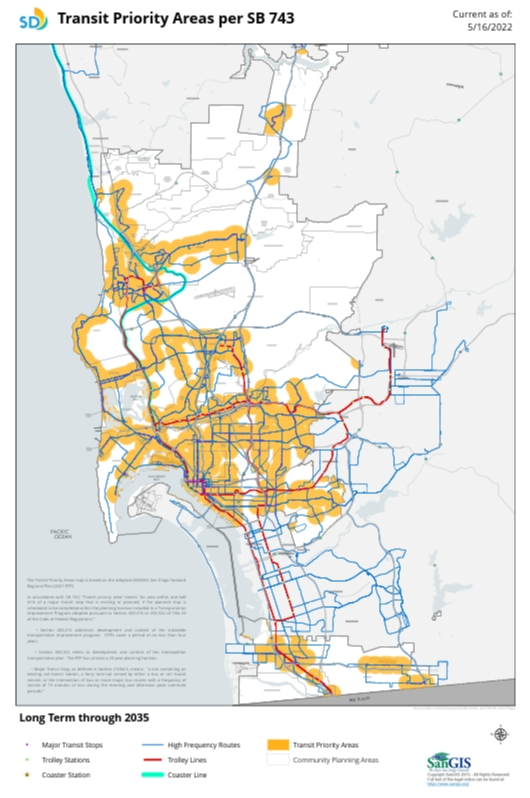
Photo Credit: City of San Diego / San Diego Transit Priority Areas map
“I think some people get it wrong and believe that adding more housing is bad,” speaker Sawat Thot told the council. “Housing is more neighbors in need, more affordability. It means that we all get to live here.”
Another speaker, Daniel Mollett of Normal Heights, called the policy “the obvious” solution to San Diego’s housing shortage.
“Building more homes in high-frequency transit areas like El Cajon Boulevard, University Avenue, and Park Boulevard is exactly what we need,” Mollett said. “We should be pushing forward to let as many people live where they want to live.”
Other residents urged the city to move more carefully, especially in neighborhoods already dealing with rapid development or limited infrastructure.
“I think you guys [have] got to slow the roll down,” one public commenter told the council. “It’s a nightmare.”
Council President Joe LaCava said San Diego has already spent years updating community plans to allow more housing and argued the city is ahead of much of California when it comes to pro-housing policies.
“Housing is good,” LaCava said. “You know what else is good? Planning is good.”
Planning Department Director Heidi Vonblum said city staff had been working under a tight timeline since SB 79 became law, and had coordinated with the San Diego Association of Governments (SANDAG), the city attorney’s office, and other agencies to interpret the legislation.
“We did identify four stops,” Vonblum said, referring to the bus rapid transit stations that staff believed met the state’s requirements for dedicated transit lanes.
However, SANDAG has still not released the official regional maps that will determine which transit stops qualify under SB 79.
“If the map released by SANDAG is different than what we’re talking about today, the SANDAG map will prevail,” LaCava said during the hearing.
Much of the council debate focused on whether the city should immediately include Park Boulevard, University Avenue, and El Cajon Boulevard as qualifying bus corridors before SANDAG releases its final maps. Councilmember Stephen Whitburn argued the city should clearly support adding these corridors.
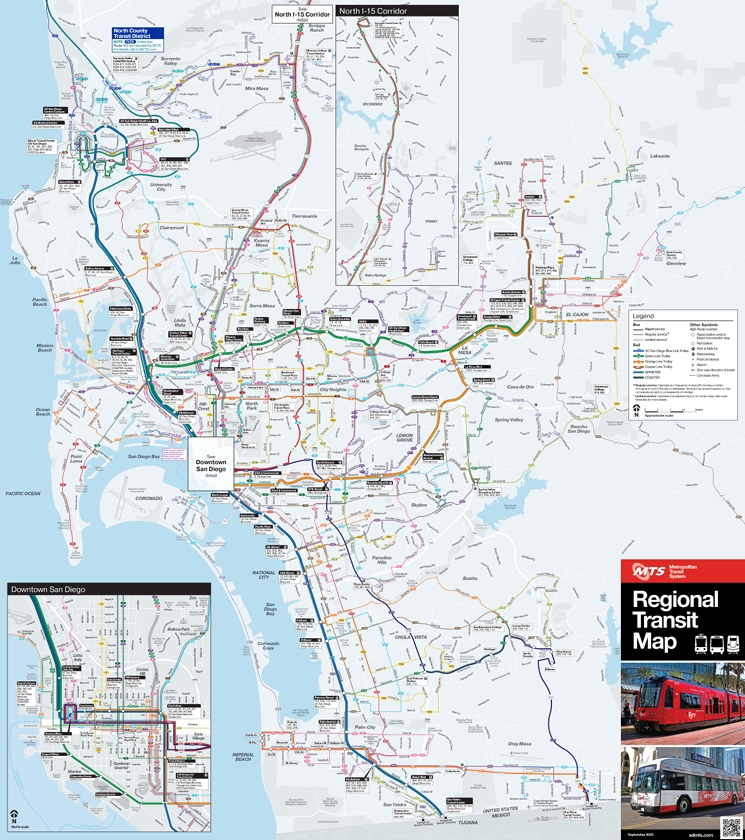
Photo Credit: City of San Diego / MTS Regional Transit Map
“When I look at those bus lanes on Park Boulevard, University Avenue and El Cajon Boulevard, I have always thought of them as designated transit-only lanes,” Whitburn said. “This is exactly where we need to be building additional housing.”
Whitburn proposed adding language that would have included bus stops along those corridors if buses arrived every 15 minutes during busy commute hours. LaCava declined to include the amendment, saying he did not want to risk delaying the ordinance before the state deadline.
“I want to maintain the integrity of this and not risk the very narrow timeline we have,” LaCava said.
Councilmembers also debated whether the law should take effect more slowly in lower-income neighborhoods. City staff recommended giving some communities more time before allowing the higher-density projects, saying residents should have more opportunities to weigh in before major zoning changes move forward. Staff also said some neighborhoods have historically been left out of planning decisions.
“The city planning department is not recommending exemption of the areas,” Vonblum said. “The city planning department is recommending that we take the additional time to do the thoughtful planning.”
Councilmember Raul Campillo said the city needed to avoid unintended consequences while still addressing the housing crisis.
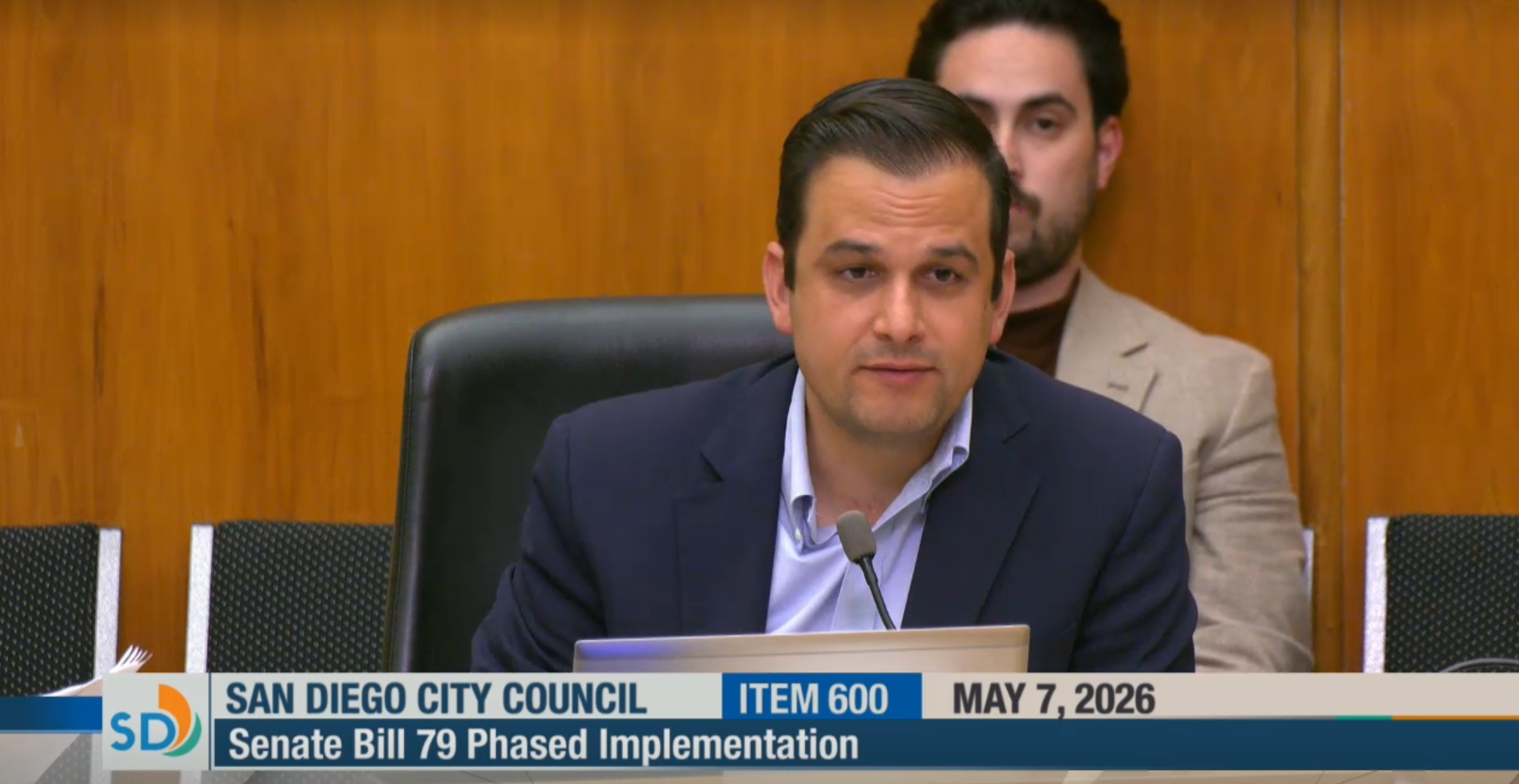
Council Member Raul Campillo speaking during the May 7, 2026 City Council Meeting.
“We have to acknowledge the sheer number of people that don’t have that safe space yet for them,” Campillo said. “Those individuals and families are rightfully concerned that the opportunity to live in this city will be unattainable.”
Councilmember Sean Elo-Rivera Moreno expressed concern that delaying implementation in some lower-resource neighborhoods could slow housing production for years.
“I do want my daughter to be able to live in the city of San Diego when she is ready to purchase a home,” Moreno said. “I do want the city to get out of the way.”
After a recess lasting more than an hour, city staff returned with a compromise proposal. The revised version removed references to specific transit stops and corridors after council members disagreed over which bus routes should qualify under SB 79. Instead of naming specific stops in the ordinance, the city decided to wait for SANDAG’s official transit maps and follow the regional agency’s final determinations.
“What this does is remove that limiting nature,” Whitburn said after the compromise was announced. “It defers to SANDAG.”
The council then approved the amended ordinance 6-0 on first reading. The council still needs to approve the ordinance one more time before the law takes effect on July 1.
Toward the end of the meeting, Whitburn said his office would lead a letter to SANDAG urging the agency to include the Park Boulevard, University Avenue, and El Cajon Boulevard corridors in its final transit-oriented development maps.
For any comments or questions on this article, email me @jenny.r@lead4earth.org.
0
1

Comments