(SACRAMENTO, Calif.) — The Sacramento City Council considered a contract amendment that would increase the city’s agreement with Urban Capital LLC for a proposed senior housing development in Rio Linda to nearly $19.7 million.
The amendment, listed as File ID 2026-01948, would increase the existing agreement by $18,903,309, bringing the total contract amount to $19,689,400. The project is planned for properties at 2809, 2811 and 2821 Rio Linda Boulevard in Council District 2.
The council agenda also called for a two-thirds vote to waive certain city contract publication and review requirements before authorizing the amendment. The requested waiver concerned provisions of the Sacramento City Code and City Council Rules of Procedure applicable to contracts exceeding $1 million.
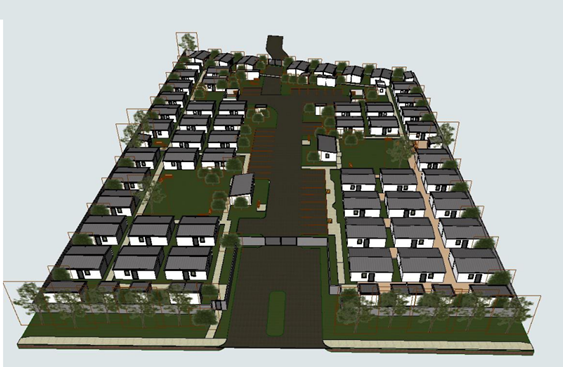
Image courtesy of Urban Capital / Studio 81 International / Architectural rendering of the proposed Rio Linda Senior Housing Project at 2809, 2811 and 2821 Rio Linda Boulevard. The site plan depicts 100 residential units arranged around a central access drive, with landscaped open space and parking areas.
The proposed development is a 100-unit permanent supportive housing project intended to serve seniors experiencing homelessness, including senior veterans. The units are planned as approximately 240-square-foot modular homes, with bathrooms and kitchenettes. Plans also include parking, community rooms, laundry facilities, storage, private offices, a park area and a community garden.
City spokesperson Jennifer Singer said the Homekey+ funding award for the project is approximately $31.86 million and will cover construction and operating costs. The city also has $3 million in Homeless Housing, Assistance and Prevention funding to support ongoing operations.
The California Department of Housing and Community Development announced the project’s Homekey+ award in July 2026. The City Council later accepted the state funding in September, according to a separate staff report.
Singer said Urban Capital approached the city in spring 2024 with a proposal to develop permanent supportive housing on privately owned property the company was seeking to purchase. The city and Urban Capital then jointly applied for Homekey+ funding.
Because Urban Capital initiated the proposal, owns the property and was identified as the development partner in the state funding award, the city did not conduct a competitive procurement to select the developer, Singer said.
The city did conduct a competitive solicitation for the project’s supportive services provider. Following a June 2026 request for qualifications process, the city selected Hope Cooperative to provide services to residents.
A separate city agreement with Hope Cooperative provides $3.885 million for an initial five-year term. The organization is expected to provide residential case management, resident services coordination and program management.
The project also includes a partnership with Alta California Regional Center, which is expected to fund and provide supportive services for 15 units serving people with developmental disabilities who are at risk of or experiencing homelessness.
The developer selection process and project costs drew questions during public comment. One speaker questioned why the city did not use a competitive process to select Urban Capital and raised concerns about the project’s development costs, developer fees and campaign contributions involving the company and people the speaker associated with it.
The speaker also asked whether any campaign contributions required councilmembers to disclose potential conflicts of interest or recuse themselves from the matter.
Singer said the city does not track political donations and could not verify the contribution figures raised during public comment. Campaign finance disclosures filed with the city are publicly available through the City’s campaign finance portal, but the information is self-reported by candidates and committees. The City Clerk maintains the records but does not independently verify individual contributions or totals. Potential violations of state campaign finance law are generally investigated by the Fair Political Practices Commission.
John Vignocchi, managing partner of Urban Capital, said he was willing to address questions about the project and rejected the allegations raised during the meeting.
The Homekey+ program, established through Proposition 1, provides funding for permanent affordable housing paired with supportive services for veterans and people with behavioral health challenges who are experiencing or at risk of homelessness.
Construction on the Rio Linda project is anticipated to begin in the first quarter of 2027. The supportive services agreement with Hope Cooperative is scheduled to begin July 1, 2027.
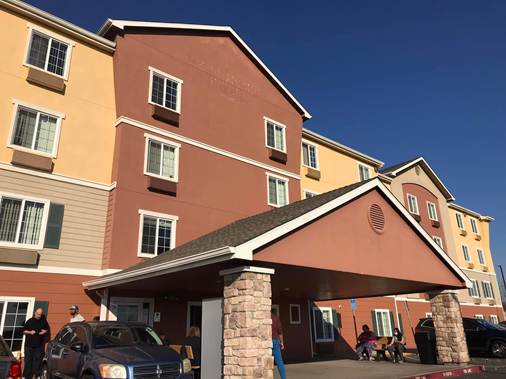
A former hotel in South Sacramento was converted into 100 units of housing through the state's Homekey program, according to Sacramento County Supervisor Patrick Kennedy. The project is separate from the proposed Rio Linda Senior Housing development. Photo: Courtesy of Sacramento County Supervisor Patrick Kennedy/Facebook.
If you’d like to add or correct anything in this report, feel free to reach out to me or leave a comment below. Submit tips and story ideas to Sarah Denos at sarahkdenos@gmail.com
0
0

Comments