(SACRAMENTO, Calif.) — The families of victims whose loved ones were murdered by people sentenced to death are at the center of growing opposition to Gov. Gavin Newsom’s plan to commute the sentences of all 548 inmates on California’s death row.
Sacramento County Sheriff Jim Cooper and Placer County Sheriff Wayne Woo are among the local law enforcement officials urging Newsom to reconsider, pointing to cases involving the killings of two Northern California law enforcement officers and other victims of violent crimes.
The Sacramento County District Attorney’s Office also criticized the proposal, saying a blanket commutation fails to account for the individual circumstances of each case and the families who have waited years for justice.
“Any discussion about ending California’s capital punishment must begin with the victims, their families, and the communities forever impacted by the most heinous crimes,” the District Attorney’s Office said in a statement.
The office argued that death sentences follow years of legal proceedings involving juries, judges and mandatory appellate review. It said commuting every sentence disregards the individualized facts of each case and the voices of victims’ families.
The office also cited California voters’ decisions to reject efforts to abolish the death penalty in 2012 and 2016. In 2016, voters rejected Proposition 62, which would have repealed the death penalty, while approving Proposition 66, which sought to speed up the legal process in death penalty cases.
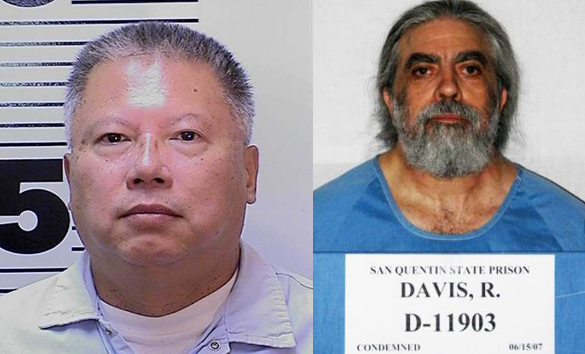
Charles Ng (left) and Cary Stayner (right), two California death row inmates whose cases were cited by the Sacramento County District Attorney’s Office in its opposition to Gov. Gavin Newsom’s proposed commutation of all 548 death sentences. Both men were convicted of multiple murders. Photos courtesy of Wikimedia Commons.
The office pointed to several condemned inmates as examples of the crimes involved, including Charles Ng, convicted of multiple murders; Richard Allen Davis, sentenced to death for the kidnapping and murder of 12-year-old Polly Klaas; and Cary Stayner, convicted of four murders.
Cooper took to Instagram to voice his opinion about Newsom’s plan, pointing to the 2014 killings of Sacramento County Sheriff’s Deputy Danny Oliver and Placer County Sheriff’s Detective Michael Davis Jr. by Luis Bracamontes.
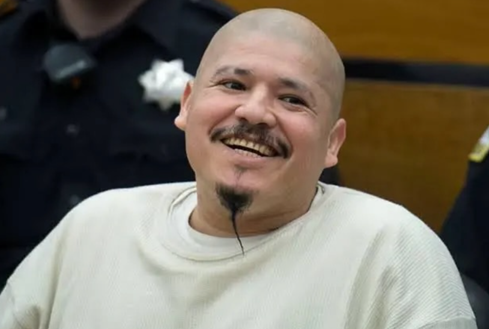
Luis Bracamontes, who was sentenced to death for the 2014 murders of Sacramento County Sheriff’s Deputy Danny Oliver and Placer County Sheriff’s Detective Michael Davis Jr., is among the inmates affected by Gov. Gavin Newsom’s proposed commutations of California’s death row sentences. Credit: Sheriff Jim Cooper’s Instagram.
Bracamontes was convicted of murdering both officers and sentenced to death. The crime spree also left another deputy seriously wounded.
Cooper said he remembered the crime scene and Bracamontes’ behavior during court proceedings, including laughing as victims’ families sat in the courtroom.
“This isn’t just about the death penalty,” Cooper wrote. “It’s about accountability, honoring the decisions of juries, respecting the will of California voters, and standing with the families of victims who have already suffered unimaginable loss.”
Woo also urged Newsom to reconsider the plan, saying it disregards public safety, victims’ families and the decisions made by juries.
The Placer County sheriff cited the killings of Oliver and Davis, along with two other cases involving multiple murders in Placer County.
In one case, four members of a family, including two young children, were killed at an Auburn-area ranch in 1998. In another, two young women, ages 18 and 15, disappeared in Placer County in 1986 and were later found dead in separate rural locations. The defendants in both cases were sentenced to death.
“These are real victims. They were someone’s children, parents, siblings and loved ones,” Woo said. “Their families have endured unimaginable loss, and this decision is another painful reminder that their voices can be overlooked in a political process.”
Woo also cited Newsom’s 2016 campaign remarks that he would be accountable to voters on the death penalty, urging the governor to honor those words.
Newsom announced his plan Nov. 5, saying he believes capital punishment is incompatible with California’s values and undermines the state’s justice system.
In an open letter to Californians, the governor acknowledged that the announcement could bring back painful memories for victims’ families. He described the decision as one of the most difficult of his career and said he alone bears responsibility for it.
Newsom said he considered whether to commute only certain sentences but concluded that distinguishing among offenders could create “two classes of murder victims” — those whose perpetrators deserve the death penalty and those whose perpetrators do not.
“I firmly believe that state-sanctioned killing is incompatible with California’s values, undermines the foundations of our legal system, and diminishes each of us,” Newsom wrote.
The proposed commutations would change the sentences of the 548 inmates to life in prison without the possibility of parole. They would not be released from prison, and the move would not repeal California’s death penalty or prevent prosecutors from seeking death sentences in future cases.
The process is not immediate. Some commutations require a recommendation from the California Supreme Court because of the inmates’ multiple felony convictions before the governor can issue them.
California has not carried out an execution since 2006. Newsom imposed a moratorium on executions in 2019, halting executions while leaving the death penalty on the books.
The governor’s office says victims and survivors registered with the state’s victim services program will be notified when commutations take effect.
“These offenders will die in prison but not by our hand,” Newsom wrote.
If you’d like to add or correct anything in this report, feel free to reach out to me or leave a comment below. Submit tips and story ideas to Sarah Denos at sarahkdenos@gmail.com.
0
0

Comments