(ROSEVILLE, Calif.) — Public Comment during the October 7 Roseville city council meeting was once again dominated by concerns regarding ongoing Flock agreements. The citizens who spoke, many of them regulars, emphasized their dedication to witnessing the termination of Flock usage and advocating for a publicly facilitated town hall.
The sentiments shared on October 7 are anything but rare at biweekly council sessions.
The Roseville Police Department first implemented LPR (license plate reader) technology in 2021 but recent growth in nationwide “DeFlocking” movements has taken Roseville by storm. Most illustrative of the local concern around Flock surveillance are the speeches shared by community members to the city council.
One resident, introduced as Kim, reflected the persistence of like-minded residents.
“I’m going to keep coming up here until we cancel this contract,” Kim said. “When you don’t hold a town hall, when you’re not willing to speak to us, that speaks volumes.”
Accompanied by seven other commenters on the issue, Kim reminded the council of its responsibility in upholding citizens’ Fourth Amendment rights, which many believe are being infringed upon.
“Rosie the Riveter” was another familiar face who spoke at the October 7 meeting. Bolstering Kim’s concern over privacy violations, Rosie accused the council of allowing for unauthorized access to citizens’ data, the “new currency.”
“There’s a reason why Mountain View, California, home to Google, one of the largest tech and data companies in the world, canceled their contract with Flock.” Rosie urged. “You need to do what is right and cancel these contracts.”
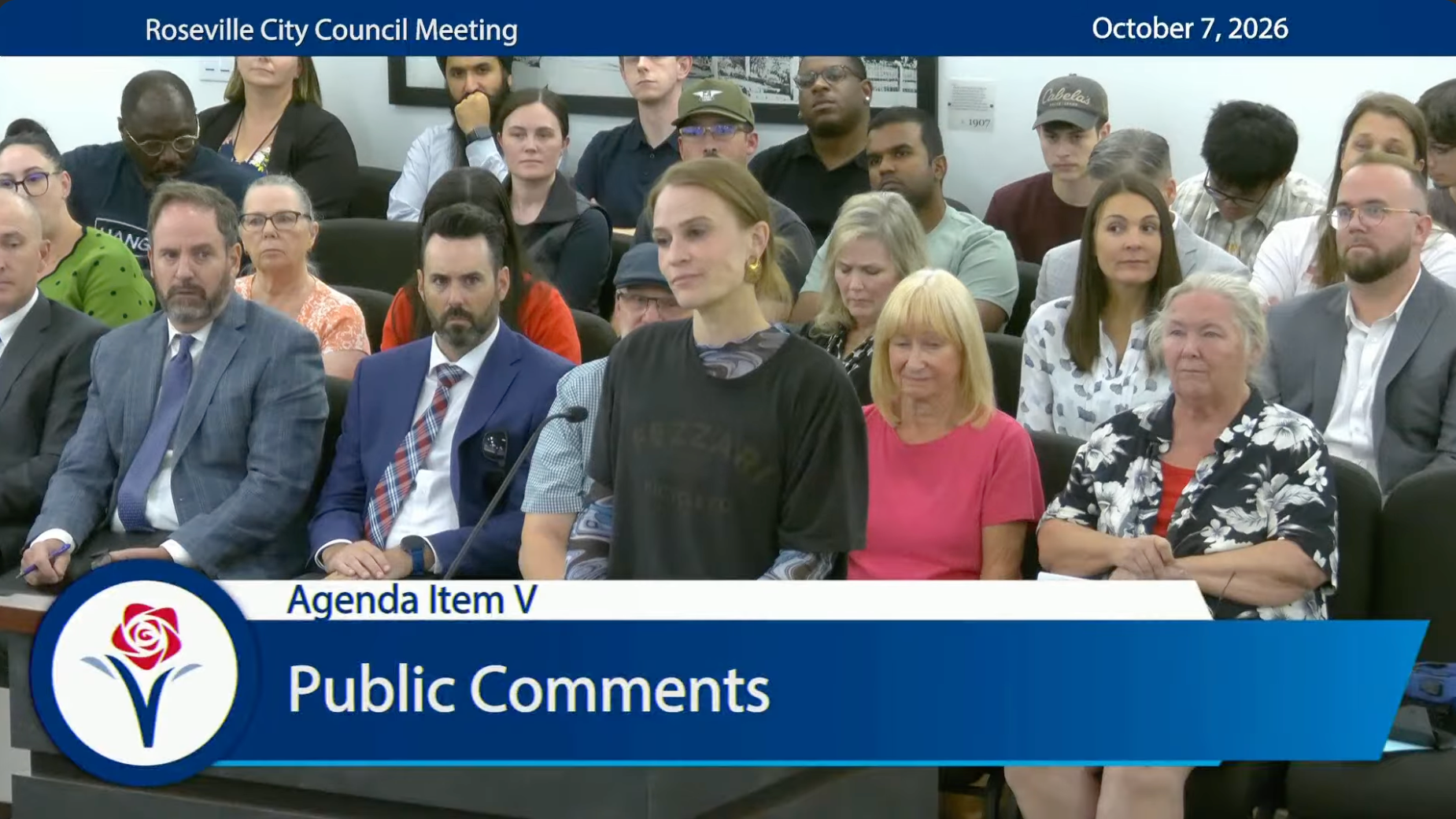
Photo Credit: YouTube/ City of Roseville / "Rosie" offering her commentary to the council
In addition to her biweekly commentary, Rosie can also be recognized as the face behind DeFlock Roseville social media posts. As public sentiment aligns itself over privacy concerns and calls for contract termination, growing opposition against nationwide LPR usage has been grounds for formalized community initiatives like DeFlock Roseville.
Though the group’s initial Instagram post is dated January 2026, the group now advertises frequent opportunities for community advocacy. Publicized on their social media, DeFlock Roseville operates mainly through acquiring signatures for its online petition or, as illustrated on October 7, advocacy in front of the city council.
The local DeFlock movement’s pressure on Roseville is not unlike that facing other California municipalities. While residents like Rosie highlight the existence and occasional successes of other statewide DeFlocking groups, webpages like FindingFlock may explain why Roseville’s city council has been facing particular opposition.
A source providing nationwide data on LPR sightings, the website ranked Roseville the 41st “most-flocked” out of the 355 California cities it provides data on. Other website statistics provide reports for neighboring communities. With 10 in Antelope, 41 in Rocklin, and 73 in Citrus Heights, Roseville is most impacted within these Sacramento Area locales.
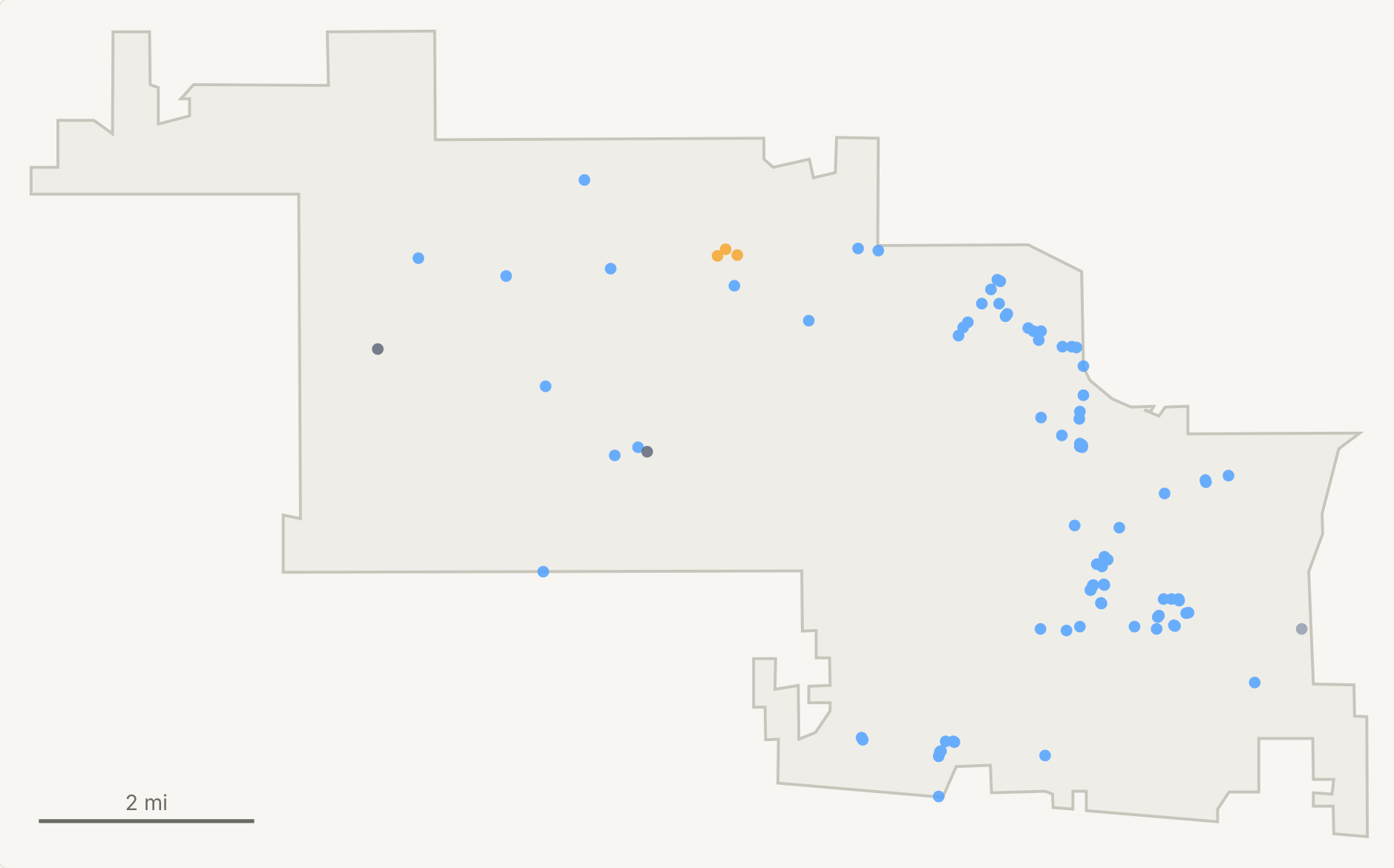
Photo Credit: FindingFlock / Map of LPR sightings in Roseville
Clayton Strawn, another frequent attendee, noted how the nearby communities of Folsom, Grass Valley, and Auburn have announced ends to their agreements. Yet Strawn stands corrected. While Grass Valley decided to terminate its Flock contracts back in August, the Sacramento Bee reported that the Folsom City Council has only confirmed plans to do the same. As for Auburn, the furthest step taken towards similar action was holding a September 21 town hall for public discussion on the matter. The presence of DeFlocking movements has notably remained strong in Auburn.
“It’s time for you on the council to take this seriously and not proceed like we’re some fringe group who just has annoying opinions.” Strawn said.
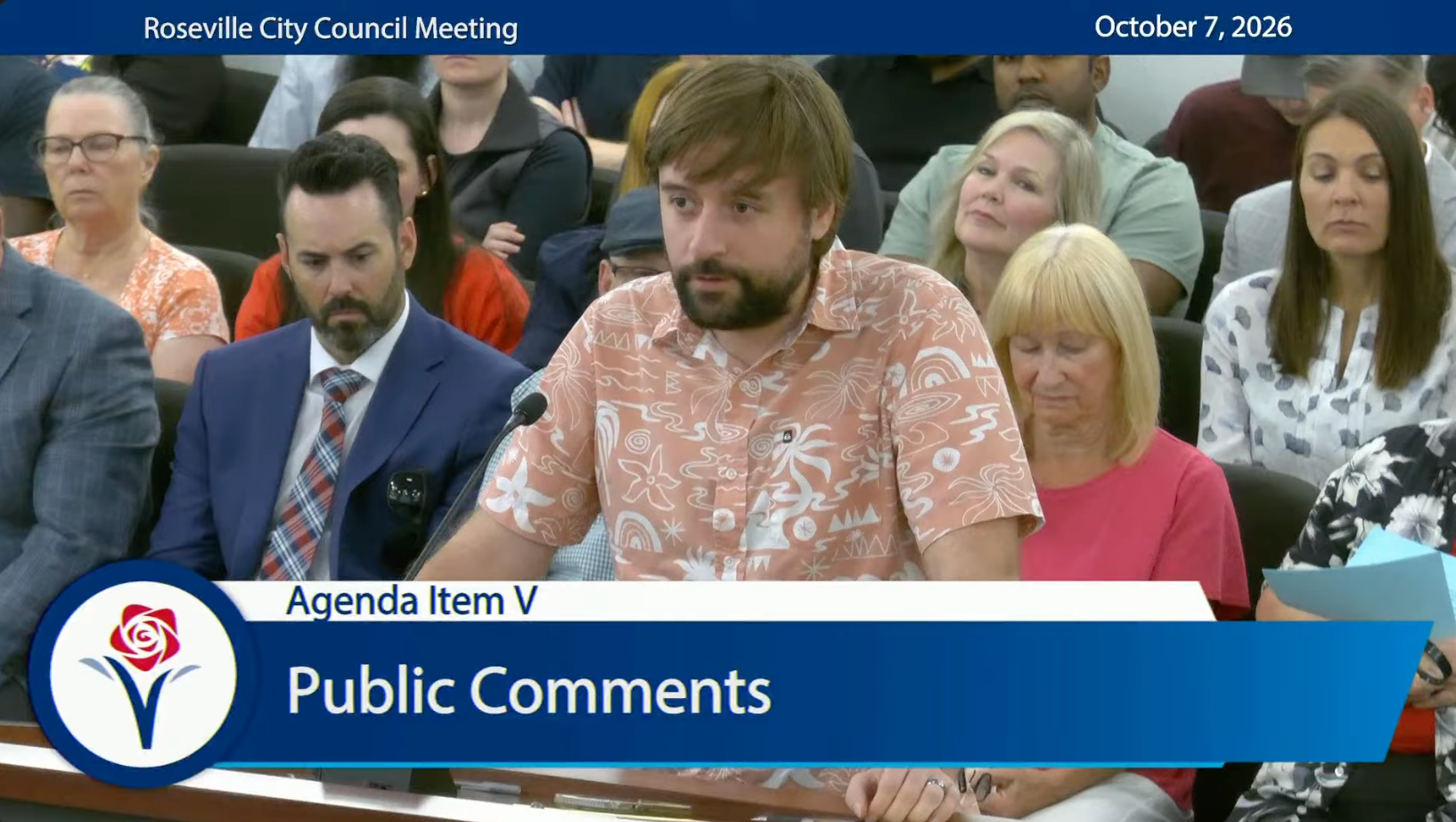
Photo Credit: YouTube / City of Roseville / Clayton Strawn directing his comments to the council
Strawn drew upon a recent Oklahoma court case, United States v. Kyle, in which the judge deemed evidence obtained from a Flock camera database as equally unconstitutional as a Fourth Amendment search.
“This does mean the intended purpose of these cameras, which in Roseville is to substantiate investigations [...] has become significantly more likely to fail,” Strawn argued. “RPD [Roseville Police Department] cannot rely on this tool anymore, and it's looking increasingly likely to be ruled illegal overall.”
Arguments made at Roseville’s October 7 city council meeting emphasize the enduring dedication of community DeFlocking movements.
The action taken by the presiding Oklahoma judge adds to mounting anti-Flock evidence used by local activists. Many already draw upon a Business Insider report from this past July. To support their case, local opponents cite the exposed data that 71 percent of license plate readings sent to RPD were incorrectly read by Flock technology.
As nationwide LPR resistance increases and the DeFlock Roseville movement endures, the city has yet to offer an agenda item regarding potential agreement termination. Neither has there been any formal acknowledgment of constituent requests for a public town hall.
Per the Roseville city calendar, the council will next convene on October 21.
Public comment will likely include words from DeFlock Roseville advocates.
OpGov.News reached out for comment from the Roseville City Council and is awaiting a reply.
To add to or correct any information in this report, please contact me at piper.a@lead4earth.org.
0
0

Comments