(GILBERT) – Unemployed engineer Darrell Grossen first noticed there was something amiss with his utility bill shortly after being laid off from Intel in July of this year.
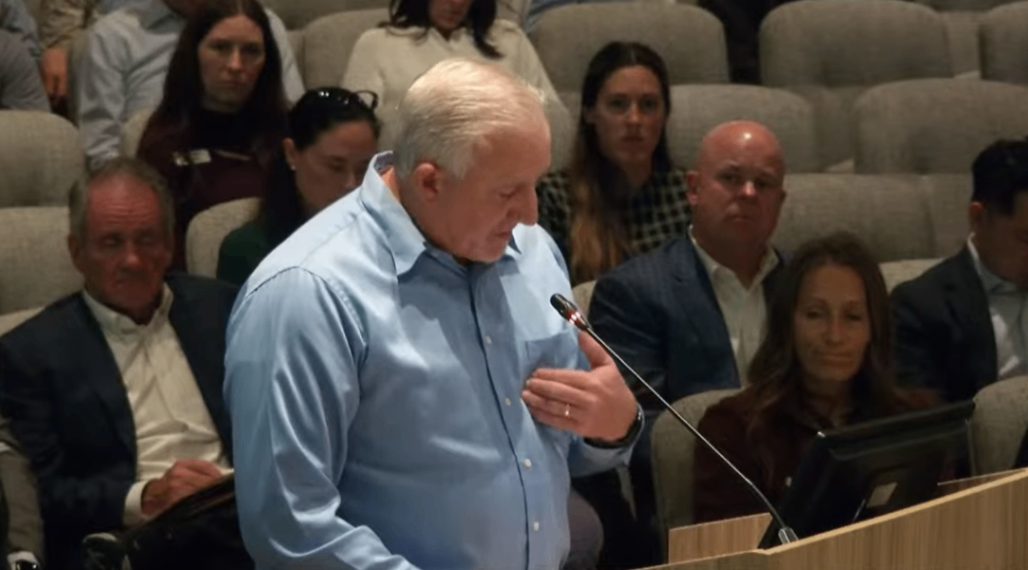
Photo credit: YouTube
With the sky-high costs of living being driven by rapid inflation, a steep utility bill is the last thing any American needs to face today.
Like many residents, Grossen was floored by the sudden and severe cost of his bill. While some of the total bill cost was attributed to a partial previous bill, an egregious $ 1,120.76 remained unaccounted for, despite careful bill tracking being part of his budgeting system. With no recollection of any major communication from the town about water rate increases, he set out to uncover the reason for his staggering bill.
While searching for another job, Grossen set to work figuring out the new water rates in conjunction with the numbers on his utility bill. That’s when he discovered that there may be more to Gilbert’s rising utility bills than the $29.26 increase in monthly bills the town’s website claims.
“I am not someone who gets involved politically, but this really upset me that the costs were so high,” Grossen says in a statement, “It was like another mortgage payment and I was concerned about providing for my family as I look for another job.”
The same sentiment has been mirrored by struggling residents in recent town council meetings, including a recent meeting that followed three listening sessions, which were intended to unite the council and Gilbert residents in a two-way discussion about water rates and infrastructure.
These sessions left Grossen with more questions than answers.
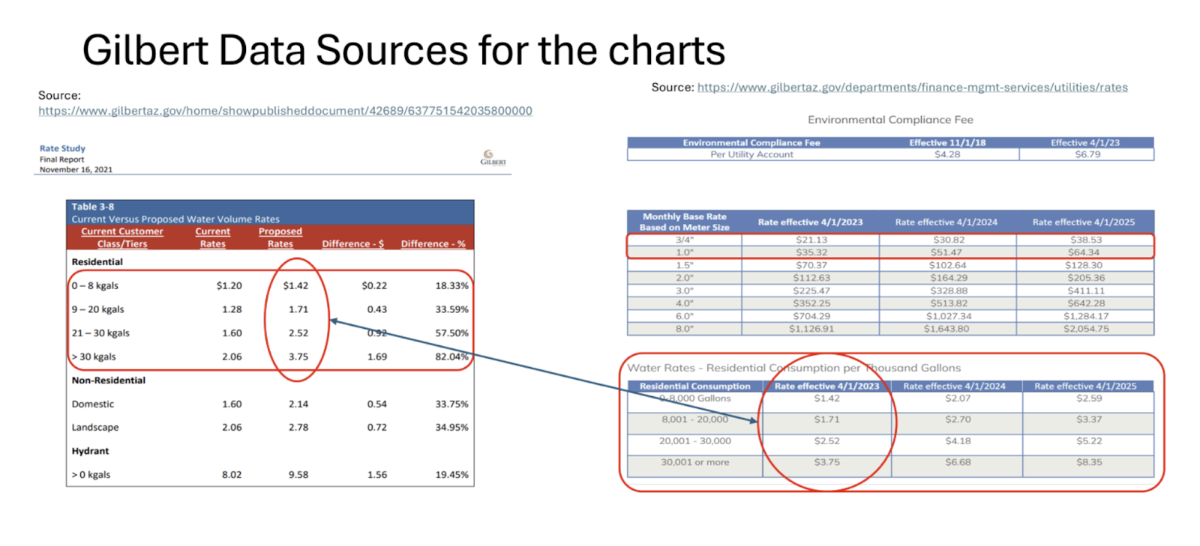
Photo credit: Darrell Grossen
Looking back on all correspondence from the town of Gilbert, Grossen compiled the increases announced and compared them to data he’s collected from various utility bills. He concluded that based on his assessments, utility bills are up over 124% and climbing.
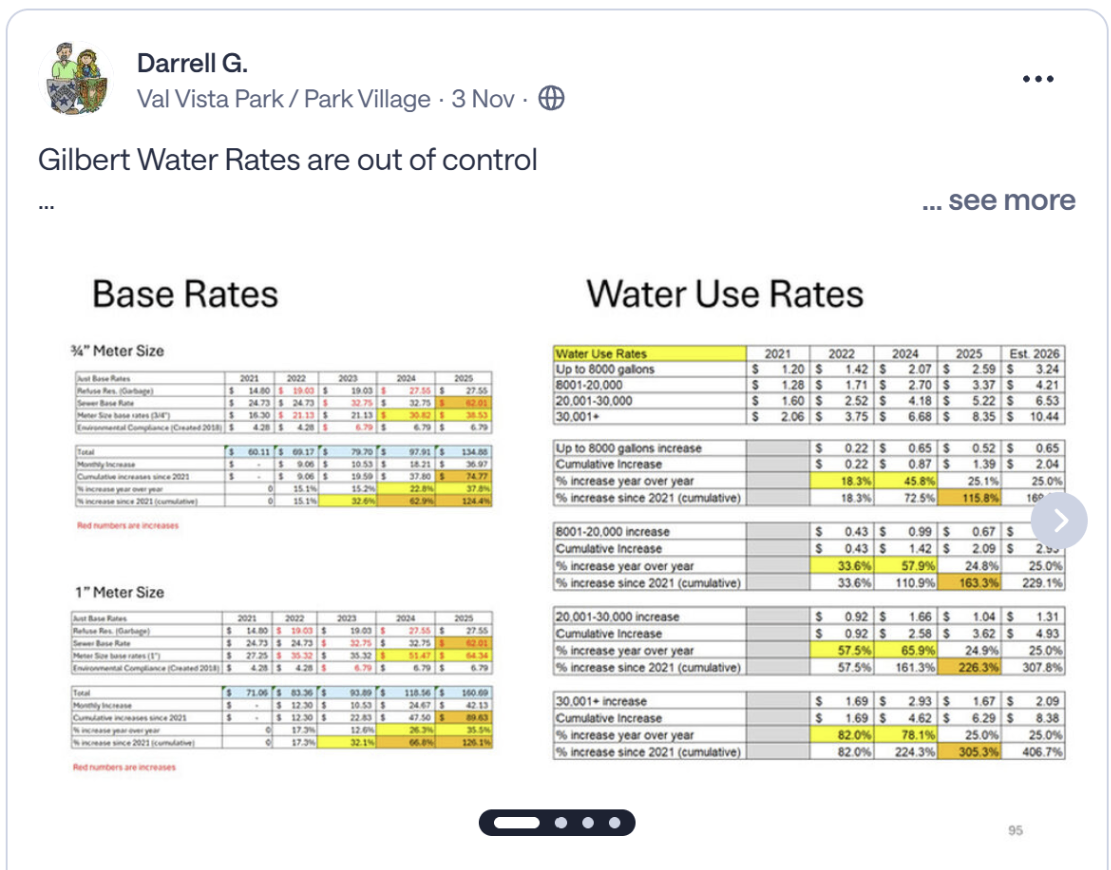
Photo credit: NextDoor/Darrell Grossen
Among an ongoing audit on potentially malfunctioning water meters and inconsistent billing periods ranging from 28 to 35 days per Grossen’s research, other concerns that contribute to climbing utility rates include compounding tiered water rates and water treatment facility building costs.
He brought the billing cycle issue to the council’s attention during the recent listening session, who he states took note of looking into the problem.
Grossen finds that these issues are often blamed on a variety of factors by the town council, primarily that past administrations have failed to properly increase water rates, resulting in the major profit loss the town has seen in recent years, according to a comment made by Councilman Chuck Bongiovanni on a NextDoor post
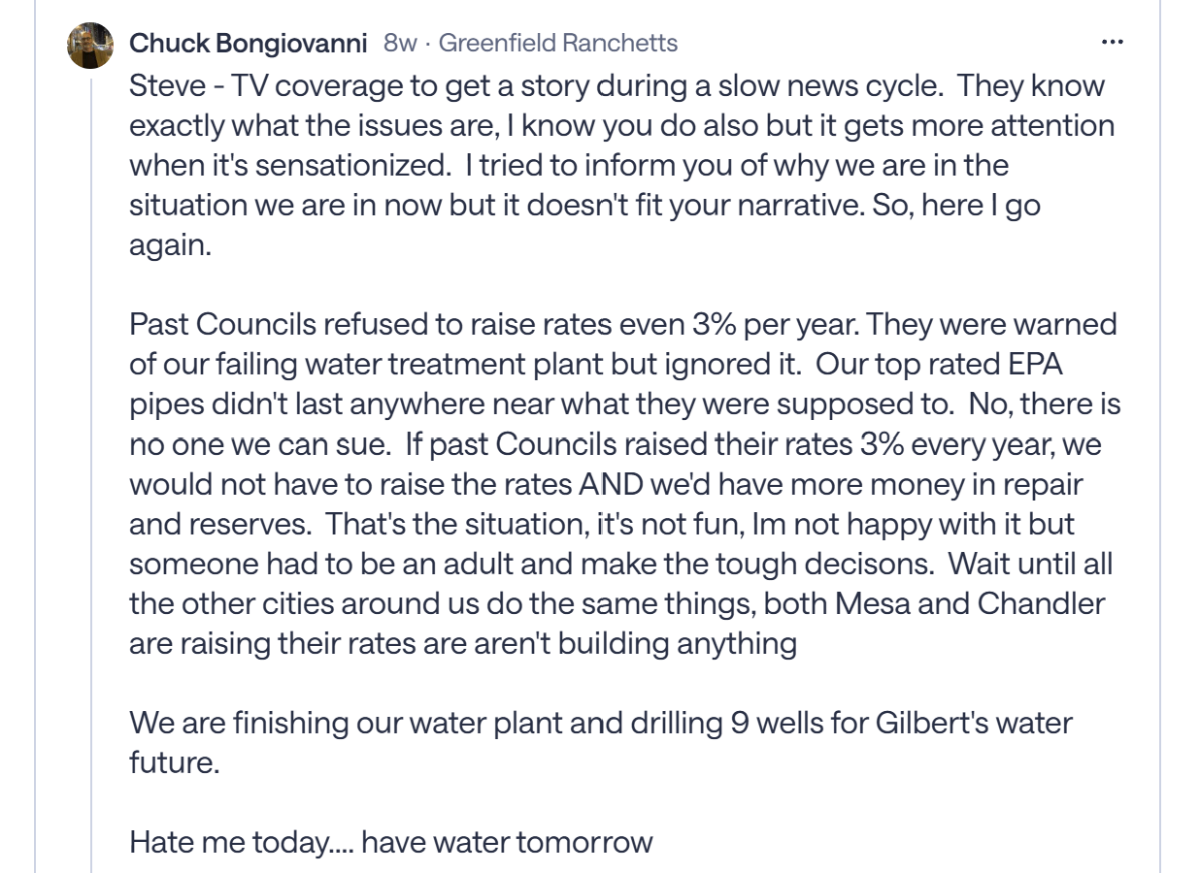
Photo credit: NextDoor.
At the Nov. 18 town council meeting, Grossen spoke about these accounts, as well as information he received from various council members at a recent listening session.
“Unfortunately, my conversation with the town only highlighted the critical failures of this administration”, he said of his interactions at the listening session, “Key staff and council members did not appear to be aligned and lacked critical fundamental information for proper decision-making."
Grossen notes in the same breath that while staff seemed to be at odds with why the tiered water rates were passed, nor did they provide similar answers as to whether it was considered that many residents would be impacted double by the increases; first on their household utility bills, and again in HOA fee increases to accommodate the increased cost in water.
“Other solutions exist; you simply haven't been creative enough to find them yet”, he said to council members on the dais, “We need to do better for our community.”
His proposal to immediately help single families and retirees who already can’t afford these new increases: roll back rates to the “last known safe condition”, which Grossen’s findings suggest was back in 2023.
While the water treatment concern is valid and crucial to an ever-growing Gilbert, expenses are far exceeding what its residents can afford.
Grossen also proposes overturning the policy as a workaround to the town’s “water pays for water” policy, allowing funds to be reallocated from other projects, such as parks and recreation development, to water resources.
“What can we do to ease the pain for our most vulnerable?” Grossen ponders.
Gilbert residents await any relief with their utility bills, but based on statements echoed in town council meetings so far, there are no significant discussions surrounding rolling back rates to an affordable level once again.
Grossen plans to continue researching ways for the town to offset the rising water costs for local residents during one of the most uncertain times in the country’s history.
If you would like to add anything to the report, please email me at terri.t@lead4earth.org.
1
0

Comments