(SAN FRANCISCO, Calif.) — Mayor Daniel Lurie spoke before the San Francisco Board of Supervisors on Tuesday, September 15, to address the skyrocketing rents in San Francisco, putting renewed pressure on tenants already facing one of the country's highest housing costs.
“Many of our constituents feel San Francisco is finally moving in the right direction,” said Lurie. “But when San Franciscans sit down at the kitchen table at night, many are asking if they can still afford to live here.”

Photo Credit: Mayor Daniel Lurie Speaks at the San Francisco Board of Supervisors Meeting.
Currently, the overall median rent for one-bedroom apartments in the city stands at $3,844, after rising 3.2% last month, according to Apartment List. Among the nation's 100 largest cities, San Francisco is ranked at #1 for month-to-month growth, with Oakland CA coming in second at 2.7%, and the US average month-to-month growth being 0.1%.
San Francisco rent growth is up 25.6% since last year, which is 32 times the national average.
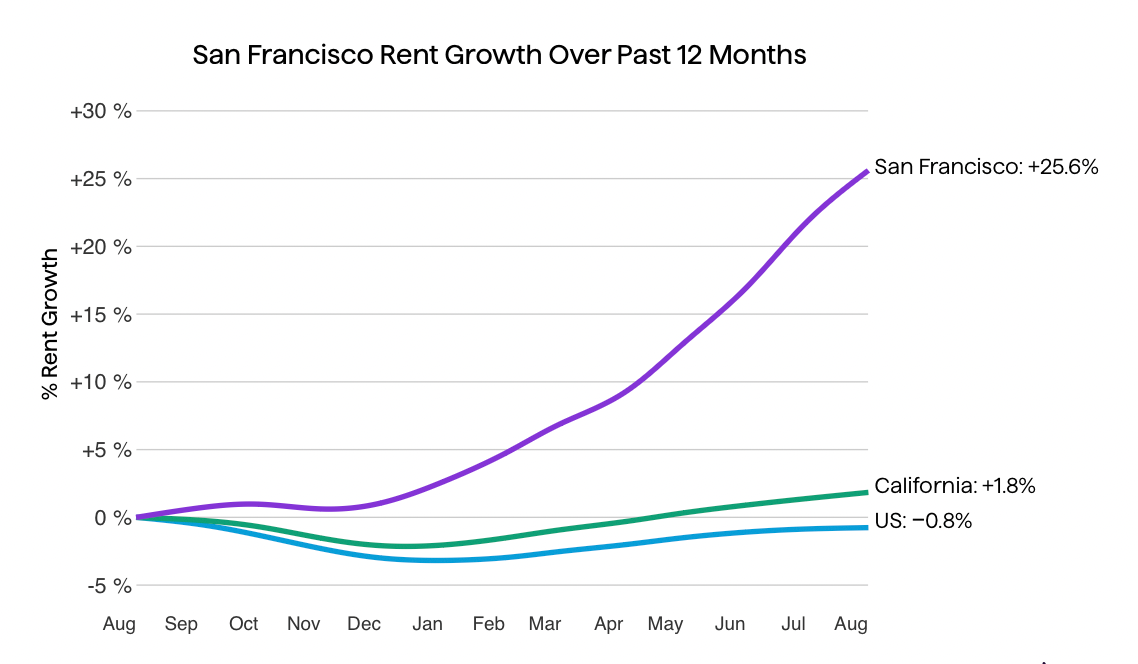
Photo Credit: Apartment List
The WSJ says that the increase is largely owed to lack of housing supply colliding with sky-high AI salaries, triggering bidding wars. Open houses routinely attract 40–50 people in an hour says Yahoo finance, and frustrated renters report being ghosted or facing pressure to decide instantly - fostering a climate that prioritizes speed and liquidity over affordability or stability.
San Francisco is on track for the most evictions in nearly a decade, with eviction notices up 44% in the last year. “With so few homes vacant and available for rent, people who lose their homes are struggling to find somewhere to go,” said Mayor Lurie. “San Francisco is in a rent emergency.”
In response to San Francisco’s rising rents and eviction rates, Mayor Daniel Lurie proposed a two-pronged strategy: protecting current tenants while increasing the city’s housing supply. His administration supported measures to cap accumulated rent increases for rent-controlled tenants at 10% and require landlords to provide tenants with annual information about their rights and potential rent increases. “Let’s be clear, these protections only matter if people can use them,” said Lurie. Legislation sponsored by Supervisor Jackie Fielder would also prevent landlords from evicting tenants for nonpayment when they were less than one month behind on rent.
Lurie also proposed substantial investments in eviction prevention. The city committed $54 million toward rental assistance, legal defense, and eviction representation, including an additional $3 million to expand the Tenant Right to Counsel program. Another $1 million was allocated for a citywide “Know Your Rights” campaign, developed in partnership with City Attorney David Chiu, to help tenants understand and enforce their legal protections.
At the same time, Lurie argued that tenant protections alone would not resolve the underlying affordability problem, saying “We have to confront what is driving housing costs in the first place.”

Photo Credit: Gilmar Gomez / 901 Market Street, a former retail space, is planned to hold 136 new housing units.
He emphasized that San Francisco needed to build more housing to address the shortage driving rents upward. His administration supported a ballot measure to more than double the city’s Housing Trust Fund and promoted efforts to convert vacant downtown office buildings into housing, with roughly 300 residential units already in the conversion pipeline.
To add to or correct any information in this report, please contact me at naomi.h@lead4earth.org or leave a comment below with your thoughts.
0
0

Comments