In 2010, as a beat reporter in Lacey Township, New Jersey, I covered an unforgettable story about a multi-state sting operation that rescued dozens of Beagles from an animal testing lab and relocated them to the Popcorn Park Zoo Animal Refuge in Forked River. Those dogs were given lifetime care or placed for adoption through the Associated Humane Societies network. Witnessing the cruelty those dogs endured and the compassion behind their rescue left a lasting mark on me. So when I learned that RedRover Responders—a Sacramento-based national animal welfare nonprofit dedicated to rescuing and sheltering animals in crisis—had reached a remarkable milestone of 300 deployments, I knew I had to share their story. This milestone is more than just a number; it reflects decades of unwavering dedication, resilience, and lifesaving work for animals in their most vulnerable moments.
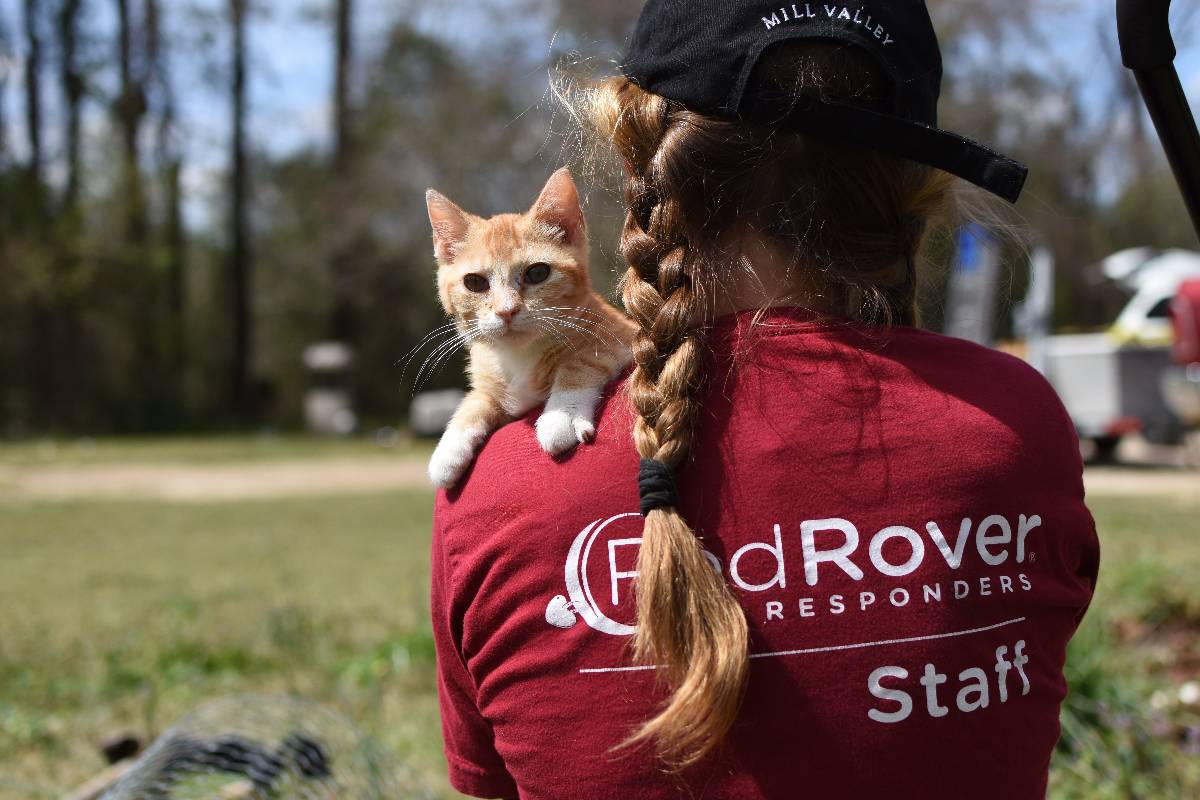
(RedRover Unchaining deployment, South Carolina.)
(Sacramento, CA) — Since its founding in 1987, RedRover Responders has provided free emergency shelter for animals displaced by natural disasters and rescued from cruelty and neglect—including cases involving puppy mills, dogfighting rings, and large-scale hoarding. Notable deployments include Hurricanes Katrina, Rita, and Harvey; the Camp Fire; Superstorm Sandy; and the Northridge Earthquake. The 300th deployment came while assisting Humane World for Animals in caring for more than 80 dogs and puppies rescued from three Florida properties suspected of dogfighting.
Through an email interview with OpGov.ai, Director of Field Services Beth Gammie shared what it takes to respond when disaster strikes. Challenges vary widely depending on the situation, she explained. In disaster zones, teams often face power outages, road closures, and limited cell service. Housing is another hurdle, as hotels and Airbnbs are filled with evacuees and first responders.
To prepare, teams carry cash in case credit cards won’t work, bring food and water when supplies are scarce, and support each other emotionally.
“We overcome challenges by being patient, setting expectations for volunteers, and doing as much research and legwork on what resources are available in the area,” Gammie said. “We remind ourselves that while we can go home after a week or two, residents will struggle for years.”
Sometimes, responders even face danger from the disaster itself.
“One time, arriving team members had to shelter in the basement of the Oklahoma City airport as additional tornadoes struck the area,” she recalled.
Cruelty cases present different obstacles. Caring for hundreds of animals in makeshift shelters can be overwhelming—like the time RedRover Responders helped care for 700 cats rescued from a hoarding situation in Florida. Extreme weather adds to the strain, requiring constant monitoring of volunteers’ well-being.
“Sometimes we’re working in open-air fairgrounds in extreme heat and humidity. We make sure everyone gets breaks to cool off,” Gammie said.
Logistical readiness is critical, but emotional resilience matters just as much. RedRover Responders trains volunteers to normalize the feelings that come from witnessing suffering.
“We stress that these are normal human reactions,” Gammie said.
Volunteers are briefed on conditions before deployment—from possible gas shortages to power outages—and asked to bring essentials to prepare for unpredictability.
Among the 300 deployments, Hurricane Helene stands out for Gammie because of the immense devastation and lack of resources on the ground. She also recalls the Caldor Fire in California, which burned for 68 days and scorched 221,835 acres across El Dorado, Amador, and Alpine counties:
“We pulled into the shelter parking lot in El Dorado County, and the ashes from the fire were falling on us like snow.”
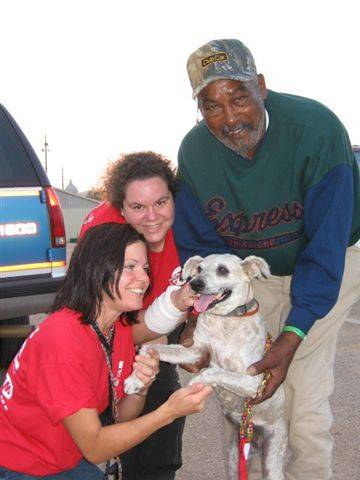
(United Animal Nations/RedRover Reunification, Hurricane Katrina, Louisiana)
Beyond Disaster Relief: Expanding the Mission
RedRover Responders has more than 4,800 specially trained volunteers across the U.S. and Canada, enabling rapid deployment when communities are overwhelmed by crises involving large numbers of animals. The organization has also expanded its programs beyond disaster relief to include domestic violence shelter renovations to allow survivors’ pets onsite; dog unchaining projects; trap-neuter-vaccinate-return operations; and pet wellness clinics.
RedRover Responders is a founding member of the National Animal Rescue and Sheltering Coalition (NARSC), created after Hurricane Katrina to improve coordination among agencies like American Humane, American Red Cross, and IFAW.
Climate change has intensified disasters, Gammie noted, with communities flooding that never used to and fire seasons stretching nearly year-round. Economic hardships also impact animal welfare, leading to more surrenders and struggling sanctuaries. Through it all, volunteers continue to go above and beyond.
Gammie shared a dramatic story from a Florida sanctuary relocation when a sedated tiger became distressed mid-move:
“Walking down the ramp one of the tigers raised his head and let out a huge roar—we could literally feel it in our bodies,” she said. A volunteer veterinary tech acted fast—covering the tiger’s head with her shirt to calm it until more sedatives could be administered.
“She truly saved the day,” Gammie said. After 300 deployments, Gammie says the guiding principle is clear: kindness and compassion.
After 300 deployments, Gammie says the guiding principle is clear: “Experience teaches us that no matter how difficult things seem, we can get through it. It’s an inside game—how you frame challenges determines how you persevere.”
Read the full news release.
Submit tips and story ideas to Sarah Denos at sarahkdenos@gmail.com.
0
0

Comments