The Ethiopian and Eritrean Chamber of Commerce could face economic challenges upon opening.

Instagram Photo of Mayor Eric L. Johnson By: Meraf Berhanu
In a ribbon-cutting ceremony, Dallas Mayor Eric L. Johnson held the official opening of the Chamber of Commerce in the city’s international district, but did not respond to OpGov.ai’s probing for clarity on the matter.
In the simplest terms, the mayor only offered the following press release.
“This is an historic occasion for Dallas and our Ethiopian and Eritrean communities. Starting today, this chamber’s support of these two communities will strengthen and enrich our city’s vibrant economy,” Mayor Johnson said. “Dallas's international partnerships have been a key focus of my Administration, and right now, our relationship with Africa is stronger than ever,” the mayor added.
The fourth trade office was opened with the intention of bettering foreign relations through economic strategies.
Despite striving to strengthen those economic and cultural relationships with East African communities, the tariffs imposed by the current presidential administration could have a direct impact on the new chamber.
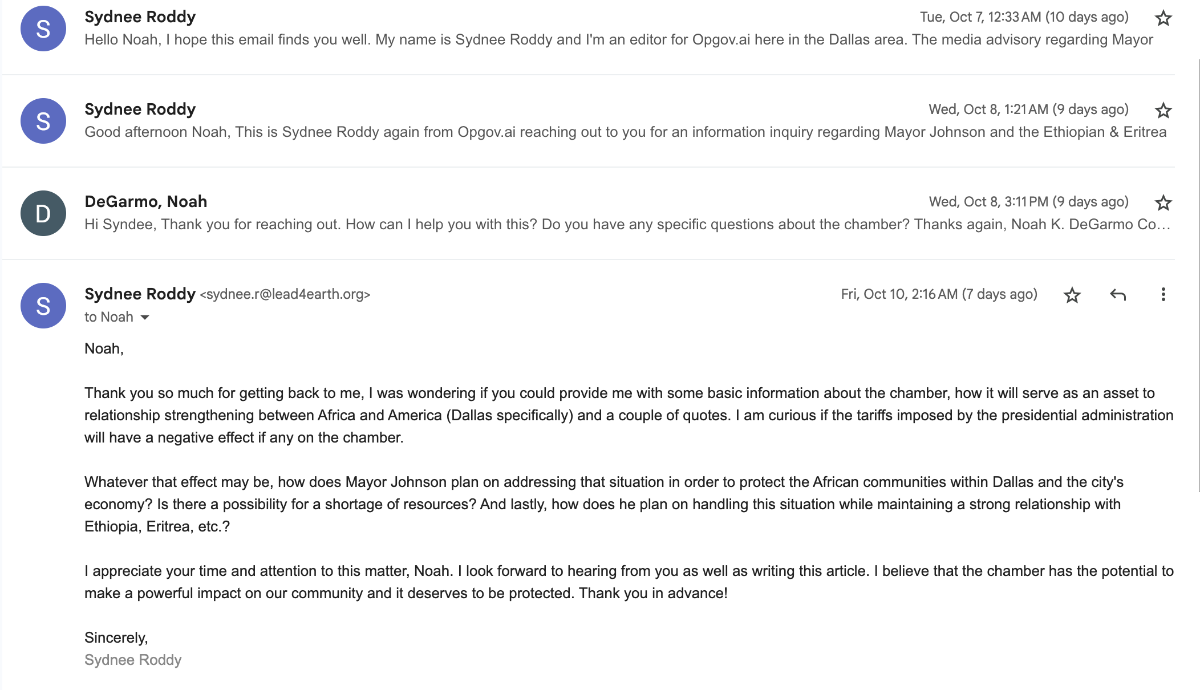
Opgov.ai also contacted the Ethiopian & Eritrean Chamber of Commerce for comment, but like the mayor, they did not respond.
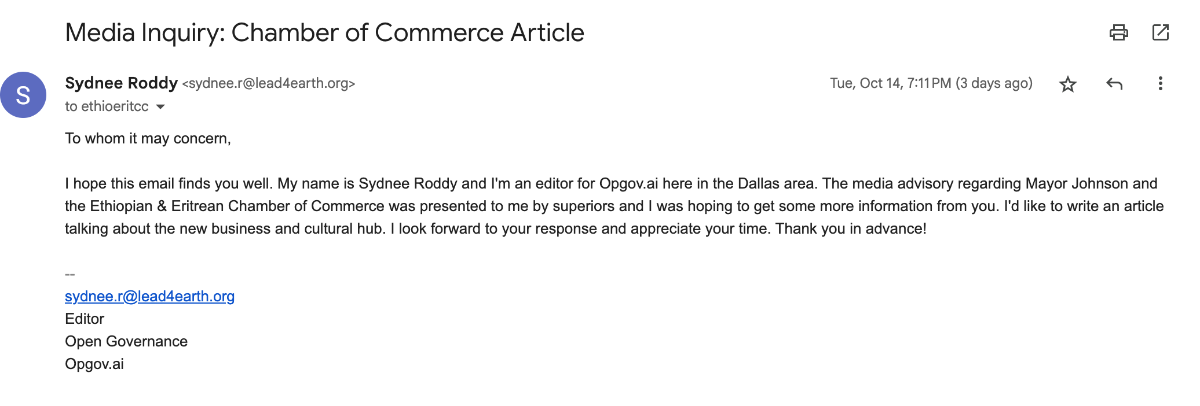
They shared their hopes in the mayor’s press release.
“The Ethiopian and Eritrean Chamber of Commerce marks a new chapter of opportunity and collaboration in Dallas,” Yilma Feleke, interim president of the Ethiopian & Eritrean Chamber of Commerce board, said.
“We thank Mayor Johnson for his leadership and support in helping us create a home where our communities can build businesses, share their cultures, and contribute to the city’s thriving economy,” Feleke added.
It is possible that the chamber’s enterprises, which aim to share their cultures and seek growth in their businesses, could be negatively affected. Whether or not the threat is imminent, officials have a duty to answer hard questions when the health of small businesses is at stake.
Increasing taxes on imported goods can cause economic harm due to higher prices for both the businesses selling and the consumers purchasing the products. Ethiopia and Eritrea both face a 10% tariff on imported goods such as agricultural products, textiles and coffee.
Any of these goods sold within the new chamber could result in a price increase or the inability to import the product altogether.
Over the course of the coming weeks, the Opgov.ai platform will be paying close attention to the economy and rising product prices. Doing so may indicate whether or not the new chamber will be affected by the imposition of the ongoing tariff war.
1
0

Comments