(PORTLAND)—In Portland’s final city council meeting of the year, officials adopted the Homelessness Response System Action Plan and Key Performance Indicators (KPIs) with 9 'yes' votes and 3 'no' votes.
The plan was approved “despite significant criticism from several councilors regarding lack of specific measurable targets, disconnect between goals and KPIs, and concerns over the plan's overall effectiveness and accountability,” according to the OpGov.ai platform.
Many council members criticized the plan.
Jamie Dunphy expressed his intention to vote no on the item.
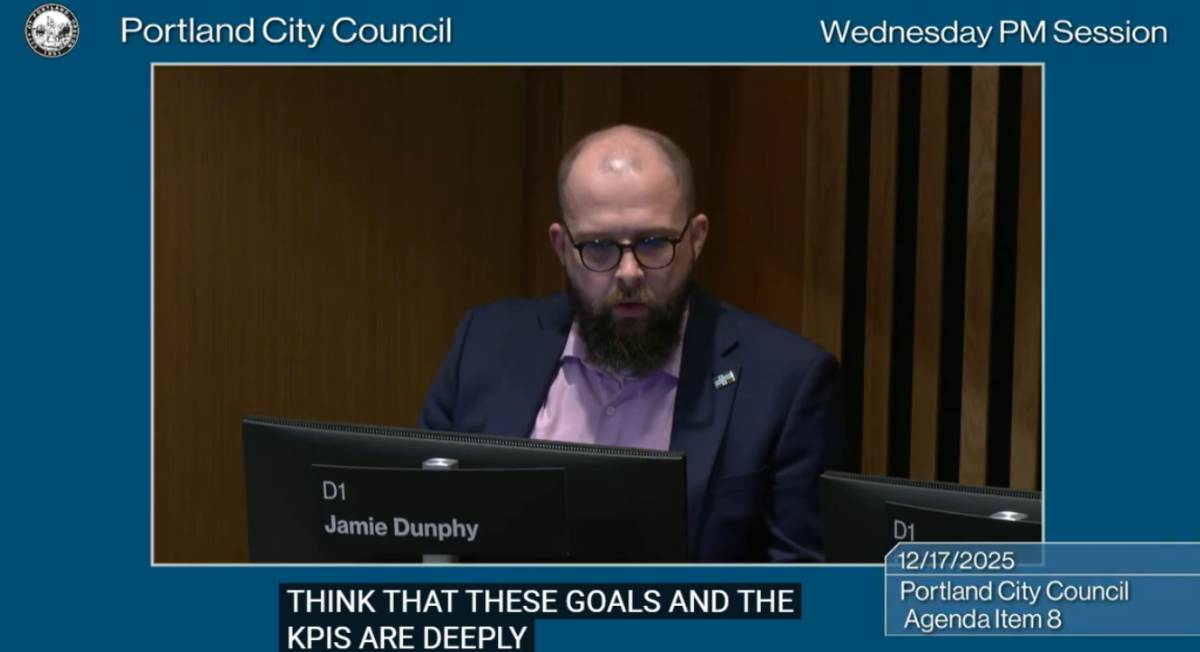
“This is an enormously complicated process," Dunphy said. "This is an enormously complicated system."
Homelessness is the most complicated challenge, the councilman said, his peers have to handle.
"Arguably more complicated in many ways in the immediate than climate change," Dunphy said. "If we can't prioritize costs are going to continue to rise and we're going to see an increase in the number of people sleeping on our streets."
Dunphy cited the report.
"We saw that the track we are on right now, if we don't nearly double our investment in our homeless services response, that we won't see measurable reductions in homelessness for years," Dunphy said. "We have not nailed it yet, and it is so important, and this is our opportunity for the next year to say what we are going to do and how we are going to do it."
However, the public was not silent about other issues. A call to increase access to immigration legal services was on many people's minds.
Carrie Babin, a member of the New Portlanders Policy Commission spoke about immigrant communities losing humanitarian protections.
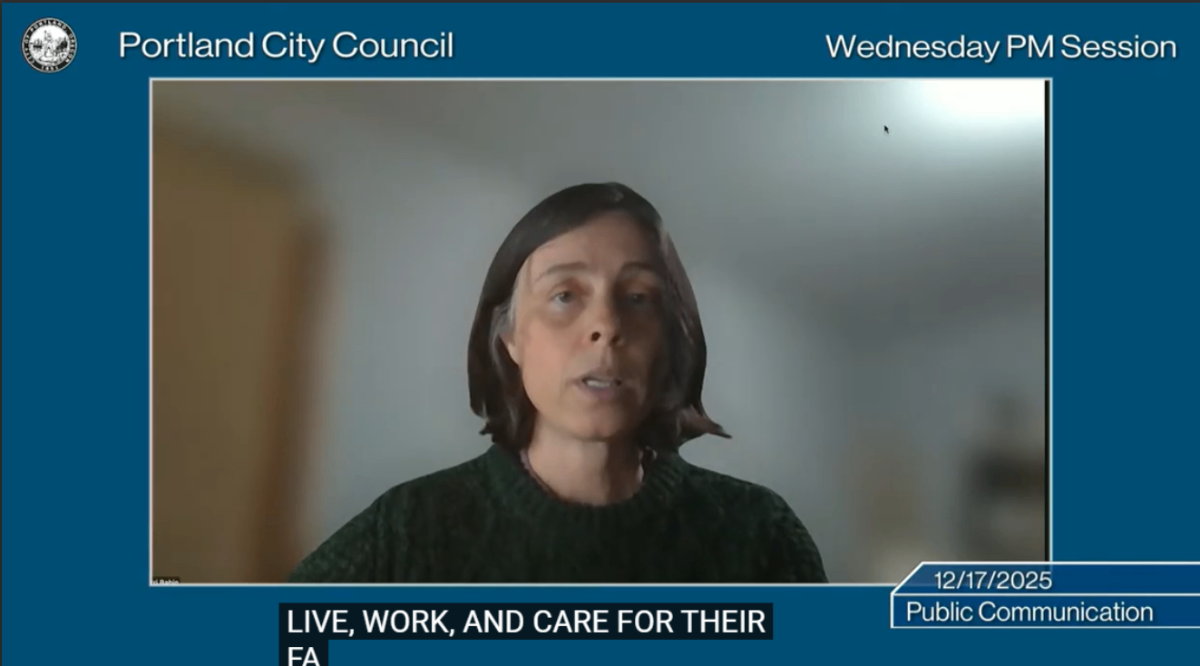
(Photo: Resident Carrie Babin, YouTube)
“When these protections disappear without access to legal support families are pushed into undocumented status where they become far more vulnerable to exploitation, detention and deportation," Babin said. "This vulnerability is not accidental."
Current federal enforcement practices are actively expanding the undocumented population, Babin said, adding it's important to create "conditions to easily target, detain and deport hardworking law-abiding individuals and families."
"We are seeing an increased fear of everyday activities like going to work, taking public transit, seeking medical care, or even reporting crimes," Babin said. "Families are being destabilized, and lives and entire communities who call Portland home are living in fear."
Babin said there are community members who are navigating one of the most complex legal systems in the country without representation nor their own language.
"Many in our community qualify for a variety of immigration protections, but without legal counsel, they lose the opportunity to apply for those protections," Babin said. "Legal support is often the difference between safety and separation between stability and detention."
Bottom line, Babin said, this is not about creating special privileges. It's about preventing predictable, avoidable harm, preserving family unity, and upholding the dignity, safety and humanity for all Portlanders.
Council President Elana Pirtle-Guiney spoke up with concerns of her own, while acknowledging improvements made since last year.
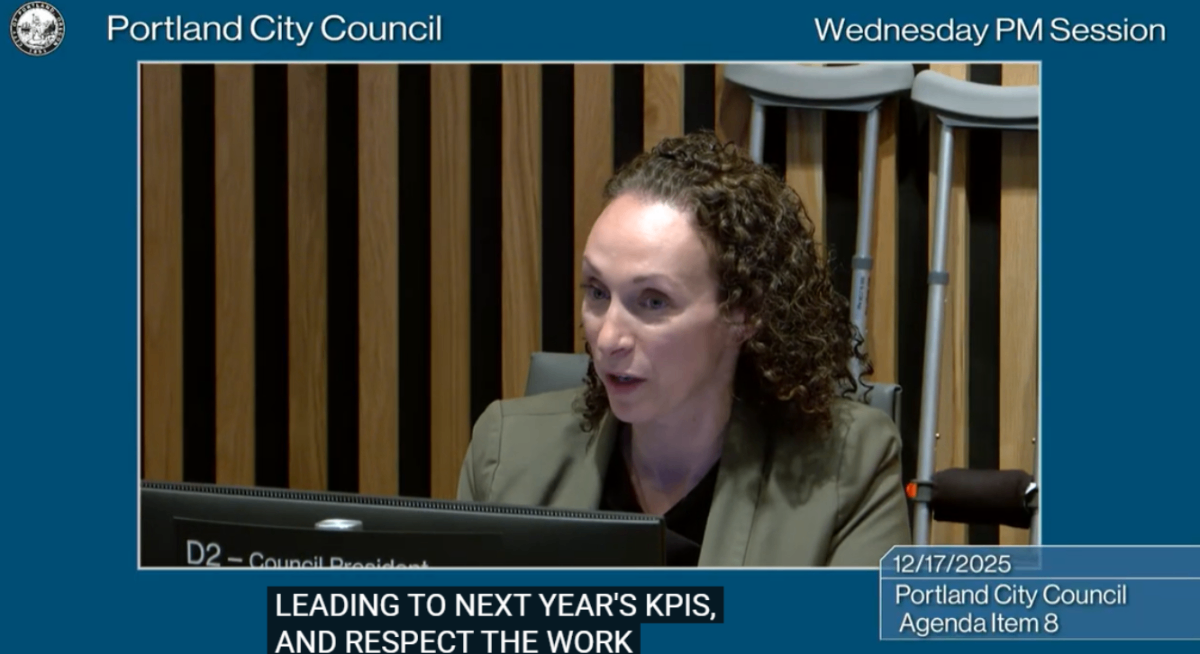
(Photo: Counil President Elana Pirtle-Guiney YouTube)
“I think that it is good for our community," Pirtle-Guiney said. "There is always a balance in making sure that we respect the work of our boards and committees like the SOC with community members there."
The council president said officials "need to provide that final level of oversight."
"I hope we can continue to do that final level of oversight through the work that we do, leading to next year's KPIs," Pirtle-Guiney said. "I respect the work that has come before us this year, which I think is a much better product than what we had last year."
Mitch Green voted yes on the item, but offered an addition to the KPIs.
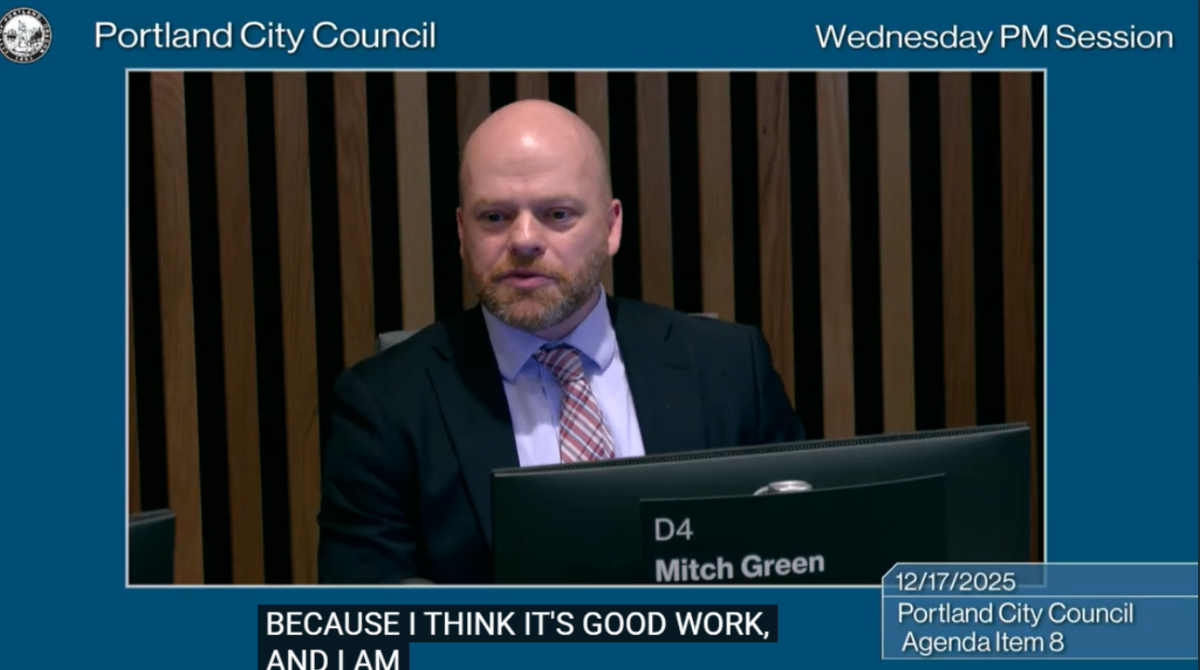
(Photo: Councilman Mitch Green, YouTube)
“Yes, we have work to do," Green said. "But continuous improvement is the thing we can do."
Green said "in the spirit of what we have been talking about, I do think there’s a KPI missing."
"I think what is missing from the discussion and what I did raise earlier in our conversations across the year is that we have a scale problem," Green said. "That is an important KPIs to measure because we can't double our resources."
Green said officials "are going to figure out a way to get more efficient."
"I am going to support this today because I think it is good work and I am encouraging us to continue to work,” Green said.
“Concerns were raised about the plan's failure to adequately address housing affordability, addiction, and workforce integration with concrete, measurable outcomes, leading to three dissenting votes,” OpGov.ai reports.
Resident Mary Karam provided further insight into this important issue, outlining steps the city can take to address these problems.
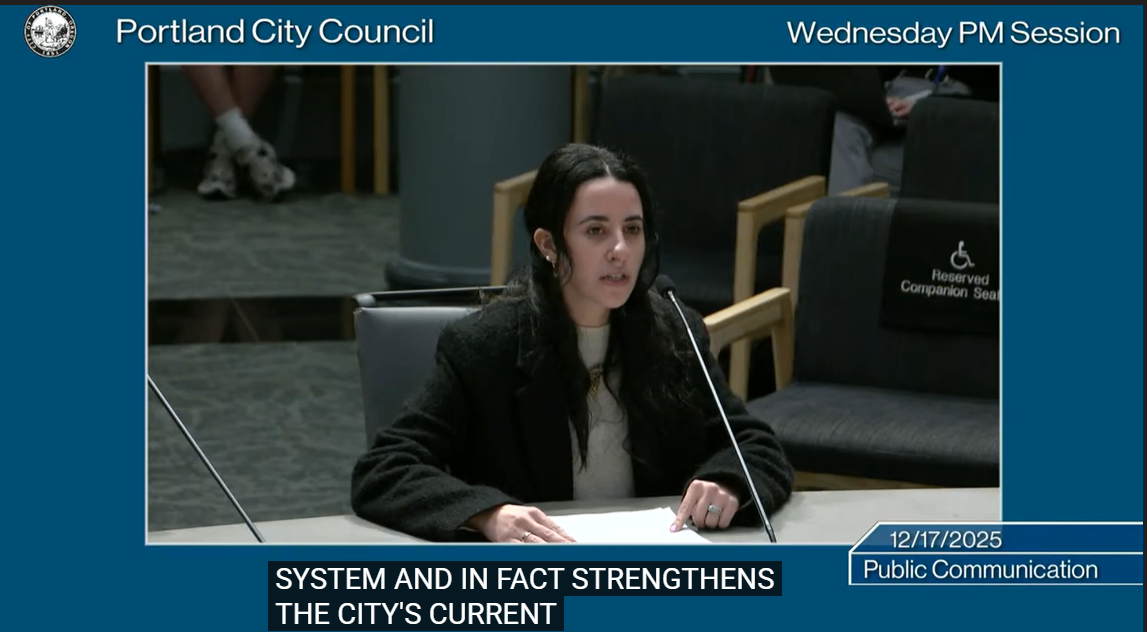
(Photo: Resident Mary Karam)
“As you can imagine, the demand for legal services has far exceeded capacity and even modest investments into these organizations can prevent irreversible harm in these communities," Karam said. "We've seen this across the country and even here in Oregon, where cities and counties have passed emergency declarations to fund legal services."
Karam said access to immigration legal services is a proven preventative measure.
"It keeps families together, reduces unnecessary detention and stabilizes communities often at far lower costs than the consequences of inaction,” Karam said.
Caroline Vanderharten also engaged the council, urging them to act.
“We have never seen it this bad and unfortunately, we know that this is just the beginning," Vanderharten said. "Our office is receiving over 100 calls every single day from the community seeking legal help."
The immigrant community is living in a state of perpetual fear due to the executive orders and the increased expansive and arbitrary ice enforcement actions. People are afraid to take their children to school. They're afraid to go to medical appointments. They're afraid to go to their houses of worship,” Vanderharten said.
These testimonies serve as a reminder that the immigration troubles in Portland remain an important issue.
If you would like to add to this report, please email me at rory.h@lead4earth.org.
0
0

Comments