PORTLAND – The OpGov.ai platform accurately captured the city mayor and council meeting.
"The Portland City Council meeting on October 29th was largely characterized by reactive governance, significant financial burdens placed on residents, and a perceived disconnect from urgent local issues," the platform reports.
Since humans can only trust AI to a certain extent, this real-time reporter watched the first part of the meeting to find the truth in the artificial intelligence's opinion. After comparing the meeting summary to OpGov.ai's platform report on each public speaker, the AI reporter is again fairly accurate.
"The meeting began with an emergency procedural vote to extend existing city code for council operations due to an administrative oversight, demonstrating a lack of proactive planning," the platform reports.
Council President Elana Pirtle-Guiney proved the same.
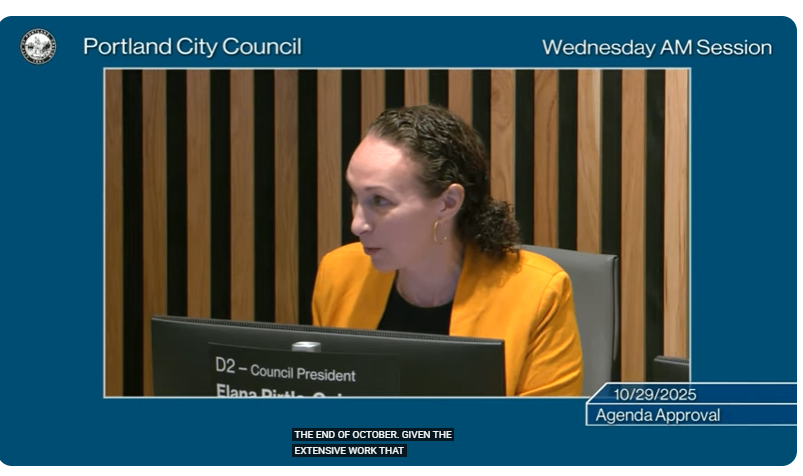
Portland Council President Elana Pirtle-Guiney at the Oct. 29 regular councilors' meeting, first half
"Usually this moves very quickly, but I am going to mix us up a little bit today, and I will start by flagging one item that has been removed from the consent agenda, that is item number 5," Pirtle-Guiney said.
After ordering the council to "suspend the rules," the council president distributed the paper resolution to her peers.
Ironically, the council spent more time reading the rules of decorum the public had to abide by, a fact AI did not pick up. These rules entail signing up in advance to testify and allow three minutes to speak, unless an officer states otherwise.
Refusing to conclude within three minutes or any disruption after results in "being ejected" from the meeting, and failure to leave can result in arrest.
There was also a follow-up on the platform's reporting, which highlighted that public comments were overwhelmingly critical, with the misallocation of arts funding being a key concern.
That's where Blake Shell comes in, painting a very bleak picture for the Coalition Portland Arts and Culture for Equity.
Schell criticized Portland's arts funding, noting its 17th national rank in artistic vibrancy but 172nd in government support, saying the group "survives not because of but despite government funding."
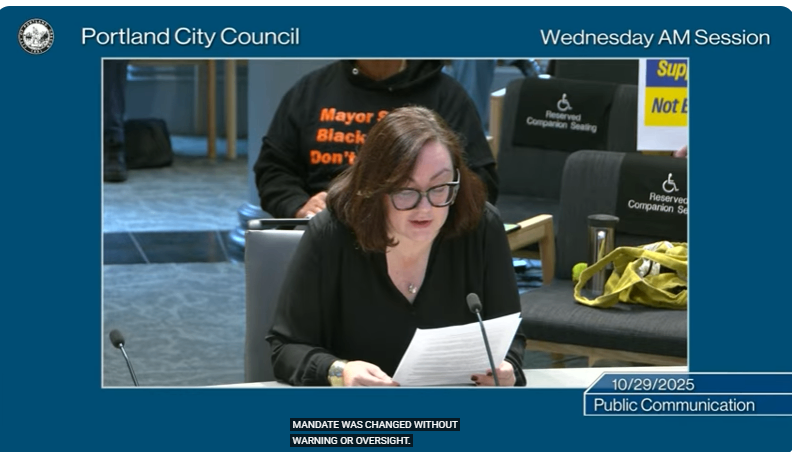
Blake Shell, Coalition Portland Arts and Culture for Equity, charges officials do not support the local arts
"Most artists make their money from 'gigs, teaching, and creative sidework that keeps this ecostyem alive," Schell said.
The OpGov.ai platform further reports that "money to established institutions instead of supporting local artists and underserved communities, directly contradicting the art tax's original intent."
"Portland voters expected the tax to expand access, not diminish it," Schell said.
Donna Cohen expressed great concern for public safety regarding earthquakes and local infrastructure, noting that "60,000 North Peninsula residents who face a 'quick death' from an earthquake, particularly due to the vulnerability of railroad bridges and tunnels that would cut off emergency access."
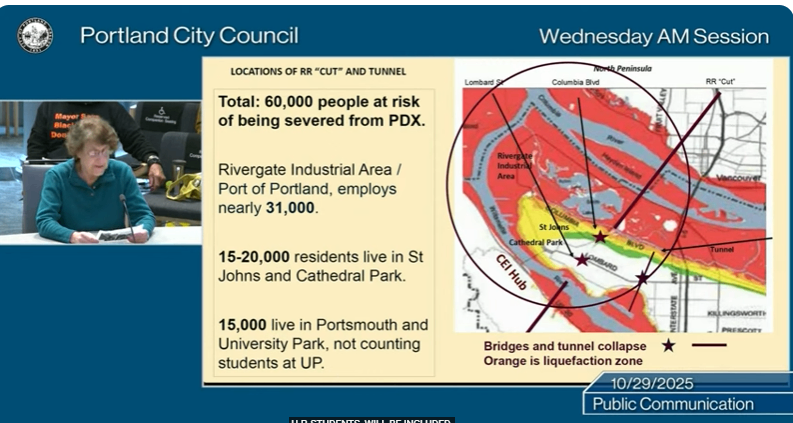
Donna Cohen told officials they do not care about thousands of citizens at risk of danger
"People from every district in Portland will be trapped," Cohen said, adding to the vulnerability of surrounding students.
"The city has not spent one minute of council business focused on the lives of the tens of thousands that are in danger, yet council has had time to discuss hot dog stands and trees."
The OpGov.ai platform reports Brian Orndorf "criticized the City Council for failing to make 'meaningful progress' on safety, mental health/substance use disorder, and economic development after 301 days in office."
"Portland residents deserve leaders who focus on pressing challenges in their own backyard," Orndorf said.
Citing Maslow's Hierarchy of Needs, Orndorf said Portland officials fail to meet the most basic. Orndorf, "cited alarming statistics on crime, overdoses, mental health, and homelessness, calling the situation a 'perfect deadly storm' compounded by job losses," OpGov.ai reports.
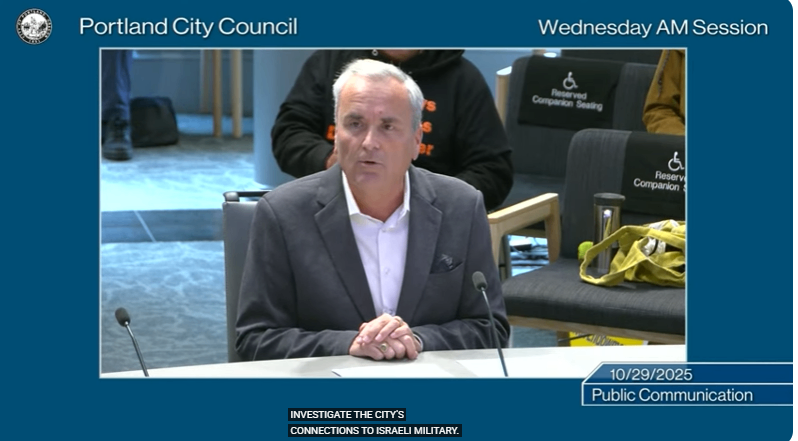
Brian Orndorm had more than one charge against elected officials in Portland on Oct. 29.
Lastly, Orndorf demanded "competent governance" rather than "ideological distractions," just before the bell rang for him to stop talking.
OpGov.ai will provide the second half of the meeting report over the weekend and will contact officials for a follow-up regarding the concerned citizens.
0
0

Comments