(PORTLAND) — Immigration and homelessness dominate Portland’s 2025 Year-in-Review, among other pressing local issues.
From beginning to end, the 2025 Portland council meetings address homelessness, starting with the first meeting in January.
Jan. 2, Inaugural Meeting
"Public comments consistently emphasized the urgent need for action on issues like homelessness, police accountability, and city livability, as well as demands for increased transparency and genuine community engagement, often seeming to contrast with the council's immediate focus on internal leadership dynamics,” the platform reports, of course, noting inaugural meeting swear-ins for elected officials.
“The Portland City Council's inaugural meeting under the new governance structure was largely consumed by a contentious and prolonged election for its President and Vice President, underscoring significant internal divisions at the outset of this new era," according to the OpGov.ai platform. "While the council made initial amendments to procedural code aimed at improving accessibility and transparency, these were widely criticized by the public as 'band-aid' solutions inadequate for the 'radical change' voters expected."
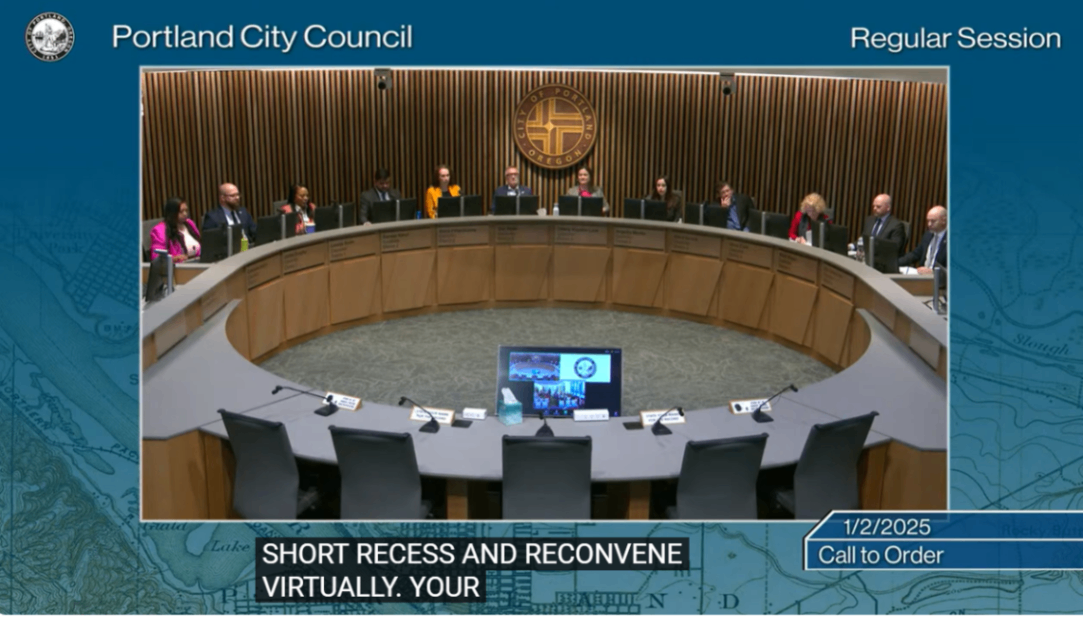
(Photo: Portland City Meeting January 2, 2025)
May 7, Homelessness, City Budget, Financial Transparency Key Issues
“The City Council meeting was fraught with procedural delays, contentious debates, and critical public commentary, reflecting a city struggling with accountability, financial transparency, and equitable resource distribution, according to our media outlet, noting session was repeatedly challenged by time constraints, leading to rushed discussions and significant agenda items being postponed.
From our media outlets' "critic's perspective," three months after the first session, "demonstrated a council grappling with the legacy of past policy failures and a perceived lack of decisive leadership on pressing issues," one of which was the Water Treatment Plant's environmental impact.
And again, unsheltered locals remained a concern.
"Additionally, discussions around the homelessness policy highlighted the mayor’s controversial shift towards short-term shelters and the detrimental impact this would have on culturally specific safe havens," according to OpGov.ai, adding the city administrator's report revealed "financial oversight" and "significant unassigned funds without clear disaggregation."
June 18, Underlying Tensions Amid Mixed Successes
A month later, elected officials held what was described as a "marathon session, characterized by a packed agenda, underlying tensions, and mixed successes in addressing critical city issues."
Tim Pitts, a small business owner and Northeast Portland resident, was a member of the Police Accountability Commission (PAC) work group that developed the framework for the new board. He emphasized learning the importance of a system that provides fair outcomes for everyone when misconduct occurs. He expressed excitement to continue working towards an accountable police force, believing it will best serve and build trust with citizens.
Skylar Halsey, a chaplain in training and new Portland resident, acknowledged her limited history in Portland but expressed a strong desire to serve. She stated that for many marginalized people, the police are the primary point of contact with local government, making civilian oversight crucial for holding individuals and the institution accountable. She believes it is a citizen's duty to serve their community and is honored to contribute to safer policing.
The platform summarized that the council managed to pass key budget ordinances and confirm appointments, "was far from ideal."
"Concerns were consistently raised about the rushed nature of decision-making, limited public input on crucial matters, and perceived political maneuvering,” OpGov.ai reports.
Sept. 17 A Meeting Disrupted by ICE Protests
OpGov.ai began covering the ICE facility in Portland after the Sept. 17 city council meeting was interrupted by protestors calling on the council to act against the ICE in Portland.
"Initial proceedings were repeatedly interrupted by protestors demanding the revocation of ICE's conditional use permit, leading to a 20-minute recess and multiple removals. The council cited ex parte communication rules as a barrier to discussing the permit directly, frustrating the public,” OpGov.ai reports.
Ongoing ICE Coverage at Portland City Council
Following this, OpGov.ai began research on the ICE facility. Writing a series of articles focusing on the impact on the residents most affected.
The first article, "No Arrests at Portland ICE Facility," published on Oct. 17, highlights the Portland Police Bureau’s handling of the protests near the ICE facility, along with some response from city council members.
"I'm proud to represent District 3 as a co-sponsor of this resolution," Councilwoman Koyama Lane said. "I want to remind us all that while we work hard to protect Portland in every way possible, we must not lose sight of what's at stake here: we are fighting to defend democracy for ourselves, our entire state, and our entire country."
Additionally, the initiative “also instructs the administration to convene community partners to develop rapid response plans for immigration raids and extends state and city sanctuary policies to city contractors.”
Council President Elana Pirtle-Guiney said she intends “to use every tool I have to stand up for our community in the face of a federal administration that is hell-bent on singling out Portland in their attempts to drive our country backwards.”
"This resolution is yet another way that we will stand up against their attacks on the incredible progress our city has made. We will defend our neighbors, and we will do so in solidarity with one another,” according to the council president.
Days later, OpGov.ai published another article on Oct. 21 regarding whether the Oregon National Guard will settle down at the Portland ICE facility, based on a federal appeals court decision handed down Monday.
“For now, local law enforcement is the primary source of protection," according to the OpGov.ai platform, adding. "The Portland Police Bureau (PPB) releases reports daily documenting the number of arrests made on South Waterfront."
OpGov.ai continued to cover this important issue with the help of Portland residents through the Nextdoor platform. In the a Nov.11 report this reporter reached out to citizens for comment about the ICE facility. One resident shared photos but wanted to remain anonymous, underscoring the tension surrounding this issue.
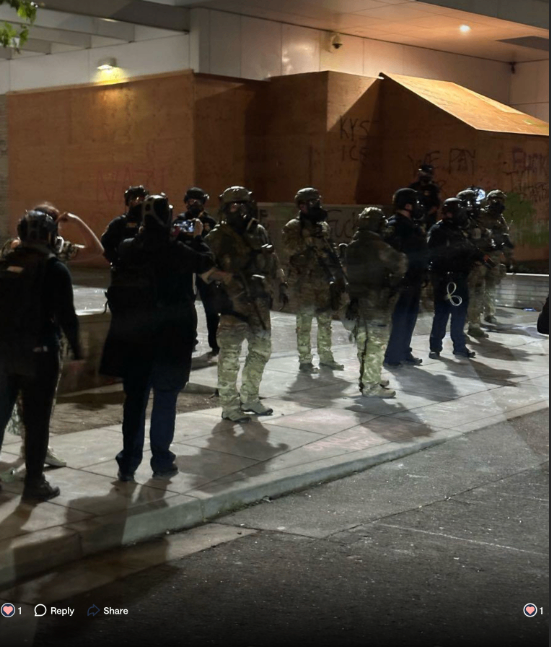
(Photo: Nextdoor Post of ICE Facility)
Oct. 30, Wage Disparity Studies
ICE was not the only issue on the minds of councilmembers in Portland over the past months.
The Oct. 30 meeting focused on two disparity studies on city contracting and workforce participation.
"While there was broad consensus on the need for these studies to promote economic justice and comply with federal requirements, the debate quickly became mired in procedural issues and the scope of a proposed amendment by Councilor Dan Ryan," OpGov.ai reports. "This amendment sought to include project-specific wage and compensation data and an analysis of exemption program effectiveness within the studies."
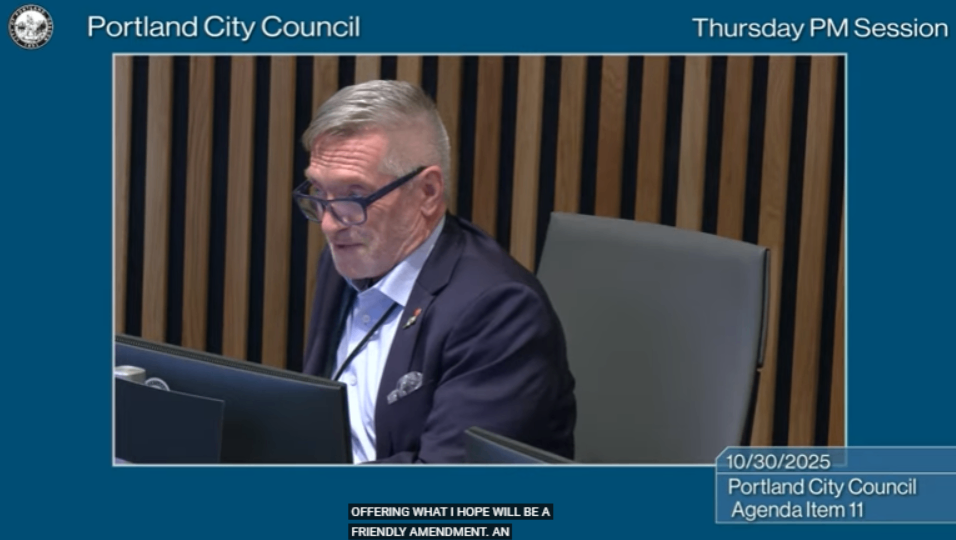
(Photo: Portland Councilman Dan Ryan)
Nov. 12 10-Hour Meeting
OpGov.ai platform captured the nearly 10 hours in a matter of minutes, proving the platform provides more time for research and real-time reporting rather than waiting through hours of video to report the meeting that was "largely dominated by contentious debates" about the proposed amendment to the FY 2025-26 Fall Supplemental Budget and how it could cut $4.3 million from the Impact Reduction Program (IRP).
Top issues discussed included Algorithm price-fixing, homelessness, and rent control policies. Another key feature from this meeting again had to do with ICE.
Portland resident Ashley Johnson pleaded with the council to use their power to help citizens impacted by the ICE facility.
Resident Ashley Johnson expressed concern over the ICE facility
“Ashley Johnson expressed panic and outrage after her partner witnessed ICE agents with covered faces and guns near her daughter's school, detaining a woman," OpGov.ai reports. "Her partner was pepper-gelled for intervening."
Johnson highlighted the broader impact of ICE activities in her South Waterfront neighborhood, including military helicopters, daily bus loadings for deportations, ICE vehicles driving through residential streets with daycares, and agents pulling pistols on protestors.
Dec. 3, Homeless Coalition Protests Outside Portland City Hall
While Welcome Home Coalition and other advocates stood at the city hall steps, making their point known. Inside, exiting City Administrator Michael Jorden said how he really felt about the $21 million in unspent housing funds that were revealed after the budget passed.
“The city council meeting, held on Wednesday, December 3rd, was marked by extensive public engagement and significant debate, particularly around financial transparency, the city's investment policy, and the ethical implications of its investments," OpGov.ai reports.
A critical undercurrent throughout the meeting highlighted tensions between the executive and legislative branches, especially concerning budget information dissemination and the scope of council oversight, the platform added.
Jordan's final report criticized the city’s response to homelessness.
Portland City Administrator Michael Jordan speaks at council meeting
“I think it’s the biggest challenge we face coming into this next, both with the county and the city, in how we allocate our resources across that continuum," Jordan said. "And right now, to be very honest with you, our sheltering system is sucking up a lot of the money that we have, and I don’t think anybody believes that the point of our effort is to keep people in shelters.”
Dec. 10, Portland Hires First Full-Time City Administrator
“The meeting's central event was the confirmation of Raymond C. Lee III as the City Administrator, a pivotal role in the new form of government. While broadly supported, the confirmation process brought to light underlying tensions regarding the mayor’s vision versus the Council's,” OpGov.ai reports.
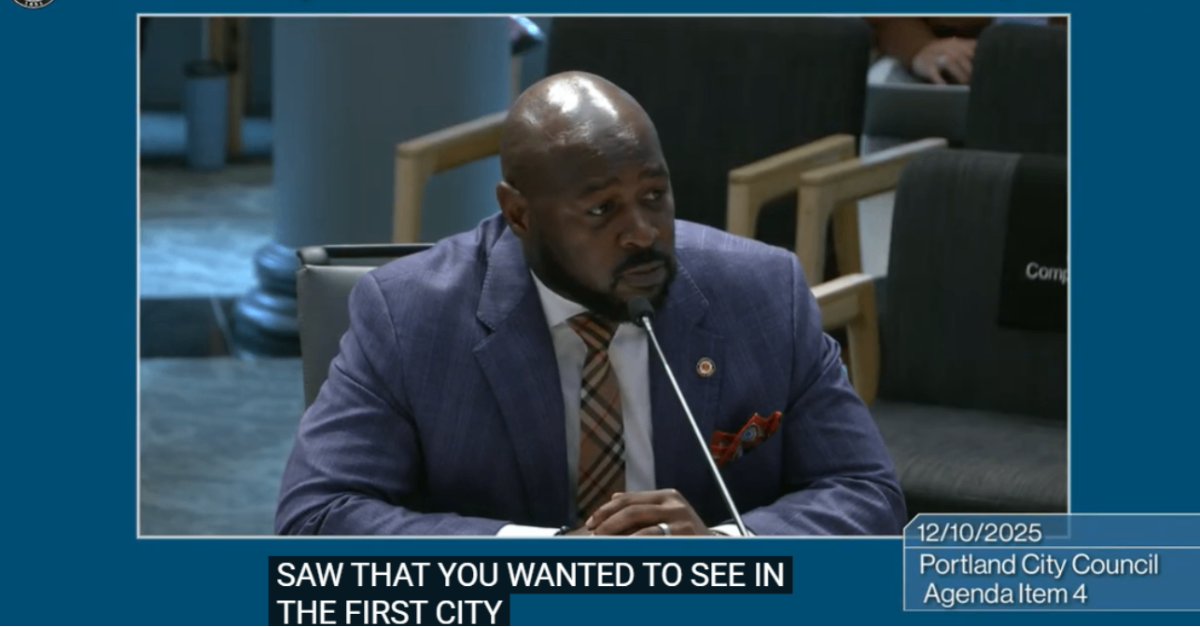
(Photo: Portland City Administrator Raymond C. Lee III)
"This is a rare opportunity to reset, to reconnect, and strengthen how we serve Portland for generations to come," Wilson said. "Raymond's leadership will help us build a strong foundation for this new form of government, one that is aligned, it is trusted, and it's focused on meaningful results."
Lee said the post marks a "pivotal time for this community."
"Very few government organizations and cities ever press the reset button," Lee said, before asking some questions. "Will there be growing pains in this? Yes. Will we have disagreements? Yes.
But we should always have alignment for what is the greater good of this community."
Dec. 17, Portland City Council Addresses Homelessness and Immigration
In Portland’s final city council meeting of the year, officials adopted the Homelessness Response System Action Plan and Key Performance Indicators (KPIs) with 9 'yes' votes and 3 'no' votes.
The plan was approved “despite significant criticism from several councilors regarding lack of specific measurable targets, disconnect between goals and KPIs, and concerns over the plan's overall effectiveness and accountability,” according to the OpGov.ai platform.
While there was no public comment on this agenda item, a call to increase access to immigration legal services was on many people's minds. Caroline Vanderharten was one of three to engage the council, urging them to act.
“We have never seen it this bad and unfortunately, we know that this is just the beginning," Vanderharten said. "Our office is receiving over 100 calls every single day from the community seeking legal help."
She continued, noting the immigrant community is living in a state of perpetual fear due to the executive orders.
"People are afraid to take their children to school and they're afraid to go to medical appointments," Vanderharten said. "They're afraid to go to their houses of worship."
These testimonies serve as a reminder that the immigration troubles in Portland remain an important issue.
If you would like to comment or add to these reports, please email me at rory.h@lead4earth.org.
0
0

Comments