(PENSACOLA, FL.) – One public forum protest against an AI data center was all it took for neighbors to turn outrage into organizing. Since the June 17 Board of County Commissioners Meeting, when residents packed the board chambers with 'No Data Center’ signs and Commissioner Lumon May proposed to draft a ban, the crowd hasn’t gone home. They’ve gone to work.
“I will never support a data center,” May said that night, acting immediately to put an ordinance on the next agenda.
Despite FloridaWest CEO Chris Plate’s statement that no data center projects were ever negotiated or planned for Escambia County, residents continue to be proactive.
“They aren’t on our target list”, Plate said, amid constant applause and frequent shouts against data centers. Plate cited regional power limits and Senate Bill 484, a new Florida state law that makes large users pay for their own infrastructure.
However, the group associated with a proposed data center is still being observed by organizers at every meeting. The shift is palpable: the consistent demand on June 17 was for an immediate and permanent ban, “not a temporary moratorium or study.” That demand now drives daily action.
The shift in the community has grown since June 17. What began as one packed hearing has swiftly become daily outreach happening in neighborhoods. A rally is being planned. Volunteers are attending community events to speak directly with neighbors and officials, answering questions about water use, noise, and power grid strain. They’re posting flyers on storefronts, libraries, and doorsteps with information pulled from studies and public records. The group also launched an Instagram page to centralize updates. The page posts Planning Board agendas, PEDC meeting times, and community meetings that pertain to data centers and FLOCK surveillance.
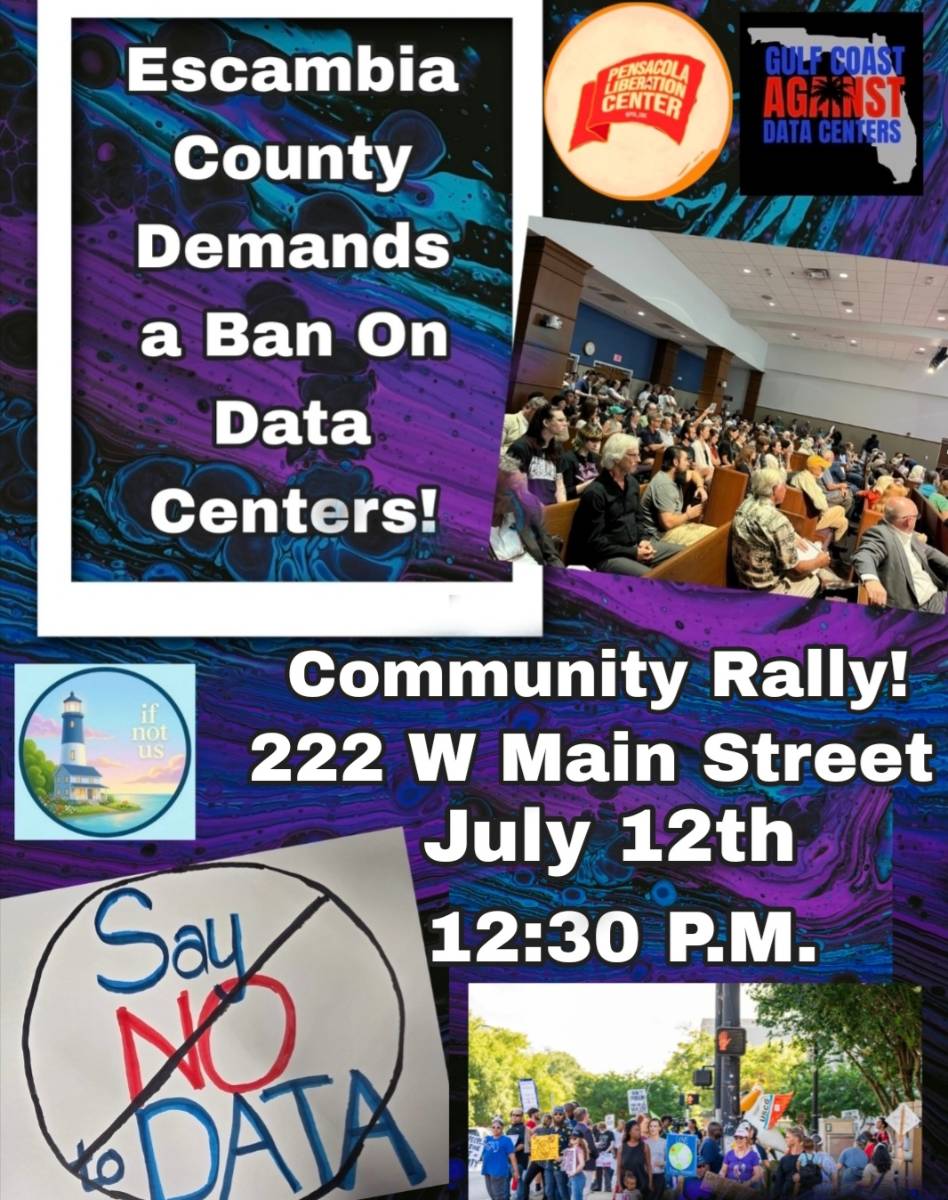
Photo Credit: Get Involved NWFL Instagram Page
For newcomers, the first meeting was the hook.
“I continue showing up to the meetings because part of health is community health,” said one resident, a student nurse. “As a student nurse, I'd like to know that the community I'm working in is also getting better both in public health and other aspects,” said Luiz Guimaraes.
Education is a major piece. Residents are designing and printing zines that explain how data centers impact local aquifers, raise ambient temperatures, and drive up utility costs. The zines cite concerns, such as how centers are used to power FLOCK surveillance, generative AI being used in weapons targeting, the use of real artists' work with no consent, job displacement, and many more issues.

Photo Credit: If Not Us Facebook Page
The movement is also becoming visible. Locals are purchasing shirts to wear at the July 23rd public hearing. The goal is to make opposition impossible to miss in the chambers.
To reach residents outside of government meetings, organizers scheduled an awareness concert and are planning another rally for July 12. The rally is intended to keep momentum ahead of the hearing and to bring in neighbors who haven’t attended a board meeting.
Policy hasn’t been left to officials alone. Residents scheduled their own AI data center zoning regulations meeting to review county land rules and draft language neighbors actually want.

Photo Credit: If Not Us Facebook page
“I think it would be best to join the other counties in having a ban,” said Luiz Guimaraes.
May is not the only one against data centers. Commissioners Steve Stroberger and Mike Kohler told the public they do not want one in their neighborhoods. Commissioner Hofberger said, “I don’t think any of us are advocating for this.”
Yet the pressure isn’t letting up. Residents continue showing up at Planning Board meetings, PEDC sessions, and FloridaWest’s own public forums. Emails to commissioners continue.
Commissioner May said an “environmental” ban cannot happen at once, but reassured the public that commissioners will hold a public hearing on July 23 to place the law on the agenda so that commissioners can formally vote on the proposed ban.
For residents, those words are a start. The flyers, shirts, zines, meetings, and rallies are all aimed at ensuring the ban becomes real. The board did not vote on June 17. The next public step before the July 23rd hearing is a planning board meeting on July 7th. Until then, organizers say they will continue connecting with neighbors and showing up.
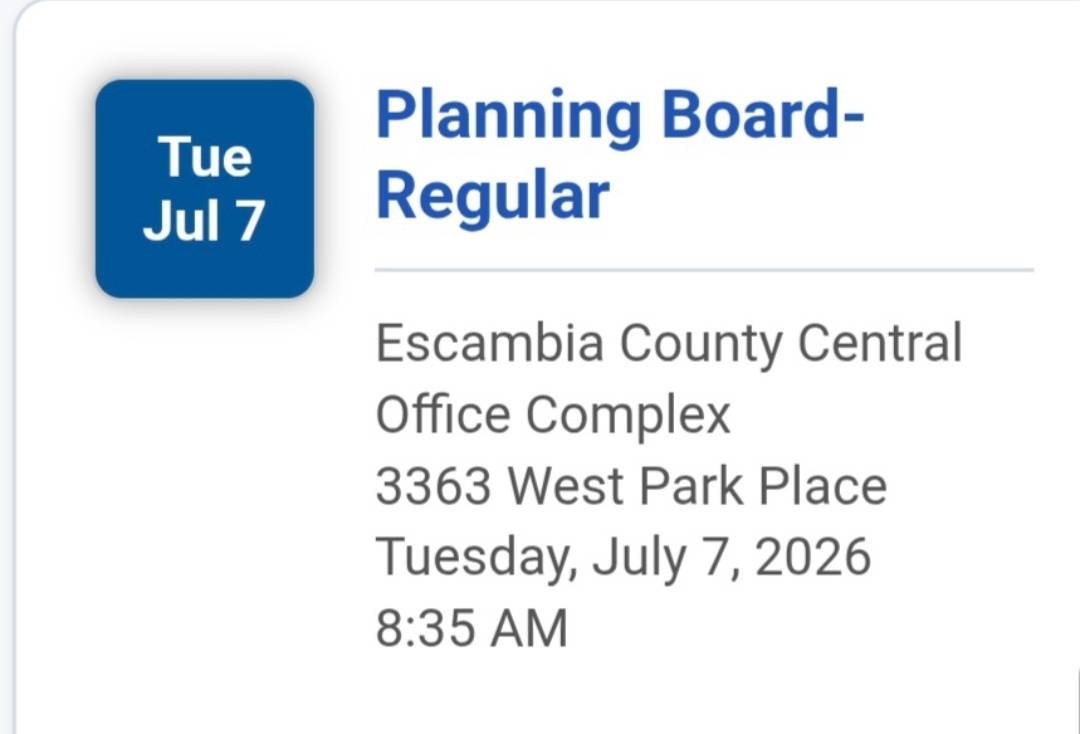
Photo Credit: Escambia County website
to add to or correct any information in this report, please contact me at camellia.w@lead4earth.org.
0
0

Comments