(CONTRA COSTA COUNTY, Calif.) – The Contra Costa County Clerk’s office does not allow its observers in its tabulation room as ballots are being counted. OpGov.News spoke with County Clerk Media Relations Coordinator Dawn Kruger, who clarified that the reason comes down to space.
“A lot of it has to do with the fact that there isn’t really space inside the tabulation room and there's plenty of opportunity to see everything in the fish bowl,” she said. “And so this is just what we're doing in order to make sure folks can still be able to observe, but also so that our workers can get their job done.”
She stated that this method is no different from any other county as far as election procedures.
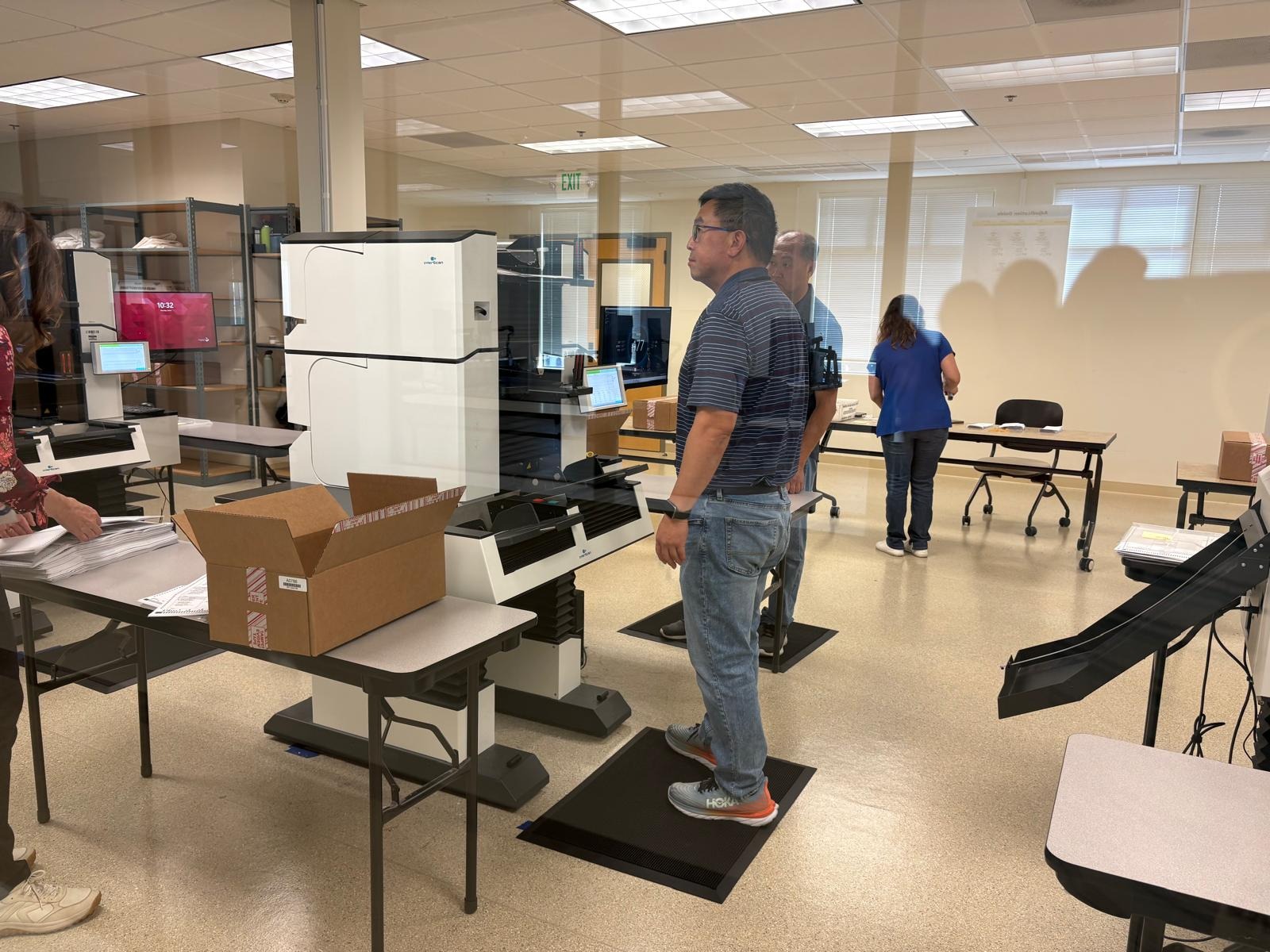
Photo Credit: OpGov.News / Contra Costa County Clerk Tabulation Room on June 4, 2026
Kruger also clarified that anyone can come and observe the election process, though due to limited space, observers may be switched out to accommodate others.
OpGov.News sent a team to the County Clerk’s office to interview staff on its process. Our correspondents Chirag Kathrani and Mandy met up with Joel from the office to tour the facility, who guided our team through each step.
Much of the following information from the video below was amended and corrected by Dawn Kruger via phone call.
Joel walked our team through the initial process of registering to vote at the office. He explained that in order to register, one must fill out the required paperwork and present a valid I.D. or driver’s license, provide identifying information such as the last four digits of a social security number, and provide an address.
The team was then guided to the Election Operations Center (EOC), where ballot envelopes arrive at the facility for the first time, either from drop boxes, polling locations, or the post office.
A team of people then begin to sort the ballot envelopes. Joel explained that it’s important to sort through each ballot envelope manually to ensure that no misplaced ballots, such as those intended for other counties, are accepted.
After sorting, the ballot envelopes are transferred to another team which verifies that signatures are in place. The ballot envelopes are run through a machine, which photographs every ballot envelope and records them electronically to verify signatures before the ballot envelopes are opened.
After the review processes are completed manually, the ballot envelope photographs are verified, wherein signature verification is completed by checking signatures against existing records, such as those from the DMV and from previous elections.
Once the ballot envelopes are sorted and the signature photographs are sent to another team for review, the ballot envelopes are locked up until each signature is verified. Signatures that can’t be verified go in for further review.
Once every signature is verified, the ballot envelopes are then put into a machine which opens each envelope.
The envelopes are then transported by van to another facility for later sorting by human hands, and two people must be in possession of the ballot envelopes at all times to ensure their security.
When Mandy asked Joel how the team ensures that a machine doesn’t make a mistake, he explained that the machines can detect whether a ballot for another county was missed, for example, or whether a ballot is damaged or marked with red ink.
The team was then shown to the tabulation and adjudication room.
Kathrani inquired about the observers’ designated place for tabulation. “Why are the observers not having a chair over here, a place to sit? Because if they’re observing, it’s going to be very tiring, right? They don’t have access over-the-shoulder to watch what is happening.”
According to California Code of Regulations, title 2, division 7, chapter 8.2, section 20873, “Observers shall be allowed sufficiently close access to enable them to observe the vote-by-mail identification envelopes, the signatures and dates thereon, and the manner in which vote-by-mail ballots are handled.”
The verbiage “sufficiently close” is outlined in section 20872 to mean “the distance determined by the elections official that enables an observer to observe and see the vote-by-mail identification envelopes and the signatures and dates, date stamps, or postmarks thereon and challenge whether those individuals handling vote by mail ballots are following established procedures, which includes all of the following:
Verifying signatures on the vote by mail ballot return envelopes by comparing them to voter registration information.
Duplicating accurately damaged or defective ballots.
Securing vote by mail ballots to prevent tampering with them before they are counted on election day.”
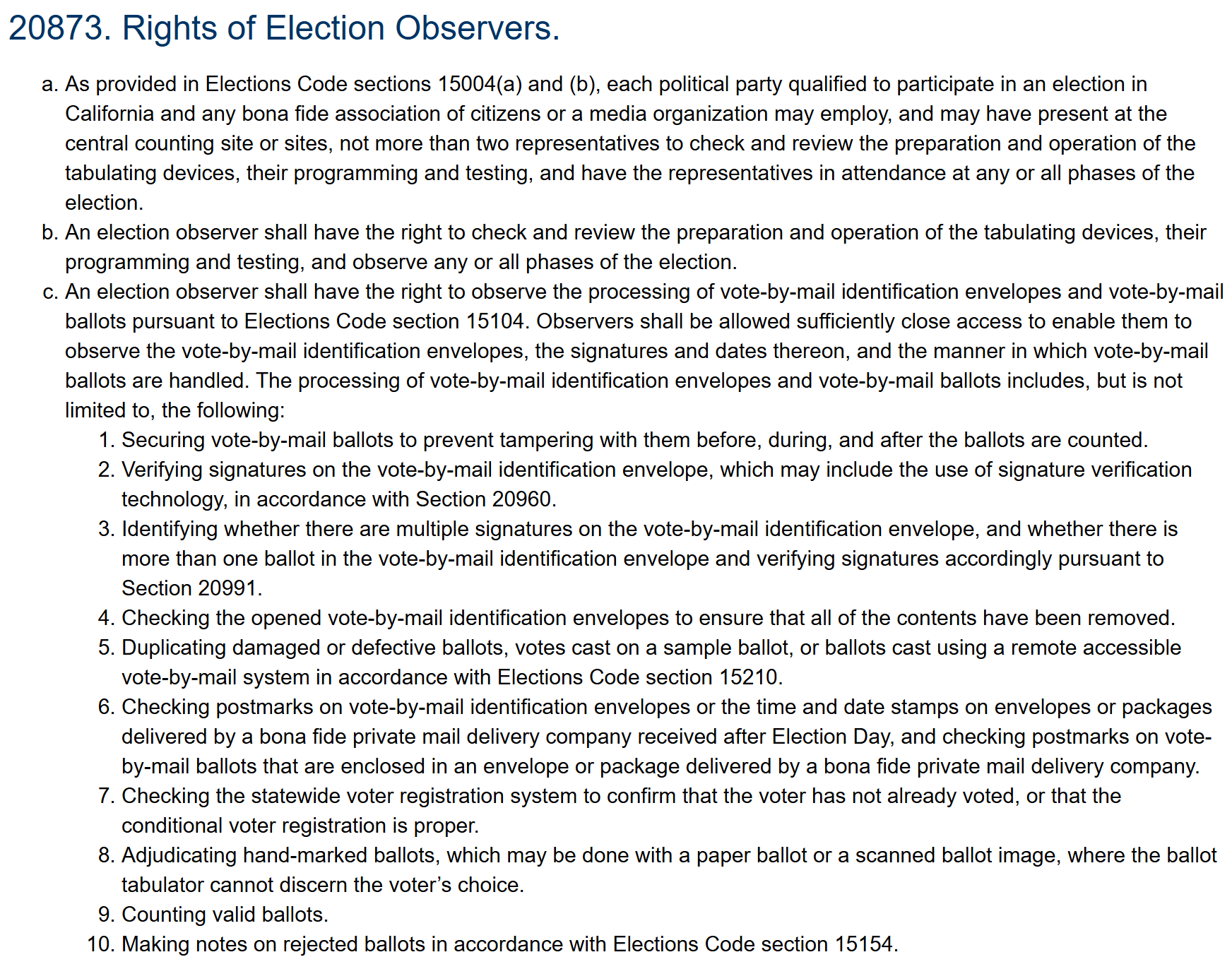
Photo Credit: California Secretary of State Website
He also asked whether observers need to have a certification in order to be qualified.
Joel explained that while the observers need to apply for the job, he stated that they don’t need any prior qualifications; only training. However, observers need to apply for the job in advance.
Kruger later clarified that while there is an extensive observer certification program, it is entirely voluntary, and not required. The program is an unpaid certification that entails an extensive review of the entire election process from before elections begin to the last ballot. These trainees are also introduced to everyone involved in the election process, and are shown how each step works, what machines are used for, and other relevant information.
This program lasts two months before elections begin, and is intended to be educational.
However, she also stated that anyone can sign up to come and observe the process.
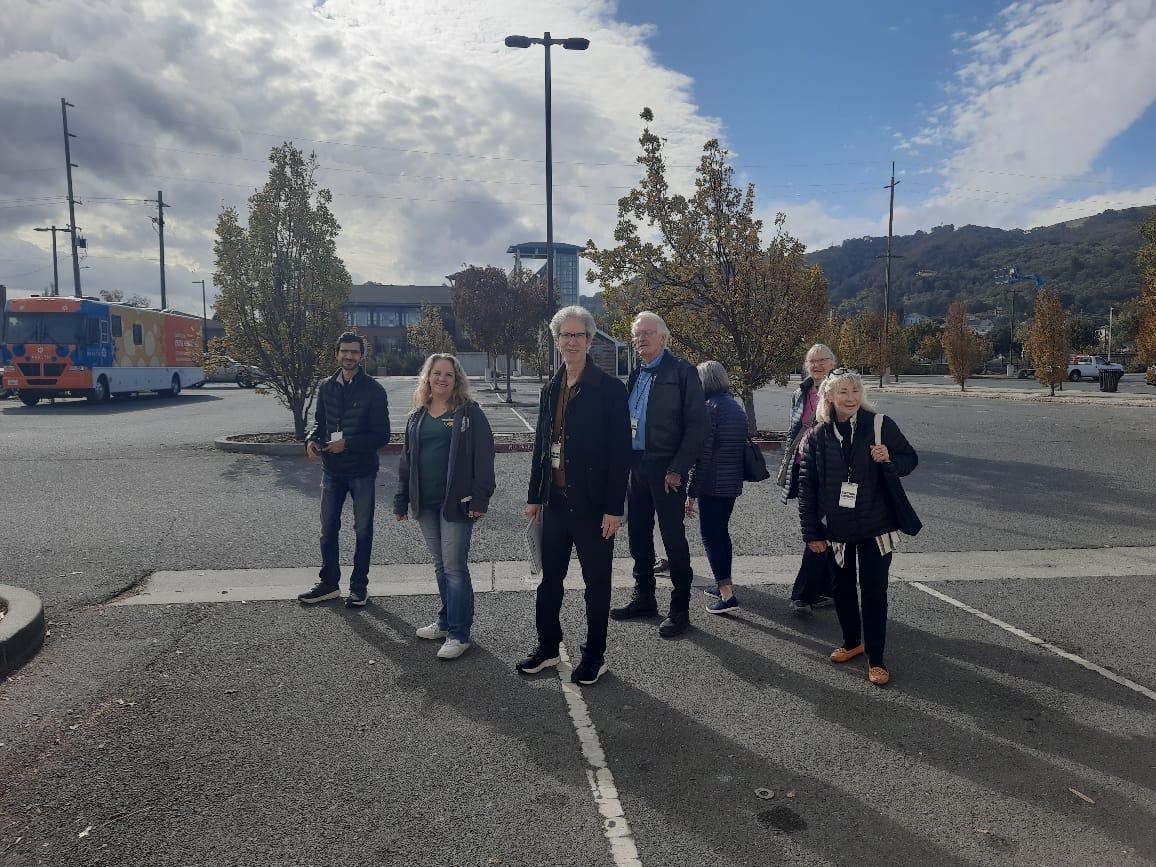
Photo Credit: OpGov.News / Contra Costa County Election Observers 2026
A separate room for observers was displayed separately from the tabulation room, where observers can see through a window, but they cannot physically be in the room during tabulation.
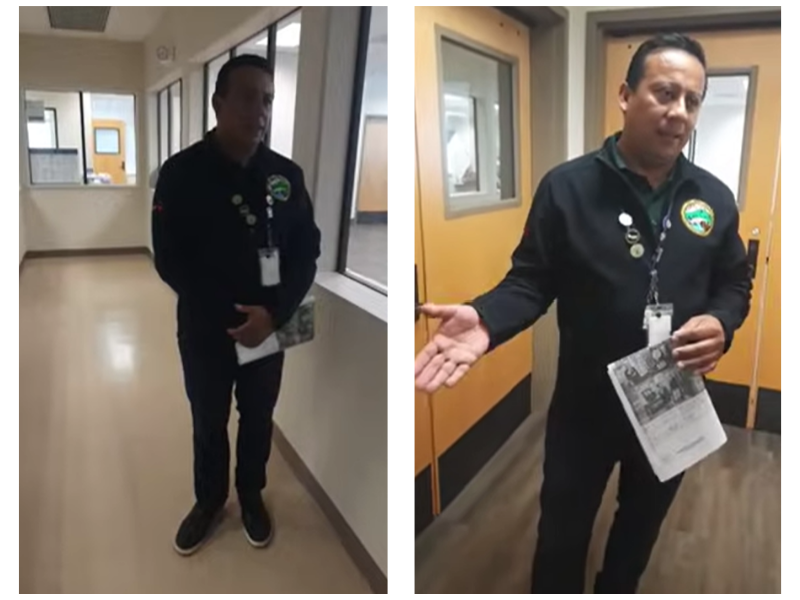
Photo Credit: OpGov.News / Tabulation room, left; observation room, right
When asked why observers cannot be in the tabulation room if they are certified, Joel wasn’t sure what the reason was, but he offered to verify the information with a manager.
“How do you build trust when you don’t give access to the data?” Kathrani queried
The same question was relayed to Kruger, whose aforementioned response cited issues with the space inside the tabulation room.
When asked what the protocol is for observers who see anything unusual happening in the tabulation room, Kruger responded that the observers are not to enter the tabulation room, as this would be considered an obstruction. Instead, they are instructed to take a note, then escalate the concern to a staff or a supervisor.
The team was brought to a local sports arena rented out for the space required for a large number of people, where a large team had begun extracting and sorting through ballots. An employee, Jacob, explained that this process included checking for things such as unapproved colors of ink, folds or tears, coffee stains, and so on to ensure they can be sent through a sorter.
Ballots that don’t meet the requirements to go through a machine will be manually reviewed.
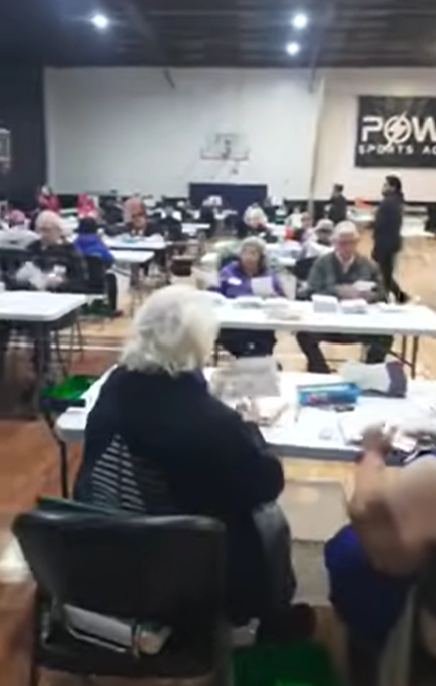
Photo Credit: OpGov.News
After extraction, the ballots will be transported back to the County Clerk’s office to be tabulated.
Their respective envelopes will then be sent back to EOC for storage.
When asked, Jacob confirmed that if a person has already voted by ballot, they cannot then check in to vote in person, and vice versa. A computer will flag a double vote for the same person.
If a person voted early and wanted to change their mind, however, that’s an entirely different process, according to Jacob. A provisional vote may be available, but the first ballot in is what is counted.
OpGov.News will be on-site at the tabulation room observing the tally. Our team will continue to follow the current elections and provide updates as they become available.
Watch the full video here:
Video Credit: YouTube / OpGov.News
To add to or correct any information in this report, please contact me at tracy.t@lead4earth.org.
0
0

Comments