(CHARLOTTE, N.C.) — North Carolina continued recovery efforts this week after a powerful winter storm swept across the state, bringing snow, sleet, and freezing rain from the Appalachian Mountains to the coast. While the worst of the storm has passed, officials and forecasters say lingering hazards and the possibility of another system mean residents should remain cautious in the days ahead.
The storm, part of a broader weather system affecting much of the eastern United States, disrupted daily life statewide. School districts closed or delayed classes, flights were canceled or delayed, and thousands of residents experienced power outages as ice-laden trees and power lines fell under the weight of freezing rain. Even as precipitation tapered off, cold temperatures have slowed recovery and kept roads hazardous.
Mountains: Snowfall Lingers, Cold Complicates Recovery
In western North Carolina’s mountain communities, snow and ice had some of the most significant impacts. Areas around Asheville, Boone, and the High Country reported snow-covered roads and icy secondary routes that remained dangerous well after plows cleared major highways.
Emergency management officials in the mountains warned that overnight temperatures dipping well below freezing could refreeze melted snow during the next several nights. That cycle increases the risk of black ice, particularly on shaded roads and steep inclines. Residents were urged to limit travel over the next 48 hours unless necessary and to keep emergency supplies, including food, water, and medications, readily available in case conditions worsen or power restoration is delayed.
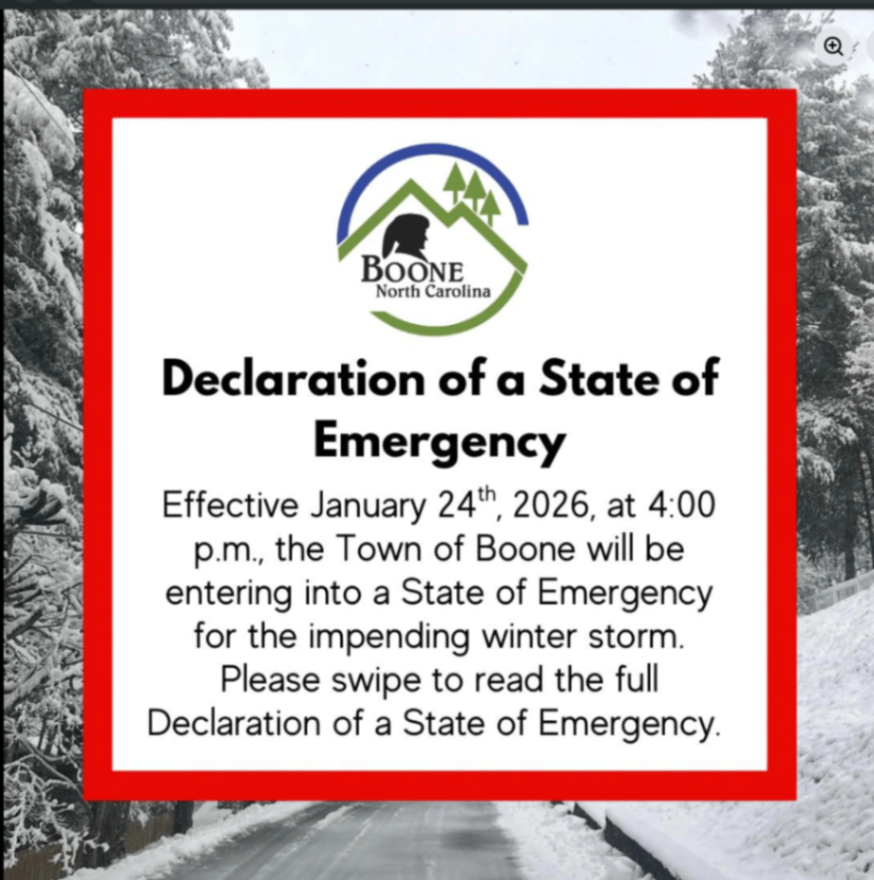
A graphic shared by the Town of Boone announces a local state of emergency effective Jan. 24, 2026, as officials prepared for the impacts of a winter storm expected to bring hazardous travel conditions and potential power outages to the High Country.
(Photo Credit: Facebook/Town of Boone)
Utility crews continued working through the cold to restore electricity to scattered outages. Officials cautioned that additional precipitation later this week, even if light, could create new problems if ice accumulates on already weakened tree limbs and infrastructure.
Piedmont and Triangle: Ice Remains a Primary Threat
Across the Piedmont and Triangle regions, including Greensboro, Winston-Salem, Charlotte, and the Raleigh-Durham area, freezing rain proved more disruptive than snow. Roads that appeared clear during daylight hours quickly became slick after sunset, leading to spin-outs and minor crashes.

Charlotte Fire Department Division Chief Robert Graham, who also serves as deputy director of Charlotte-Mecklenburg Emergency Management, delivers a winter weather briefing on Jan. 23, 2026, outlining preparedness efforts and safety guidance as freezing rain and icy conditions impacted the Charlotte region.
(Photo Credit: YouTube/City of Charlotte)
Transportation officials emphasized that the next few mornings pose elevated risks as residual moisture freezes overnight. Drivers were advised to reduce speed, avoid bridges and overpasses when possible, and delay morning commutes if conditions look questionable.
School districts across the region continued to monitor forecasts closely, with administrators noting that decisions over the next several days will depend less on new snowfall totals and more on overnight temperatures and road refreezing potential.
Airports in Charlotte and the Triangle region resumed operations, but officials warned travelers to check flight statuses as cold weather can still slow de-icing operations. Residents were also encouraged to conserve energy during peak hours as demand rises amid sustained cold.
Eastern and Coastal North Carolina: An Unfamiliar Winter Hazard
In eastern North Carolina and coastal communities, the storm delivered less snow but still caused significant disruption through sleet, freezing rain and gusty winds. From Fayetteville toward Wilmington and the Outer Banks, light ice accumulation made roads unexpectedly hazardous in areas unaccustomed to winter driving.
Local officials advised residents to remain alert through midweek, particularly during early mornings when icy patches may be difficult to see. Ferry services and coastal transportation agencies also warned that strong winds combined with freezing temperatures could create slick docks and limited visibility.
Meteorologists noted that while coastal areas are less likely to see heavy snow from the next system, even light freezing precipitation could cause outsized impacts. Emergency managers urged residents to monitor local forecasts and prepare for brief but dangerous travel windows rather than assuming the coast is in the clear.
Statewide Coordination and Public Safety Messaging
State agencies, including the North Carolina Department of Transportation and emergency management officials, coordinated road treatment, debris removal, and public safety messaging throughout the storm. Officials reiterated that winter storms in North Carolina present unique challenges because impacts vary sharply by region — often within a single county.
Similar public safety coordination challenges have surfaced in municipalities across the Southeast, where local governments are increasingly balancing emergency response, infrastructure strain, and public safety demands during extreme weather events.
As part of the state’s ongoing response, residents were encouraged to check on elderly neighbors, avoid using generators indoors, and ensure space heaters are operated safely. Fire officials reported an uptick in heating-related incidents during cold snaps, prompting reminders about carbon monoxide detectors and proper ventilation.
Looking Ahead: Another System Under Watch
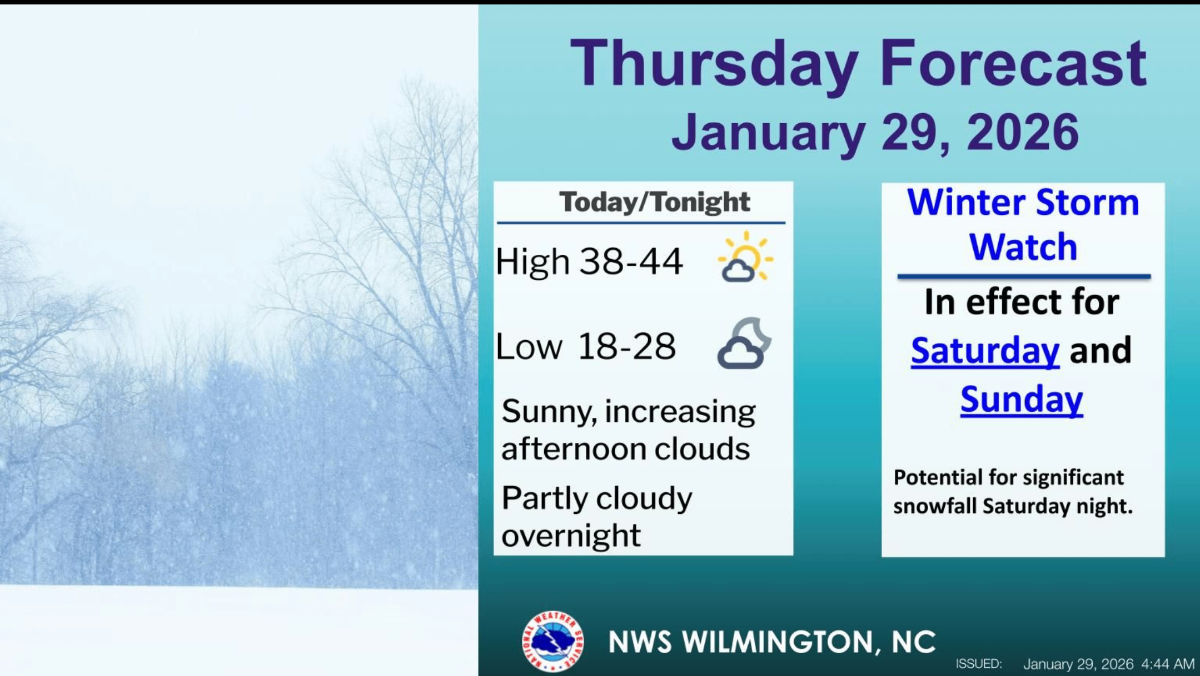
As North Carolina continues to recover from this week’s ice, a new Winter Storm Watch has been issued for Saturday and Sunday. Expect a cold, sunny Thursday before significant snowfall potentially returns Saturday night.
(Photo Credit: Facebook/US National Weather Service Wilmington, NC
Forecasters are tracking another potential winter weather system that could affect North Carolina later this week or over the weekend. While confidence remains low on exact timing and precipitation type, the broader pattern suggests continued below-normal temperatures statewide.
Meteorologists stressed that any new precipitation falling onto cold ground could quickly become hazardous, even if amounts are modest. Residents were advised to use the next 48 to 72 hours to prepare — refueling vehicles, charging devices, restocking essentials, and staying informed through official weather updates.
Policy analysts note that weather-related disruptions often expose broader infrastructure vulnerabilities, forcing local governments to weigh emergency response needs against long-term planning and investment priorities.
Recovery Continues, Vigilance Urged
Officials emphasized that recovery from this storm is ongoing and that patience will be necessary, particularly in rural and mountainous areas where road clearing and power restoration take longer. Even as conditions gradually improve, winter weather risks remain elevated across North Carolina.
Here is a link to resources for those in North Carolina preparing for the upcoming weather tomorrow and this weekend!
Make sure to comment below to let me know your thoughts!
You can reach Victoria Osborne at victoria.o@lead4earth.org
Thumbnail Photo Credit: Spectrum News 1
1
0

Comments