
(Photo: Teri Tracy)
(ARIZONA) – With the start of the new year, new laws are taking shape.
Several new bills, ranging from those addressing public school nutrition to property tax exemptions, will either take effect in 2026 or be further considered by state lawmakers.
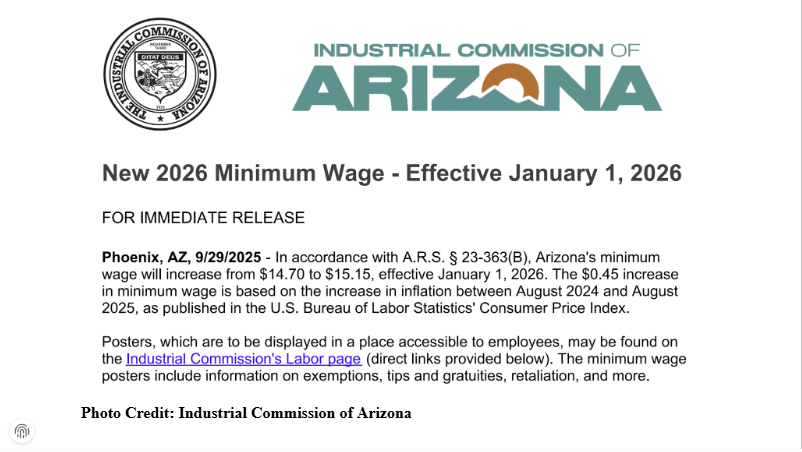
First and foremost, the minimum wage in Arizona was raised from $14.70 to $15.15 based on inflation as determined by the Industrial Commission in compliance with the Fair Wages and Healthy Families Act of 2016.
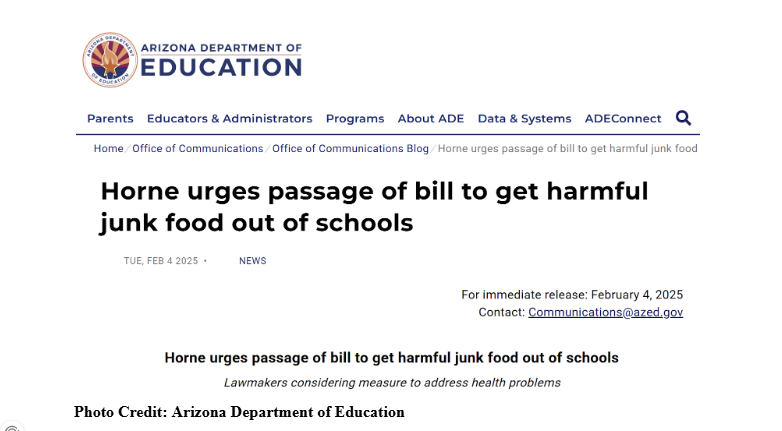
Most impactful to families with students for the new year is House Bill 2164, which is an amendment to Title 15, Chapter 2, Article 2 in the Arizona Revised Statutes, aiming to provide safe, non-toxic school meals for students.
The Arizona Department of Education released a statement in February of last year informing the public of unanimous lawmaker support of the bill and its intentions to eliminate harmful foods from student meals.
The Department refers to HB 2146 as “a bill that would prohibit public schools from serving or selling food containing ingredients shown in scientific studies to be harmful, such as potassium bromate, propylparaben, titanium dioxide, brominated vegetable oil, yellow dyes 5 and 6, blue dyes 1 and 2, red dyes 3 and 40, and green dye 3.”
The bill is expected to go into effect for the 2026-2027 school year.
OpGov.ai reached out to the Department of Education for comment but received no response.
One bill that may closely affect Gilbert’s communities is Senate Bill 1008, which will limit speeds on small motorized vehicles such as e-bikes and electric scooters to 15 miles per hour on paths, with an additional 5 miles per hour passing limit. According to the bill text, however, the local authority may further reduce the proposed speed limit to account for extenuating circumstances.
The bill comes after several e-bike-related incidents across the Valley over the past year involving children, but it is currently still in committee. If passed, the bill will most likely come into effect mid-to-late year.
Gilbert Councilman Chuck Bongiovanni responded to a request for comment on the new bill, stating, "I'm not keen on the 15 mph [speed limit] in a bike lane if it is a legal electric bike which can be operated without a license, registration, and issuance.”
“I do like the limits on a multi-path; however, enforcement may be an issue since there aren't a lot of police on the Canal paths,” Bongiovanni adds, “When I'm on a bike or multiuse path and a person is coming, I try my best, if it is safe, to go off the path and rejoin after I pass them.”
A Senate Concurrent Resolution from 2024-2025 will be on the 2026 ballot, requiring a pass from both the Senate and the House of Representatives beforehand. This piece of legislation was created to ensure more secure voting.
SCR 1001 would require voter ID and proof of citizenship for mail-in ballots, and would end early voting by the Friday before voting day, if approved.
Other upcoming amendments include House Bill 2672, which will most likely begin taking effect in the 2027 fiscal year, and will introduce a full property tax exemption for veterans with a 100% full service-connected disability. The amendment will also include reassessing income caps and will exclude pensions from qualifying income.
Rather interesting, Senate Bill 1555, could potentially legalize the prescribed medical use of the controlled substance psilocybin, which is the psychoactive component of hallucinogenic mushrooms.
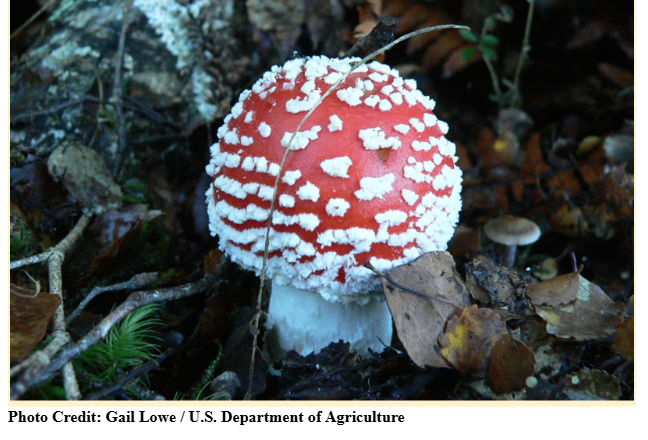
Currently, a Schedule I drug federally, the bill is ultimately dependent upon whether or not the hallucinogen becomes legal on a federal level. The deadline for legalization is anticipated to be 2031.
“The Gilbert Police Department remains committed to upholding the law and serving our community with integrity,” Officer Travis Sheppard of the Gilbert Police Department said on the matter, “ We continuously review new legislation, revise our policies and procedures, and work closely with our Town Attorney's Office to ensure our officers have the most up-to-date information and guidance.”
If you would like to add to or correct anything in this report, please email me at tracy.t@lead4earth.org.
0
0

Comments